Introduction
Rotary shaft seals are critical components in rotating machinery across virtually every industrial sector, preventing lubricant leakage and contamination ingress. Yet the financial consequences of improper seal selection are staggering—unplanned downtime in process industries costs between $5,000 and $50,000 per hour, with 33% of all pump failures attributed to bearing distress caused by inadequate sealing against contaminants.
Choosing between oil seals, V-rings, and labyrinth seals affects equipment reliability, maintenance costs, and total cost of ownership. Each seal type suits a different operating envelope:
- Oil seals provide excellent fluid retention at moderate shaft speeds
- V-rings excel at contamination exclusion with minimal friction
- Labyrinth seals handle extreme speeds and temperatures where contact seals would fail
This guide breaks down the operating parameters, performance trade-offs, and installation considerations that determine which seal belongs in your application.
Key Takeaways
- Oil seals deliver reliable fluid retention at moderate speeds (up to 30 m/s) and pressures via direct elastomeric contact with the shaft
- V-rings provide effective contamination exclusion in low-pressure applications with self-centering capabilities and accommodation of shaft misalignment
- Labyrinth seals offer non-contact sealing for high-speed applications (40+ m/s) and extreme temperatures where friction must be eliminated
- The right choice comes down to speed, pressure, temperature, contamination exposure, and whether contact sealing is acceptable
Oil Seals vs V-Rings vs Labyrinth Seals: Quick Comparison
| Feature | Oil Seals (Radial Lip Seals) | V-Ring Seals | Labyrinth Seals (Bearing Isolators) |
|---|---|---|---|
| Initial Cost | Low ($20–$50) | Low | High ($150–$500) |
| Operating Speed | Up to 30 m/s (PTFE) / Up to 15 m/s (NBR) | 8–12 m/s effective / Lifts off above 15 m/s | 25+ m/s (Standard) / 120+ m/s (Turbomachinery) |
| Pressure Rating | 0–10 bar (special designs to 35 bar) | Low pressure (<0.5 bar) | Minimal differential pressure |
| Temperature Range | -40°C to +200°C (FKM) / -70°C to +250°C (PTFE) | -40°C to +100°C (NBR) / -20°C to +150°C (FKM) | -40°C to +121°C (Standard) / Up to +500°C (Metallic) |
| Contact Type | Direct shaft contact | Light/non-contact (speed dependent) | Non-contact |
| Maintenance | Periodic replacement (3–12 months) | Minimal | Virtually maintenance-free |
| Contamination Exclusion | Excellent with dust lip | Good for large particles | Moderate (design dependent) |
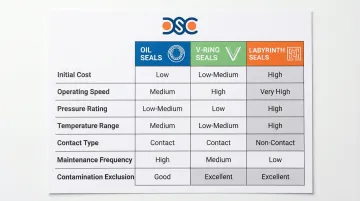
Each seal type has a clear home: oil seals where fluid retention is the priority, V-rings where low-cost contamination exclusion is enough, and labyrinth seals where long service life justifies the higher upfront cost. The right choice depends on your speed range, operating environment, and maintenance tolerance — not a single "best" option.
What are Oil Seals (Radial Shaft Seals)?
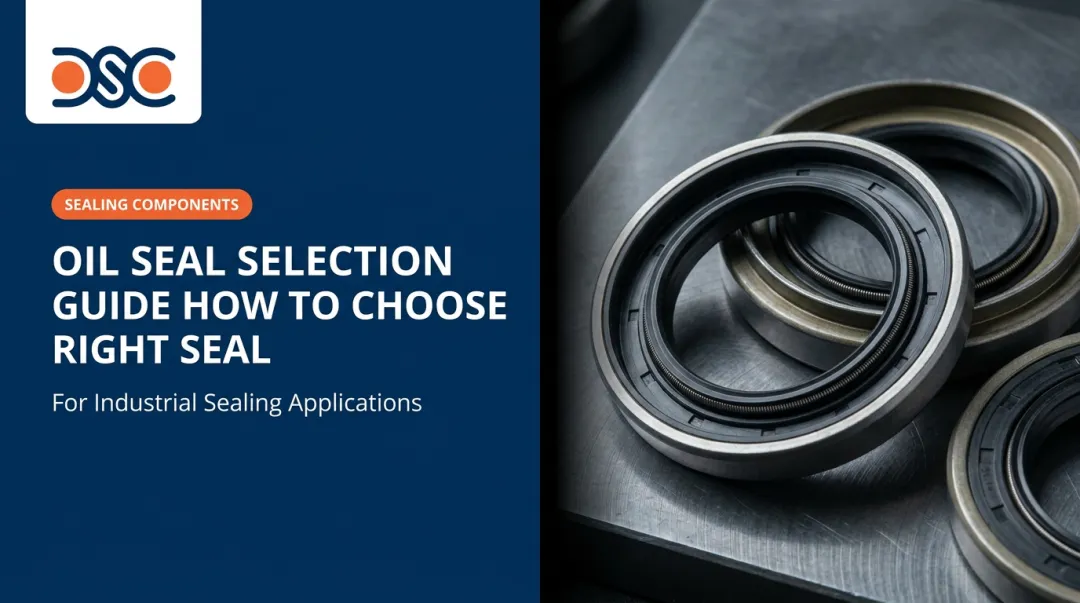
Oil seals are elastomeric sealing devices featuring a flexible lip that contacts the rotating shaft, incorporating a metal or rubber outer case, a sealing lip, and a garter spring that maintains contact pressure. The spring-loaded lip creates a dynamic seal that retains lubricants while excluding external contaminants.
Core benefits include:
- Excellent fluid retention at moderate speeds and pressures
- Wide material availability (NBR, FKM, PTFE) for diverse applications
- Decades of field-proven reliability across automotive, hydraulic, and industrial sectors
- Cost-effective initial investment for standard applications
Main seal types:
- Type A/R (single lip): Retains fluid only — the baseline design for clean, controlled environments
- Type AS/RST (double lip): Adds a secondary dust lip for use where external contamination is a concern
- Type B/M (metal cased): Rigid outer case for reliable press-fit installation in standard housings
- PTFE lip seals: Handle extreme temperatures and aggressive chemical exposure where elastomers fall short
Use Cases of Oil Seals
Oil seals dominate applications in gearboxes, pumps, electric motors, and automotive wheel hubs where rotating shafts require reliable fluid containment. The automotive sector represents the largest market share at 33.3%, with oil seals serving critical functions in transmissions, engines, and axle assemblies.
That reach extends well beyond automotive. Common application areas include:
- Automotive transmissions, engines, and axle assemblies
- Industrial gearboxes and pump housings
- Hydraulic cylinder rod seals
- Bearing protection in general manufacturing equipment
Material selection considerations:
- NBR: General purpose for petroleum oils, -35°C to +100°C operating range
- FKM: High temperature and chemical resistance, -15°C to +180°C capability
- PTFE: Extreme conditions, -80°C to +200°C, speeds up to 30 m/s, pressures to 35 bar
When standard materials don't match the operating environment, DSC's ISO 17025 accredited lab and ISO 9001:2015 certified quality system supports custom compound development and testing. With access to hundreds of formulations across all major elastomer families, Detroit Sealing Components can source or develop oil seals for applications where off-the-shelf options fall short.
What are V-Ring Seals?
V-ring seals are elastomeric seals with a distinctive V-shaped cross-section that provides axial sealing by stretching over the shaft and self-centering during rotation. Unlike radial lip seals, V-rings rotate with the shaft and seal against a stationary counterface, creating a dynamic barrier through light contact and centrifugal force.
Core benefits:
- Self-centering capability eliminates precise alignment requirements
- Accommodates significant shaft runout and misalignment
- Simple installation—just stretch over the shaft
- Effective contamination exclusion with minimal friction
- No shaft surface finish requirements
Design variations:
- Standard V-rings for general contamination exclusion
- Reinforced designs with axial support for higher speeds (up to 12 m/s)
- Material options including NBR, FKM, and silicone for different temperature ranges
These design options cover a wide range of operating conditions, which is why V-rings appear across so many different industries and equipment types.
Where V-Ring Seals Are Used
V-rings operate effectively up to 8-12 m/s before the lip lifts away from the counterface, transitioning to a clearance seal at higher speeds. Within that range, they excel wherever contamination exclusion matters more than high-pressure fluid retention.
Common applications include:
- Bearing protection in electric motors and conveyor rollers
- Agricultural machinery operating in dust, dirt, and debris
- Food processing equipment subject to frequent washdown cycles
- Material handling systems where simple, reliable sealing reduces maintenance
The washdown resistance alone can deliver measurable savings. In one UK food processing operation, switching to advanced bearing protection seals reduced hot water consumption by 33% and saved approximately £44,240 (~$56,000 USD) annually by preventing fluid ingress at bearing housings.
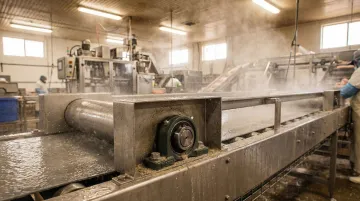
V-rings are the right choice when shaft runout or misalignment rules out precision lip seals, and when the application demands low-friction contamination exclusion rather than pressurized fluid containment.
What are Labyrinth Seals?
Labyrinth seals are non-contact sealing devices that use a series of grooves, ridges, or barriers to create a tortuous path, restricting fluid or gas flow between rotating and stationary components. Unlike elastomeric seals, they rely on pressure drops across multiple restrictions — with no surface contact required.
Core benefits:
- Zero friction and wear — no shaft contact
- Handles extreme temperatures (-200°C to +500°C)
- Suited for high-speed operation (40+ m/s; turbomachinery exceeds 120 m/s)
- Long service life — virtually maintenance-free
- Handles gas sealing in high-speed turbomachinery environments
Design variations:
- Straight-through: Multiple axial restrictions along a linear path
- Stepped: Radial steps form discrete pressure chambers at each stage
- Interlocking: Rotor and stator teeth intermesh for the tightest achievable clearances
Gap clearances — typically around 0.3 mm — directly determine sealing effectiveness across all three designs.
Use Cases of Labyrinth Seals
Labyrinth seals dominate in turbines, compressors, aerospace engines, and high-speed rotating equipment where contact seals would fail due to heat, speed, or friction limitations. In turbomachinery applications, labyrinth seals operate at tip speeds exceeding 120 m/s and temperatures above 300°C.
Where they're used:
- Power generation — steam and gas turbine shaft sealing
- Aerospace — jet engine and propulsion system shafts
- Oil and gas — centrifugal compressor bearing protection
- High-speed industrial equipment — spindles, blowers, and turbomachinery
Beyond these primary markets, industrial bearing isolators — a widely used labyrinth variant — offer 99% less energy consumption than radial lip seals, eliminating the typical 147 W frictional loss per seal. API 610 standards for hydrocarbon processing pumps generally prohibit lip seals in favor of labyrinth bearing isolators for this reason.
How to Choose the Right Rotary Shaft Seal
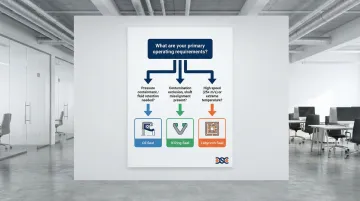
No single seal type suits every application. Matching the right seal to your operating conditions — speed, pressure, temperature, and contamination level — determines both reliability and long-term cost.
Operating Speed Considerations
Speed ranges by seal type:
- Oil seals handle moderate speeds up to 15 m/s (NBR) or 30 m/s (PTFE lip)
- V-rings seal effectively from low speeds up to 8–12 m/s
- Labyrinth seals run at high speeds exceeding 25 m/s, with turbomachinery designs reaching 120+ m/s
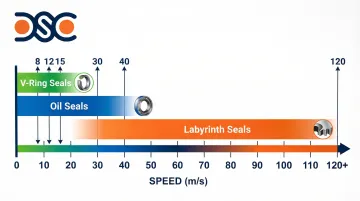
For most general industrial applications under 15 m/s, oil seals are the default choice.
Pressure Requirements
Pressure capabilities:
- Oil seals handle positive pressure up to 10 bar (PTFE designs to 35 bar)
- V-rings are low-pressure only — below 0.5 bar, not suitable for fluid retention
- Labyrinth seals work only in minimal differential pressure conditions
When pressure containment is a requirement, oil seals are the only viable option among these three types.
Temperature Environment
Temperature ranges:
- Oil seals: NBR (-40°C to +100°C), FKM (-40°C to +200°C), PTFE (-70°C to +250°C)
- V-rings: NBR (-40°C to +100°C), FKM (-20°C to +150°C)
- Labyrinth seals: Standard bearing isolators (-40°C to +121°C), metallic designs to +500°C
Contamination Environment
Exclusion capabilities:
- Oil seals with dust lips perform well in moderate contamination
- V-rings offer superior particle exclusion in dirty or abrasive environments
- Labyrinth seals provide moderate exclusion, best suited for gas sealing or clean environments
For agricultural, outdoor, or high-debris applications, V-rings are the strongest contamination barrier.
Cost Analysis Framework
| Seal Type | Typical Initial Cost |
|---|---|
| Oil seals | $20–$50 |
| V-rings | $20–$50 (comparable to oil seals) |
| Labyrinth bearing isolators | $150–$500 |
Lifecycle costs: A pulp and paper mill operating 20 pumps saved $175,760 annually by switching from lip seals to bearing isolators, reducing failure rates from 25% to 5% while eliminating energy penalties.
Situational recommendations:
- Oil seals — when you need positive pressure containment, fluid retention, or broad material compatibility at moderate speeds
- V-rings — when contamination exclusion is the primary concern and shaft runout or misalignment is a factor
- Labyrinth seals — when speed or temperature exceeds elastomer limits, or when zero contact friction is non-negotiable for bearing life
Real-World Application Examples
Mining Slurry Pump Upgrade
Challenge: Large slurry pumps in a mining operation experienced frequent seal failures with standard lip seals, achieving only six months mean time between failures. Repetitive seal replacement created excessive downtime and maintenance costs.
Solution: The operation replaced $150 lip seals with $933 dual-face magnetic isolators (a labyrinth seal variant) despite the 6x higher initial cost.
Results: The upgrade reached breakeven in just 34 days and saved $16,727 per year per pump by eliminating repetitive repairs and extending equipment life. Because the labyrinth design runs without contact, it also eliminated the shaft grooving and contamination-driven bearing failures that had plagued the original lip seal installations.
Not every application comes with a straightforward answer. If your operating conditions sit at the edge of what standard seals handle well, DSC's technical team can help narrow the options. Detroit Sealing Components stocks a broad range of rotary shaft seals and compounds, and its ISO 17025 accredited lab and ISO 9001:2015 certified quality system supports custom material development when off-the-shelf solutions fall short.
Conclusion
Oil seals handle fluid retention and pressure sealing at moderate speeds. V-rings stand out for contamination exclusion where shaft misalignment is a factor. Labyrinth seals cover extreme speed and temperature environments. No single design wins across all conditions — the right choice depends on your operating parameters.
Getting the selection right shapes long-term equipment reliability and maintenance costs, whether you're running automotive drivetrains, oil and gas pumping systems, or high-speed industrial machinery.
Detroit Sealing Components stocks and sources sealing solutions across all three seal types, with access to hundreds of rubber compounds, computer-aided design, finite element analysis, and an ISO 17025 accredited lab and ISO 9001:2015 certified quality system for custom material development and testing. If your application sits outside standard catalog options, DSC's technical team can work through the tradeoffs with you.
Frequently Asked Questions
What are the different types of shaft seals?
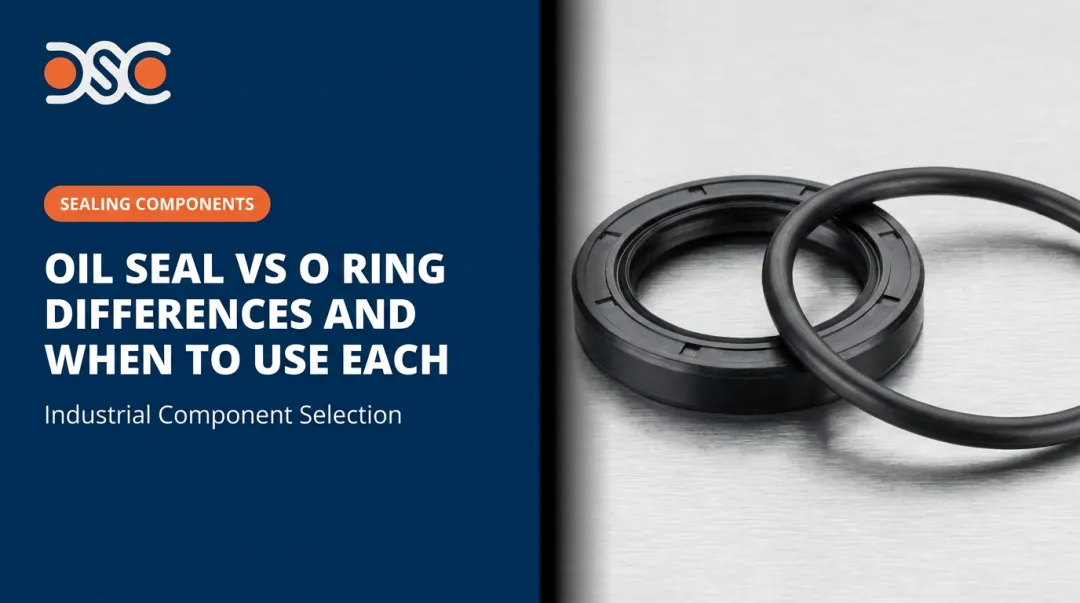
The three main rotary shaft seal types are oil seals (radial lip seals with elastomeric shaft contact), V-ring seals (axial seals with V-shaped cross-section for contamination exclusion), and labyrinth seals (non-contact seals using tortuous paths). Choosing between them comes down to your speed, pressure, temperature, and contamination requirements — start with those four parameters before evaluating seal type.
What is the difference between V ring and lip seal?
V-rings are axial seals that stretch over the shaft with a V-shaped profile and self-center during rotation, while lip seals (oil seals) are radial seals with a flexible lip in direct contact with the shaft. V-rings excel at contamination exclusion and accommodate shaft misalignment, whereas lip seals provide superior fluid retention and pressure sealing capability.
Why does my shaft seal keep leaking?
The most frequent culprits are incorrect seal selection and installation errors — inverted lips or improper press-fit alone account for a large share of premature failures. Other causes include shaft surface roughness, chemical incompatibility between the elastomer and fluid, temperature or pressure beyond the seal's rated limits, and shaft grooving from wear.
What is the purpose of shaft sealing on a pump?
Shaft seals prevent process fluid from escaping along the rotating shaft, protect bearings from contamination, and maintain system pressure. Sealing performance directly affects pump longevity — 33% of pump failures trace back to bearing distress from inadequate contaminant exclusion.
What is the difference between SC and TC seals?
SC (Single Contact) seals have one sealing lip for fluid retention only, while TC (Twin Contact or Double Lip) seals feature a primary sealing lip plus a secondary dust lip for contamination exclusion. TC seals are better for harsh environments with airborne debris, dirt, or water splash, providing dual protection against both internal fluid leakage and external contamination ingress.
What is another name for oil seal?
Oil seals go by several names — radial shaft seals, lip seals, rotary shaft seals, or grease seals — depending on the application and industry. The terminology varies by region and sector, but all refer to the same elastomeric contact seal.