Leaking shafts do not just waste oil. They damage bearings, pull in contamination, and shut down production. Inadequate lubrication, including contamination and loss, causes 35 to 40 percent of all equipment failures, and most of those start at a failed shaft seal. You are not buying rubber. You are protecting uptime. When a pump or gearbox begins to leak, where do you look first. Many teams chase bearings while the problem sits at the shaft opening.
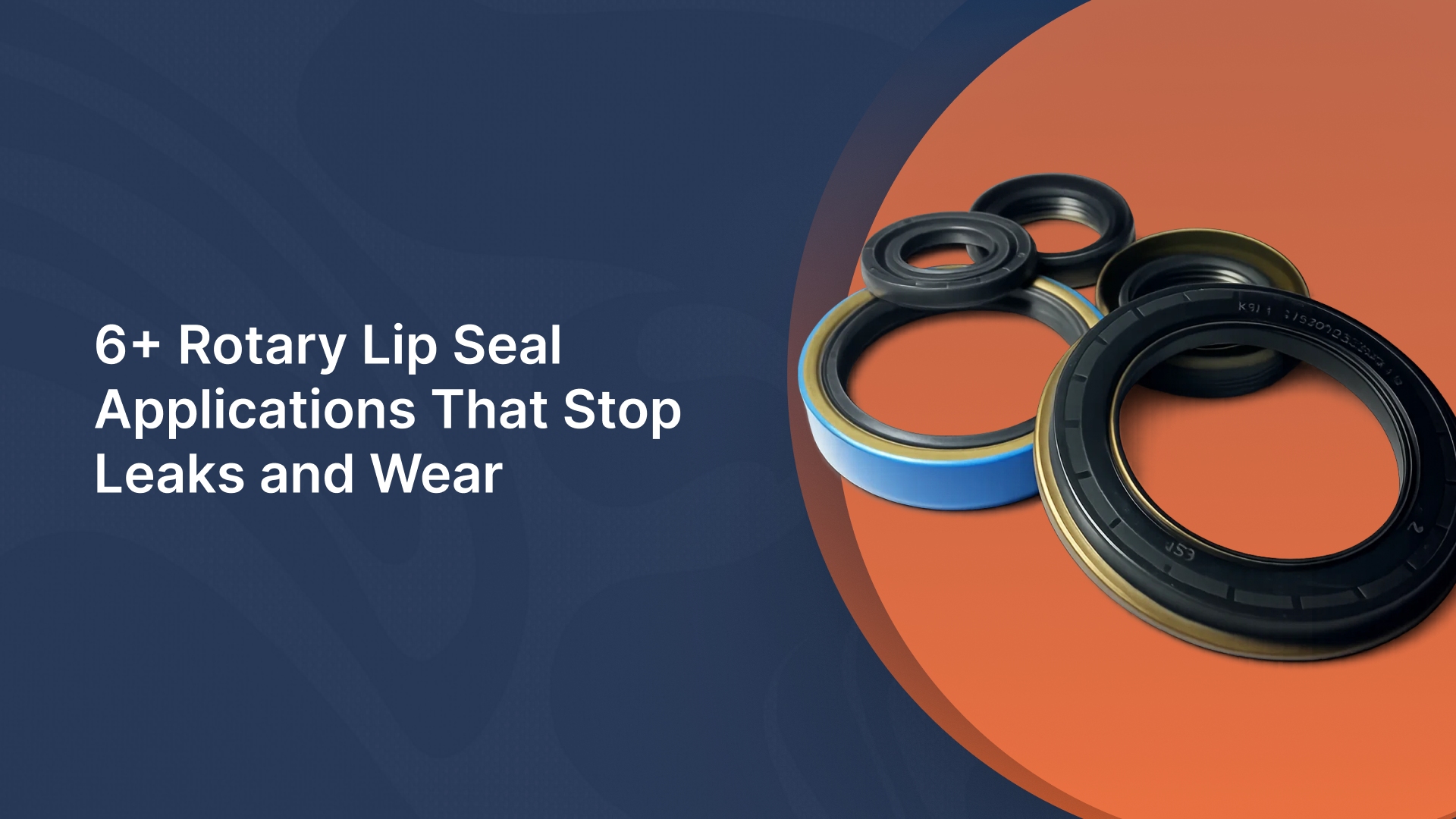
Rotary lip seals create a dynamic barrier between a rotating shaft and a stationary housing, keeping lubricants in and blocking dirt, water, and chemicals. That single function explains why rotary lip seal applications span motors, gearboxes, pumps, vehicles, and process equipment across nearly every industry.
The best applications of rotary lip seals are any systems with rotating shafts that must protect bearings and fluids from loss and contamination. In this blog, we show where they are used, why they work, and how to choose the right seal for your operation.
Read This First
Rotary lip seal applications include drivetrains, motors, pumps, gearboxes, and clean process equipment where rotating shafts must stay sealed.
The lip, spring, and elastomer work together to control heat, pressure, and fluids at the shaft surface.
Oscillating systems like actuators and steering need special lip designs to avoid twist and uneven wear.
Material choice and shaft finish determine whether seals survive in oil, water, chemicals, or washdown environments.
Detroit Sealing Components supports these applications with stocked shaft seals and engineered elastomers matched to operating conditions.
What Are Rotary Lip Seals and Why Rotary Lip Seal Applications Depend on Them
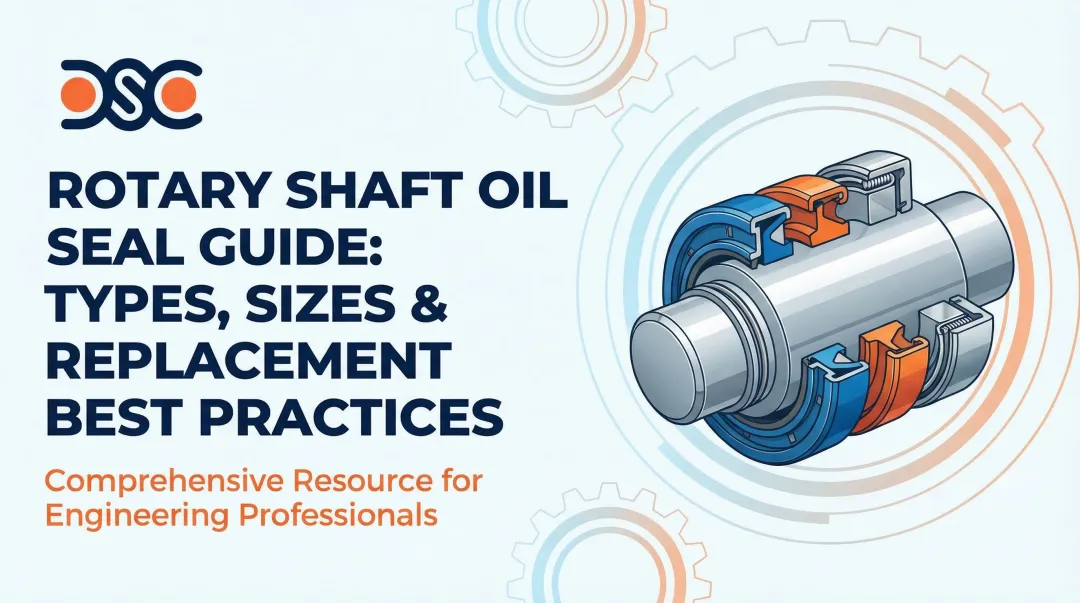
Every rotating shaft passes through a stationary housing, which creates a leak path for oil to escape and dirt to enter. Without a proper seal, lubrication breaks down and bearings begin to fail. A rotary lip seal fixes this by pressing a flexible elastomer lip against the shaft, forming a moving barrier that stays closed as the shaft spins.
That lip applies controlled force and rides on a thin oil film to reduce friction while sealing. Lubrication related failures, including bearing and lubricant issues, account for over 76 percent of industrial machinery breakdowns, which makes this interface critical to uptime.
To see how rotary lip seal applications protect rotating equipment, look at the three jobs every lip seal performs:
A rotary lip seal is designed to handle three functions at once
Retain lubricants so oil, grease, or coolant stays inside the housing where bearings and gears need it
Block contamination such as dust, water, washdown chemicals, or abrasive particles from entering
Protect internal components by preserving clean lubrication and stable operating conditions
These functions explain why rotary lip seal applications appear across motors, gearboxes, pumps, compressors, and vehicle drivetrains. Any system with a rotating shaft depends on this seal to maintain lubrication, keep contaminants out, and protect the components that cost the most to replace.
Where Are Rotary Lip Seals Used Across Industrial Systems: 9 Core Rotary Lip Seal Applications
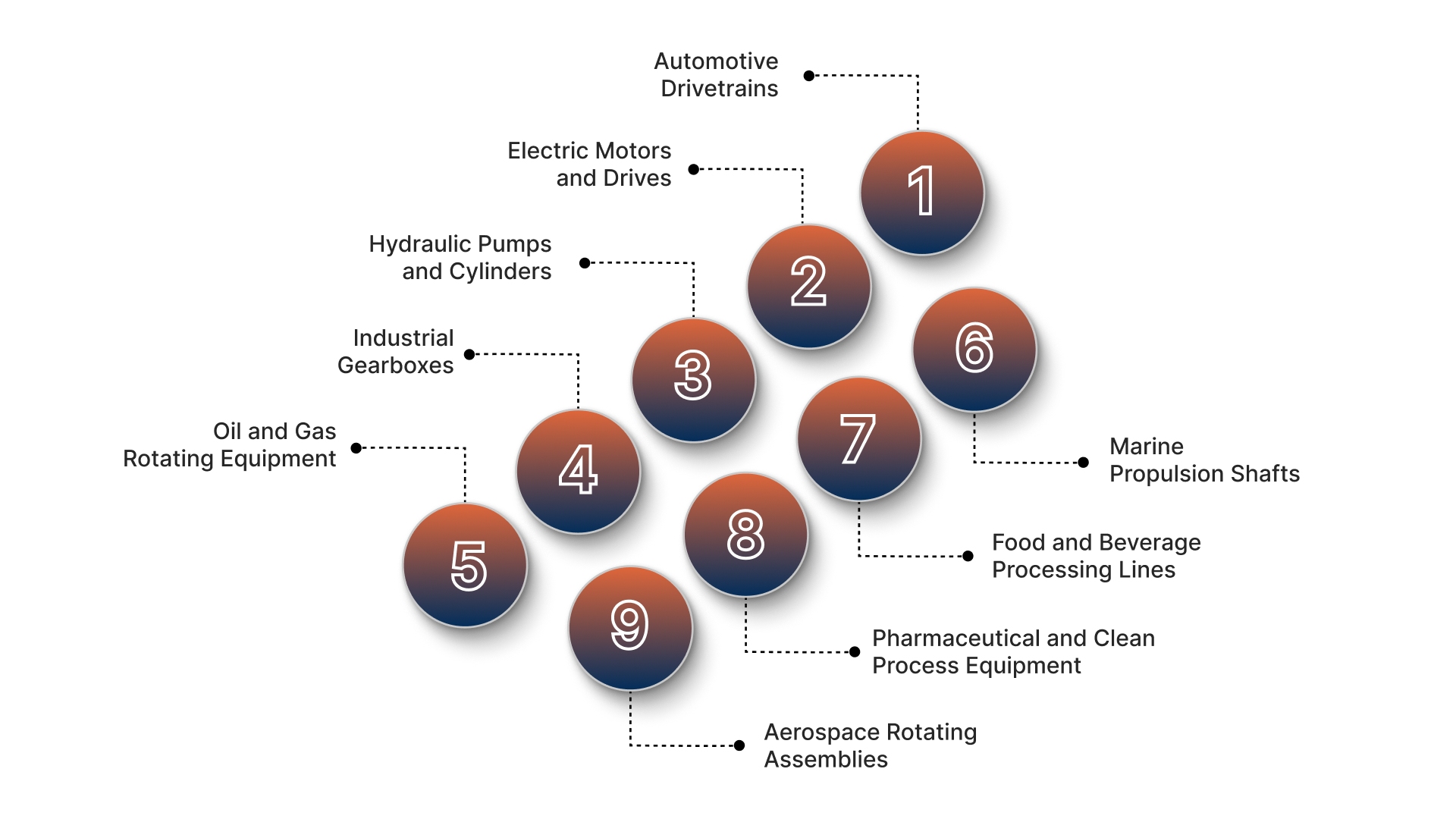
Every machine that moves power through a shaft creates a sealing problem. Motors, pumps, gearboxes, and compressors all rely on rotating shafts to transmit torque, move fluids, or drive loads. Rotary lip seals follow shaft motion rather than industry labels, which is why you see the same sealing principle across vehicles, factories, utilities, and regulated process plants.
To show where rotary lip seal applications protect your equipment, the list below maps shaft motion to the fluids and risks you manage every day.
1. Automotive Drivetrains
In your vehicles, dozens of shafts rotate at different speeds and loads to move power from the engine to the wheels. Rotary lip seals keep these systems lubricated while blocking road debris, water, and heat driven contaminants that destroy bearings and gears.
Where you use them
Crankshafts and camshafts
Transmissions and transfer cases
Axles and differentials
What they control
Engine oil and gear lubricants
Road water, dust, and grit
What fails without them
Bearing seizure
Gear pitting
Loss of drivetrain efficiency
2. Electric Motors and Drives
Every motor depends on a clean, lubricated bearing system to stay efficient and quiet. Rotary lip seals protect the rotating shaft interface so grease stays in and moisture, dust, and coolant stay out.
Where you use them
Industrial motors
Variable speed drives
Cooling fan shafts
What they control
Bearing grease
Dust, humidity, and coolant mist
What fails without them
Bearing noise and vibration
Overheating
Motor winding damage
3. Hydraulic Pumps and Cylinders
Hydraulic systems run on clean, pressurized oil moving through rotating and reciprocating components. Rotary lip seals protect pump shafts and rod ends so pressure, efficiency, and motion stay stable.
Where you use them
Hydraulic pumps
Actuator rods
Valve drive shafts
What they control
Hydraulic fluid
Air and abrasive particles
What fails without them
Pressure loss
Heat buildup
Erratic cylinder movement
4. Industrial Gearboxes
Gearboxes transmit torque through tightly meshed rotating gears and shafts. Rotary lip seals keep gear oil inside while blocking contaminants that cause metal wear and surface damage.
Where you use them
Conveyor drives
Mixers
Production line reducers
What they control
Gear oils and lubricants
Dust and abrasive debris
What fails without them
Gear tooth wear
Bearing pitting
Drive failure
5. Oil and Gas Rotating Equipment
Oil and gas machinery relies on rotating shafts that handle high pressures and aggressive fluids. Rotary lip seals prevent leaks while keeping external contaminants out of sensitive equipment.
Where you use them
Pumps and compressors
Valves and rotating connectors
What they control
Hydrocarbons and process fluids
Sand, water, and chemicals
What fails without them
Environmental release
Safety hazards
Equipment shutdowns
6. Marine Propulsion Shafts
Marine systems operate with rotating shafts exposed to saltwater and pressure. Rotary lip seals protect these shafts by keeping lubricants inside and seawater out.
Where you use them
Propeller shafts
Thrusters
Rudder drives
What they control
Lubricating oils
Saltwater and marine debris
What fails without them
Corrosion
Bearing damage
Drive loss
7. Food and Beverage Processing Lines
Food processing equipment uses rotating shafts in areas that must stay clean and leak free. Rotary lip seals prevent lubricant migration into product zones.
Where you use them
Mixers and blenders
Fillers and conveyors
What they control
Food grade lubricants
Washdown water and residue
What fails without them
Product contamination
Regulatory violations
Equipment damage
8. Pharmaceutical and Clean Process Equipment
Pharma systems use rotating shafts in controlled environments where contamination cannot be tolerated. Rotary lip seals maintain clean separation between lubricated parts and sterile product areas.
Where you use them
Pumps
Mixers
Filling systems
What they control
Process fluids and lubricants
Airborne particles and microbes
What fails without them
Batch rejection
Compliance issues
Equipment damage
9. Aerospace Rotating Assemblies
Aerospace systems operate at extreme speed, temperature, and load. Rotary lip seals protect critical rotating shafts so lubrication stays stable under flight conditions.
Where you use them
Engine shafts
Actuator drives
Control systems
What they control
High performance lubricants
Dust and moisture
What fails without them
Component wear
System instability
Safety risk
How Rotary Shaft Lip Type Seals Handle Speed, Pressure, and Fluids
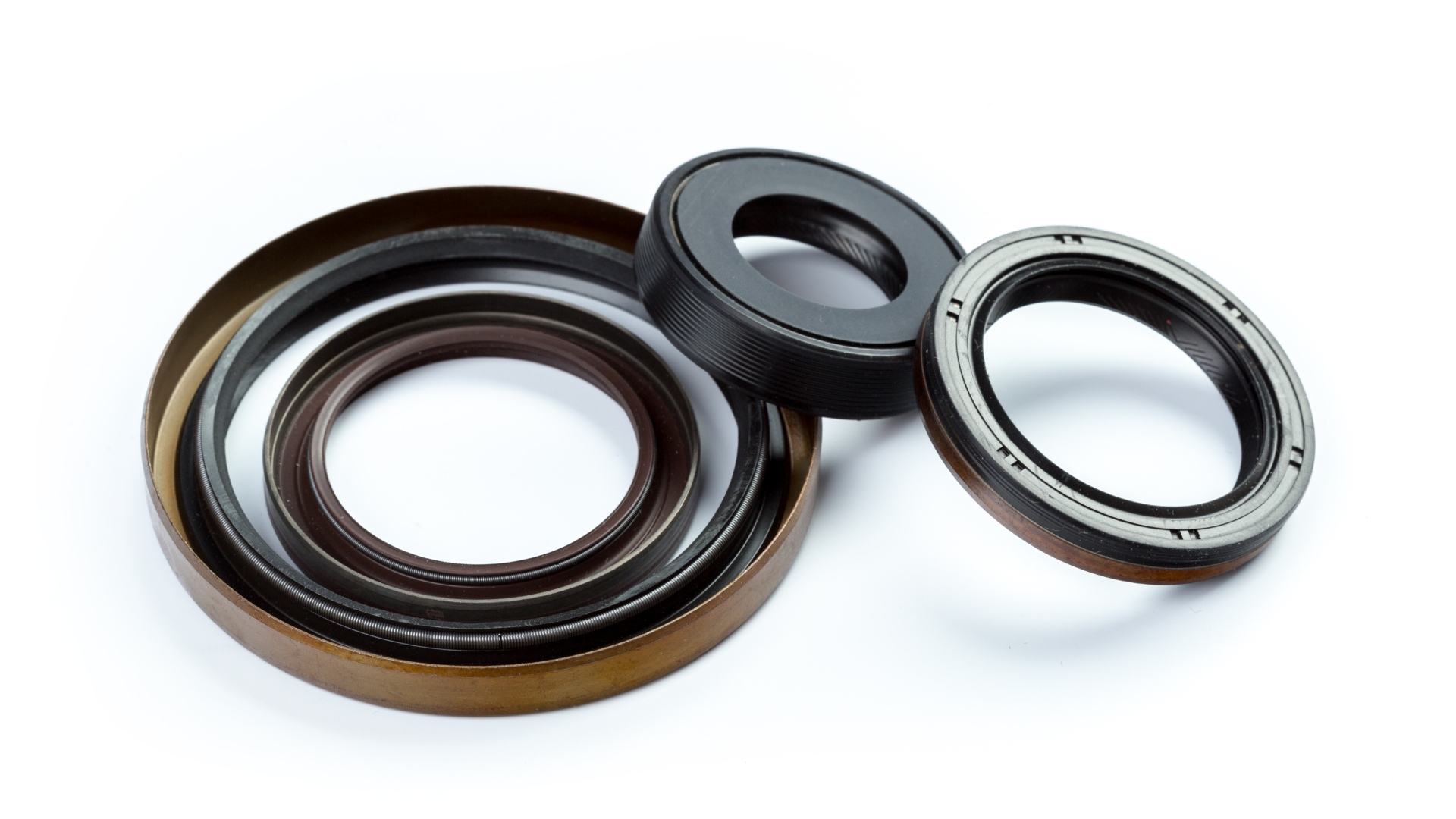
Every rotating shaft puts stress on the seal that touches it. Higher speed raises friction and heat. Pressure pushes fluid against the lip. Chemicals attack the elastomer from the inside. A rotary shaft lip type seal has to manage all three forces at the same time or you see leakage, wear, and hardening.
To understand how these seals survive that environment, look at the design and material working together.
The seal controls speed, pressure, and fluid through three core elements
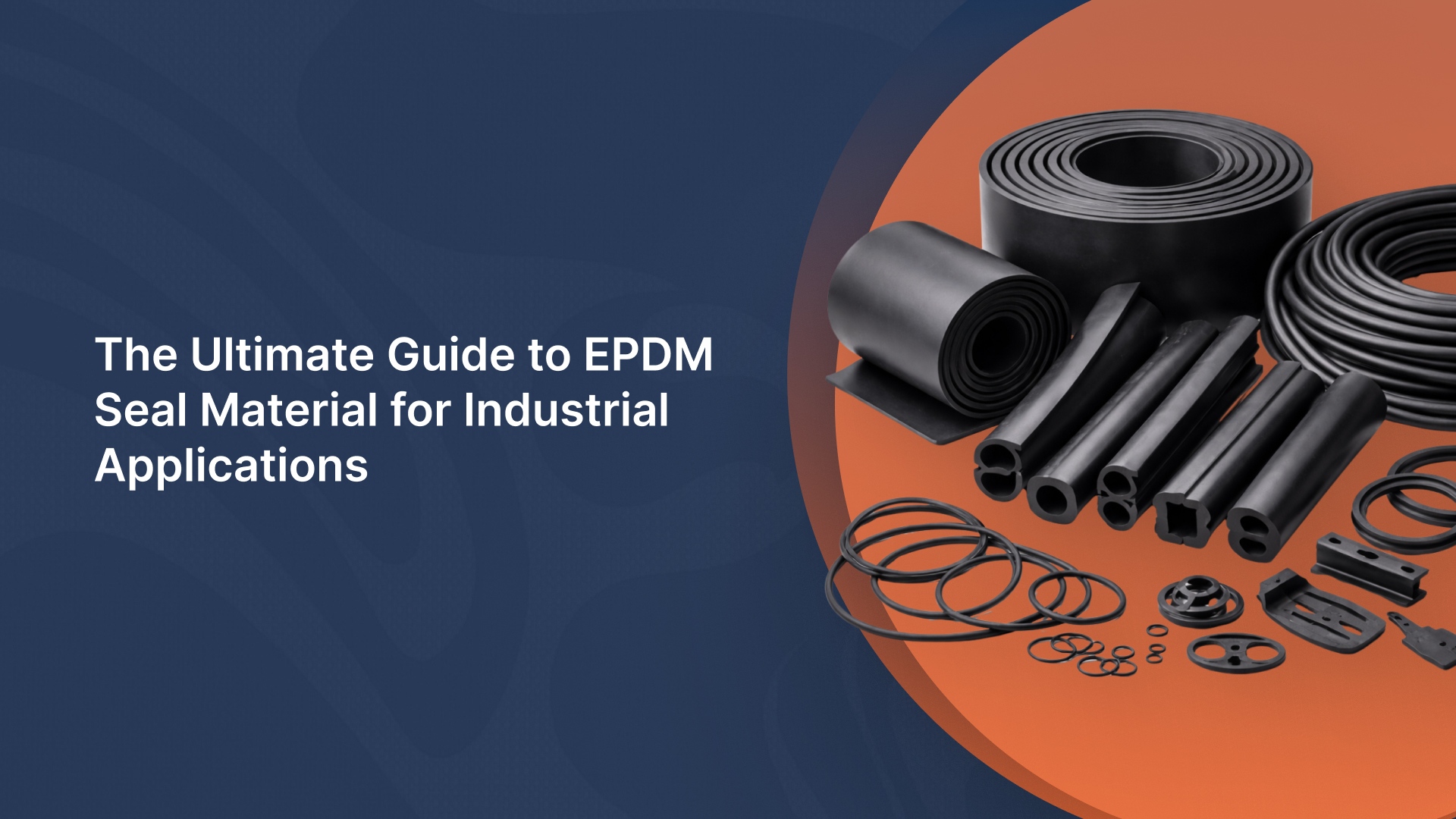
Elastomer selection sets the temperature and fluid limits. NBR handles oils and fuels at moderate heat. FKM handles higher temperatures and aggressive fluids. EPDM resists water and steam but fails in oils.
Lip geometry shapes the contact band on the shaft. A sharp, narrow lip reduces friction at high speed. A wider lip increases sealing force for higher pressure.
Spring or molded tension keeps the lip pressed against the shaft as the elastomer ages and relaxes.
The table below shows how these factors interact in common rotary lip seal applications.
Operating condition | What changes at the seal | What design feature controls it |
High shaft speed | Heat and wear increase | Narrow lip and proper material |
High pressure | Fluid pushes past lip | Lip profile and spring force |
Aggressive fluid | Elastomer swells or hardens | Compound selection |
When you match these three elements to your operating conditions, the seal maintains contact force, controls leakage, and stays stable across long service cycles.
Rotary Shaft Seals for Oscillating Equipment and Bi Directional Motion
Not every shaft spins in one direction at steady speed. Many systems rock back and forth or reverse direction under load. That motion changes how the lip slides across the shaft and it creates stress that standard rotary seals are not built to handle.
Oscillation creates three failure modes that you see in the field.
These motion patterns damage seals in predictable ways
Twist builds up in the lip when rotation keeps reversing. The elastomer winds up instead of sliding.
Lip roll occurs when the sealing edge flips or folds during direction change.
Uneven wear forms because the shaft surface contacts the same zone of the lip over and over.
To control these problems, you rely on lip designs and materials that stay stable during motion reversal.
Features used in oscillating rotary lip seal applications
Low friction elastomers such as FKM or PTFE filled blends that resist stick slip
Special lip profiles that reduce twisting forces
Secondary lips or anti rotation features that keep the seal seated
You see these designs in valve actuators, steering systems, robotic joints, and pump drives where shafts never spin in one direction for long. In those systems, a standard radial seal fails quickly while an oscillation rated design keeps contact force and wear under control.
Why Rotary Lip Seal Applications Outperform Other Rotary Seal Types
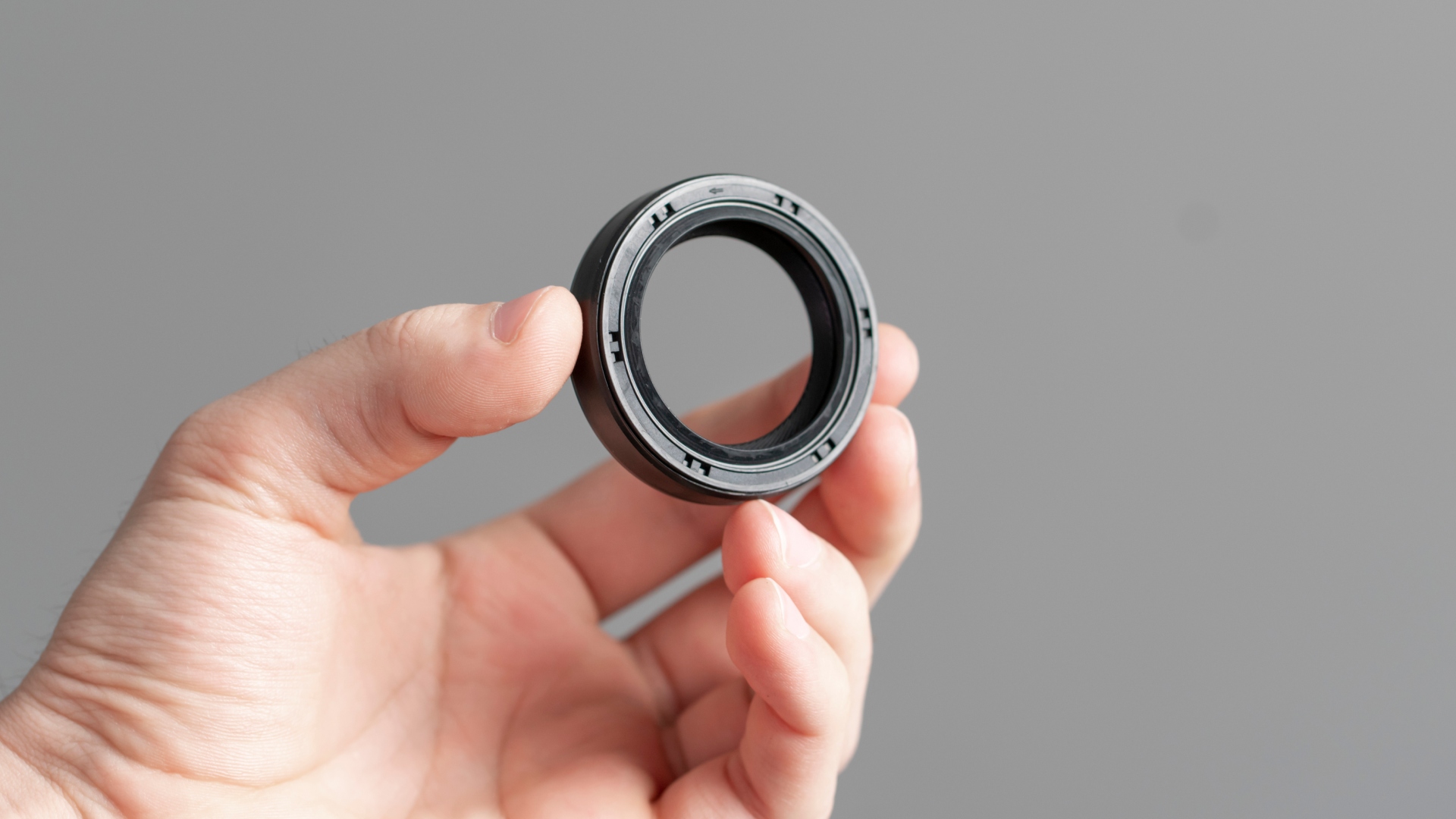
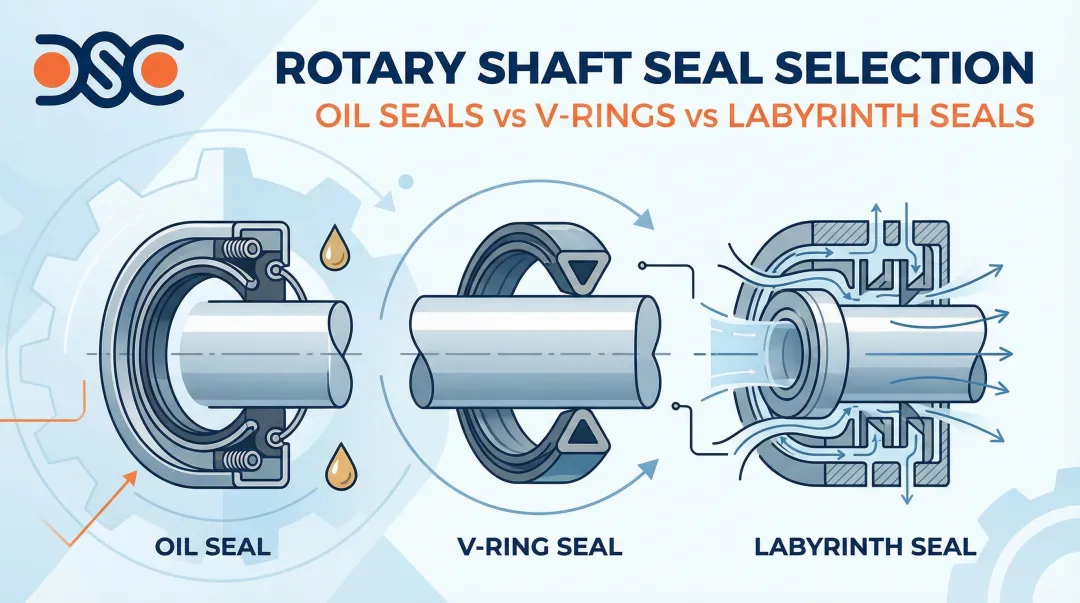
You can seal a rotating shaft with many technologies, but each brings tradeoffs that show up in cost, leakage, and maintenance. Mechanical seals offer tight leakage control but need precision alignment and high installation cost. Packing seals are cheap but leak and wear quickly. Labyrinth seals reduce friction but do not retain fluid.
A rotary lip seal gives you a better balance for most machines.
This comparison shows where lip seals fit
Seal type | Leakage control | Installation | Service life | Cost |
Mechanical seal | Very high | Complex | Long | High |
Packing | Low | Simple | Short | Low |
Labyrinth | None for fluids | Moderate | Long | Medium |
Rotary lip seal | High | Simple | Long | Low to medium |
You use rotary lip seal applications because you get tight dynamic sealing, low friction, and simple replacement in one part. For most pumps, gearboxes, motors, and drives, that balance keeps downtime low and operating cost predictable. Only extreme pressure or near zero leakage pushes you toward mechanical seals.
How Engineers Match Rotary Lip Seal Application to Material and Design
A seal fails when the material or geometry does not match the conditions you run. Heat hardens elastomers. Fluids cause swelling. Shaft speed raises wear. Pressure pushes fluid through any weak contact point. If one factor is wrong, the seal stops doing its job.
To select the correct rotary lip seal, you evaluate four operating inputs.
These inputs drive every seal choice
Temperature sets the elastomer limit
Pressure determines lip profile and spring force
Shaft speed controls friction and heat
Fluid type controls chemical compatibility
Common failure patterns come directly from mismatch.
Material | Works well in | Fails in |
NBR | Oils, fuels | High heat, ozone |
FKM | Heat, chemicals | Steam, hot water |
EPDM | Water, steam | Oils and fuels |
Shaft condition matters as much as the rubber. A rough or misaligned shaft cuts the lip and breaks the oil film that reduces wear. When you control surface finish, concentricity, and material choice, the seal holds contact force, limits leakage, and delivers full service life in your application.
How Detroit Sealing Components Supports Rotary Lip Seal Applications
You do not buy rotary lip seals just to fill a line item. You buy them to protect uptime and control leakage in rotating equipment. Detroit Sealing Components supports rotary lip seal applications by linking seal design, elastomer selection, and supply so your shafts stay sealed under heat, pressure, and contamination.
When a seal failure stops a pump, motor, or gearbox, part numbers alone do not fix the issue. Detroit Sealing Components provides stocked rotary shaft seals and engineered elastomer options that match how your equipment actually runs.
Stocked rotary shaft sealing products
Radial shaft lip seals for pumps, gearboxes, motors, and drivetrains
V seals for exposed shafts and contamination heavy environments
O-rings and X-rings used in rotary glands and secondary shaft sealing
Back-Up Rings and T-Seals to control extrusion and pressure in demanding rotary systems
Engineered elastomer support for rotating equipment
Hammer Union Seals, FS-Seals, S-Seals, and Packer Elements for oil and gas rotating and oscillating shafts
Hydraulic Seals and Pneumatic Seals for pump drives, valve shafts, and actuator systems
Sanitary & Drinking Water Seals, Medical Seals, and LSR Products for clean and regulated rotary equipment
Material testing, compound development, and controlled molding environments tie directly to the reliability of your rotary lip seal applications.
Explore our product catalog to find shaft seals, V seals, and engineered rubber solutions that fit your equipment.
Conclusion
Rotary lip seals sit where motion, fluid, and contamination meet, which makes them a reliability control point, not a minor part. When the right seal is in place, lubrication stays clean and equipment runs as designed. When the wrong one is used, small leaks turn into heat, wear, and shutdowns. Correct rotary lip seal applications across motors, pumps, and gearboxes reduce downtime and compliance risk by matching seal design and elastomer to speed, temperature, pressure, and fluid.
Detroit Sealing Components gives you more than shaft seals. You get stocked products, engineered elastomer options, and controlled manufacturing that support oil and gas, hydraulics, food, medical, and industrial equipment.
Are recurring seal failures or long lead times putting your equipment at risk? Contact Detroit Sealing Components today to review your rotary lip seal applications and get the right solution in place before the next shutdown.
FAQs
Q: How do you handle shaft runout in demanding rotary lip seal applications?
A: You account for runout by selecting seals with wider contact bands and flexible lips that tolerate shaft movement. You also correct misalignment during installation to prevent edge loading and early wear.
Q: Can rotary shaft lip type seals work in equipment that runs dry during startup?
A: You need materials that resist dry friction without tearing or glazing. Some elastomers and coated lips survive short dry cycles before lubrication fully develops.
Q: What makes rotary shaft seals for oscillating equipment fail faster than standard rotary designs?
A: Direction changes concentrate stress on one section of the lip instead of spreading it evenly. That localized loading leads to twist, uneven wear, and loss of contact force.
Q: How do you choose a rotary lip seal application for abrasive process environments?
A: You use lips designed to exclude fine particles and materials that resist surface scoring. You also protect the sealing edge with auxiliary barriers when debris is present.
Q: Do shaft surface finishes affect where rotary lip seals are used?
A: Yes, a rough shaft surface cuts the lip and disrupts the lubrication film. A controlled finish lets the seal glide and maintain consistent contact.
Q: Can rotary lip seal applications handle sudden pressure spikes?
A: You need seals with reinforced lips and supporting elements that resist extrusion. Those features keep the sealing edge stable when pressure surges occur.