A leaking shaft seal can start as a minor issue and end in damaged components, contaminated systems, or unexpected shutdowns. In many industrial assemblies, maintaining separation between fluids and external elements depends on a simple but precisely designed sealing interface.
Lip seals are commonly specified in such applications where motion, tolerances, and service conditions demand consistent sealing performance over time. This guide outlines the different types of lip seals, their benefits, and where they are applied to support informed specification and design decisions.
In Summary
Lip seals are sealing components that retain fluids and prevent contamination in applications involving rotary or reciprocating motion.
Different lip seal designs and materials are selected based on factors such as speed, temperature, pressure, and media compatibility.
Proper specification plays a major role in seal performance, service life, and equipment reliability.
Lip seals differ from other sealing solutions in their suitability for moving interfaces and moderate operating conditions.
Application-specific guidance can help ensure the right lip seal is selected for long-term, consistent performance.
What are Lip Seals?
A lip seal is a type of dynamic seal designed to control the passage of fluids or exclude contaminants in applications involving relative motion between components. It is typically installed around a shaft or within a housing and used where one surface moves against another during operation.
Unlike static seals, which remain stationary once installed, lip seals are intended for systems with rotary or reciprocating motion. They are commonly specified where controlled sealing is required without complex assembly or excessive space requirements.
How Lip Seals Work
Lip seals function by maintaining controlled contact between the sealing lip and a moving surface, typically a shaft. The seal is installed with a slight interference fit, creating the initial contact pressure required to restrict fluid flow.
In many designs, a garter spring is used to apply a consistent radial force, helping the lip maintain contact as wear occurs or tolerances change over time.
During operation, shaft rotation or reciprocating motion draws a thin film of lubricant beneath the sealing lip. This film reduces friction and wear while supporting stable sealing performance. Proper lubrication is essential, as dry running can lead to rapid degradation.
Sealing performance is influenced by operating conditions such as:
Surface speed, which affects heat generation and wear
Temperature, which impacts material stability and flexibility
Pressure, which can alter lip contact behavior and sealing force
These factors must be considered to ensure reliable performance over the seal’s service life.
Lip Seals vs Other Sealing Solutions
Different sealing solutions are designed for different types of motion, pressure, and installation conditions.
Criteria | Lip Seals | O-Rings | Mechanical Seals | Gaskets |
Type of motion | Rotary or reciprocating | Static or limited motion | Rotary | Static |
Primary use | Shaft and housing sealing | Groove-based sealing | High-duty shaft sealing | Flange and surface sealing |
Pressure capability | Low to moderate | Low to moderate | Moderate to high | Low |
Speed capability | Moderate | Low | High | Not applicable |
Lubrication required | Typically required | Not required | Required | Not required |
Design complexity | Simple | Very simple | Complex | Simple |
Space requirement | Compact | Compact | Larger assembly | Depends on the flange |
Cost range | Low to moderate | Low | Higher | Low |
Maintenance needs | Low with proper conditions | Very low | Higher | Low |
When Lip Seals Are the Better Choice
Lip seals are often preferred when:
Sealing around rotating or reciprocating shafts
Space is limited
Pressures are moderate
Cost-effective dynamic sealing is required
When Alternatives May Be More Suitable
Other sealing solutions may be more appropriate in applications involving:
High system pressures, where mechanical seals, hydraulic seals, or T-seals are better suited to handle increased load and pressure requirements.
Extremely high shaft speeds, where mechanical seals or PTFE-based dynamic seals may provide more stable performance.
No relative motion between sealing surfaces, where O-rings, gaskets, or gaskets & packings are commonly used for static sealing.
Large flange connections requiring static sealing, where gaskets & packings are designed to seal fixed mating surfaces effectively.
Selecting the correct sealing solution depends on motion, pressure, and environmental demands rather than a single performance factor.
Types of Lip Seals
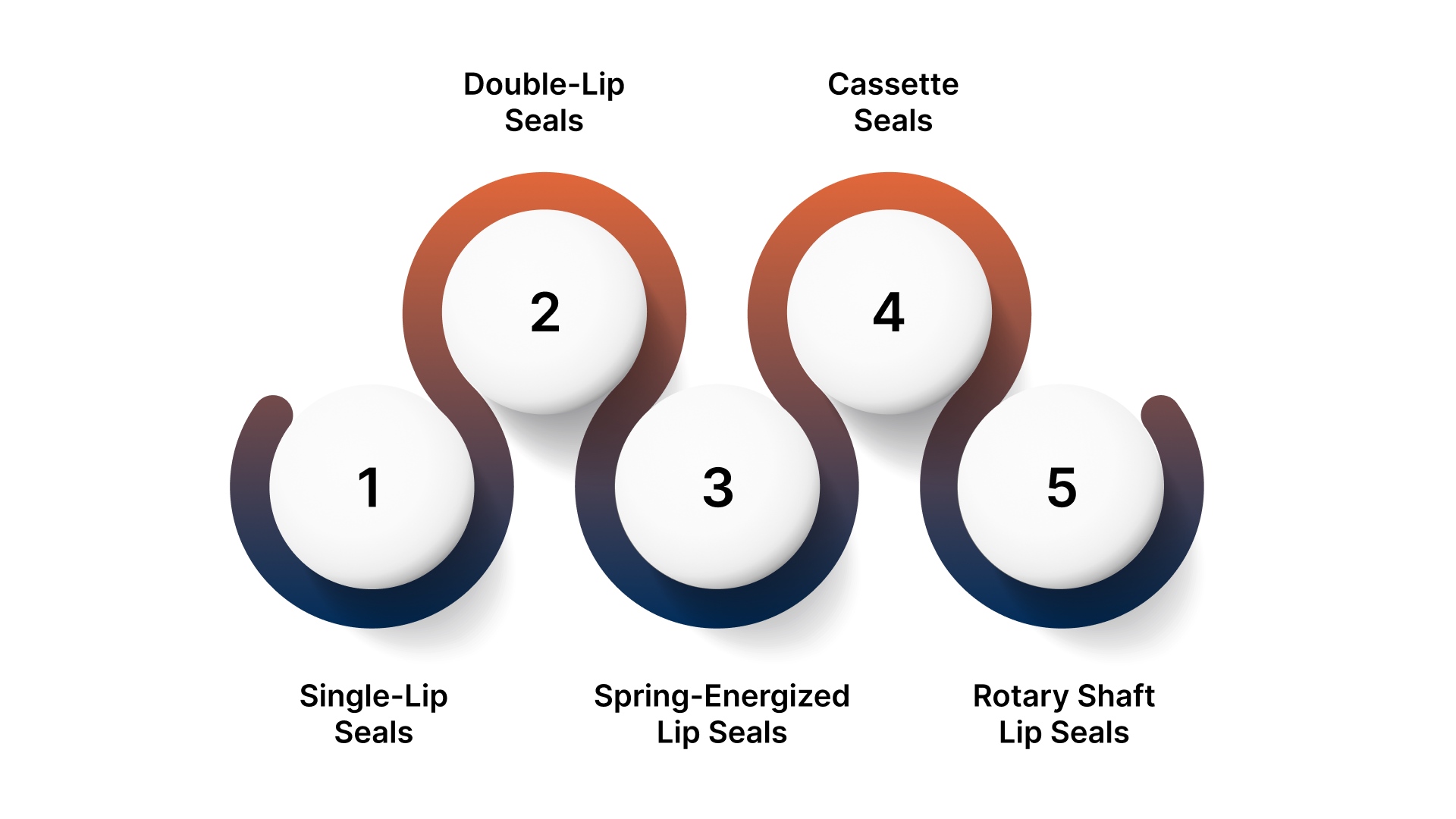
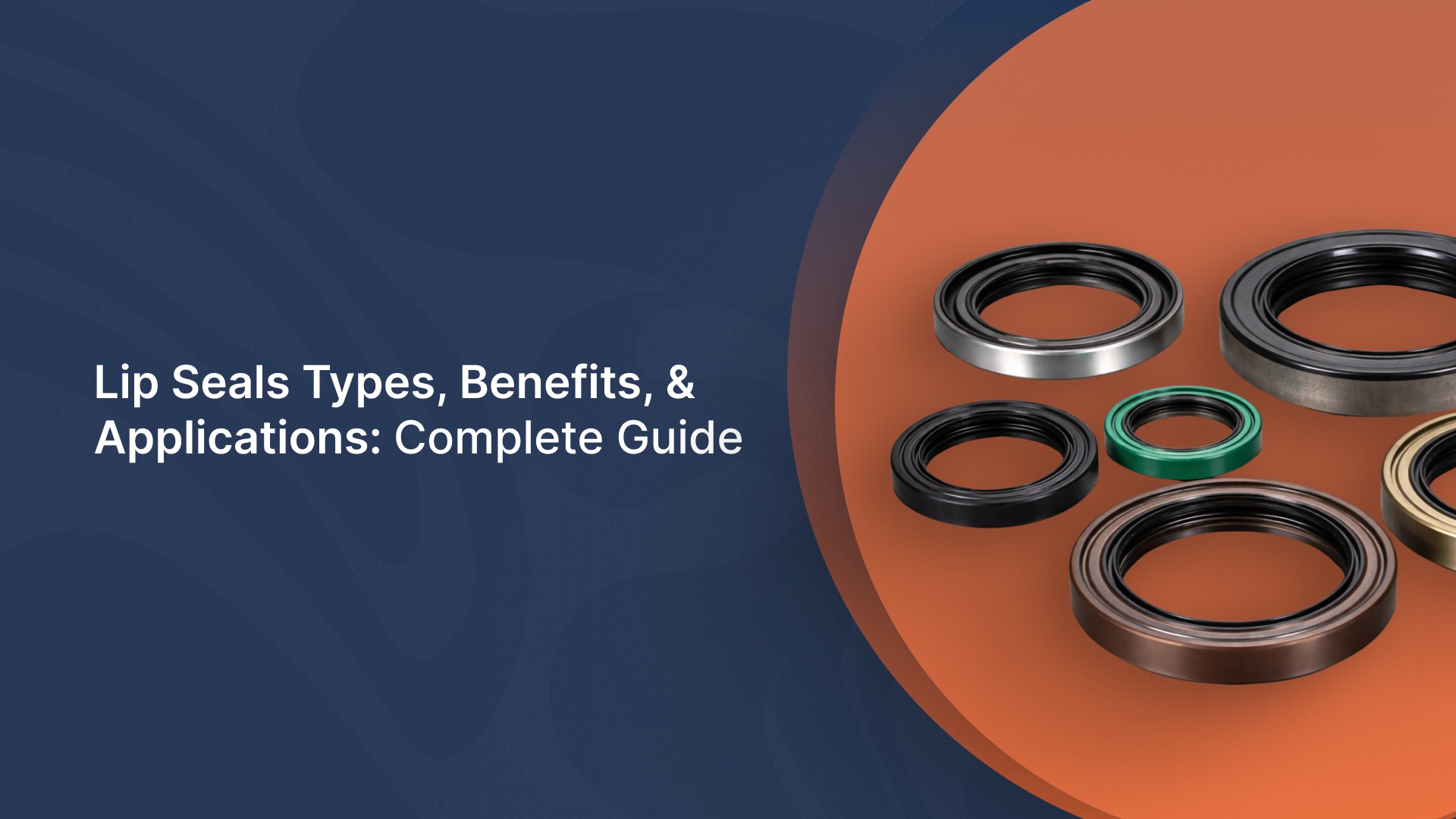
Lip seals are available in several configurations to suit different operating conditions, environmental exposure, and equipment requirements. The most common types are outlined below.
Single-Lip Seals
Single-lip seals feature one primary sealing edge that contacts the shaft. They are typically used to retain lubricants or fluids in applications where external contamination is limited. This design is commonly specified for enclosed systems with stable operating conditions and moderate shaft speeds.
Double-Lip Seals
Double-lip seals include an additional secondary lip, often facing outward, to provide extra protection against dirt, dust, or moisture. The primary lip retains the fluid, while the secondary lip helps reduce contaminant ingress. These seals are frequently used in applications exposed to external debris or variable environments.
Spring-Energized Lip Seals
Spring-energized lip seals incorporate a metal spring to apply a consistent radial force to the sealing lip. This design helps maintain contact pressure as the seal experiences wear or dimensional changes. It is commonly used in applications with fluctuating pressures, temperature changes, or extended service requirements.
Cassette Seals
Cassette seals are pre-assembled sealing units that combine multiple components into a single, integrated design. They are often used in demanding environments where contamination, misalignment, or heavy loads are present. The enclosed structure provides added protection and simplifies installation in certain applications.
Rotary Shaft Lip Seals
Rotary shaft lip seals are designed specifically for sealing around rotating shafts. They are widely used in motors, pumps, gearboxes, and other rotating equipment where consistent sealing performance is required over continuous operation. Their design accommodates shaft motion while maintaining a controlled sealing interface.
Common Materials Used in Lip Seal Design
The performance and service life of a lip seal are strongly influenced by the material used for the sealing element. Different elastomers and polymers are selected based on the operating environment and the media being sealed.
Common materials used in lip seals include:
Nitrile (NBR): Widely used for oil- and grease-based applications due to good abrasion resistance and compatibility with petroleum fluids.
Viton/FKM: Selected for higher temperature ranges and resistance to fuels, chemicals, and aggressive media.
EPDM: Common in applications involving water, steam, or certain chemicals, particularly where resistance to weathering and aging is required.
Silicone: Used where flexibility across a wide temperature range is needed, often in low-pressure or specialty applications.
PTFE: Chosen for its low friction, chemical resistance, and stability in demanding environments, especially where elastomers may not perform reliably.
Material selection typically considers factors such as:
Operating temperature range
Exposure to fluids or chemicals
Required wear resistance and expected service life
Manufacturers often work with sealing specialists such as Detroit Sealing Components to evaluate material options and develop engineered compounds suited to specific application requirements. This approach is especially useful when standard materials do not provide sufficient performance.
Applications of Lip Seals
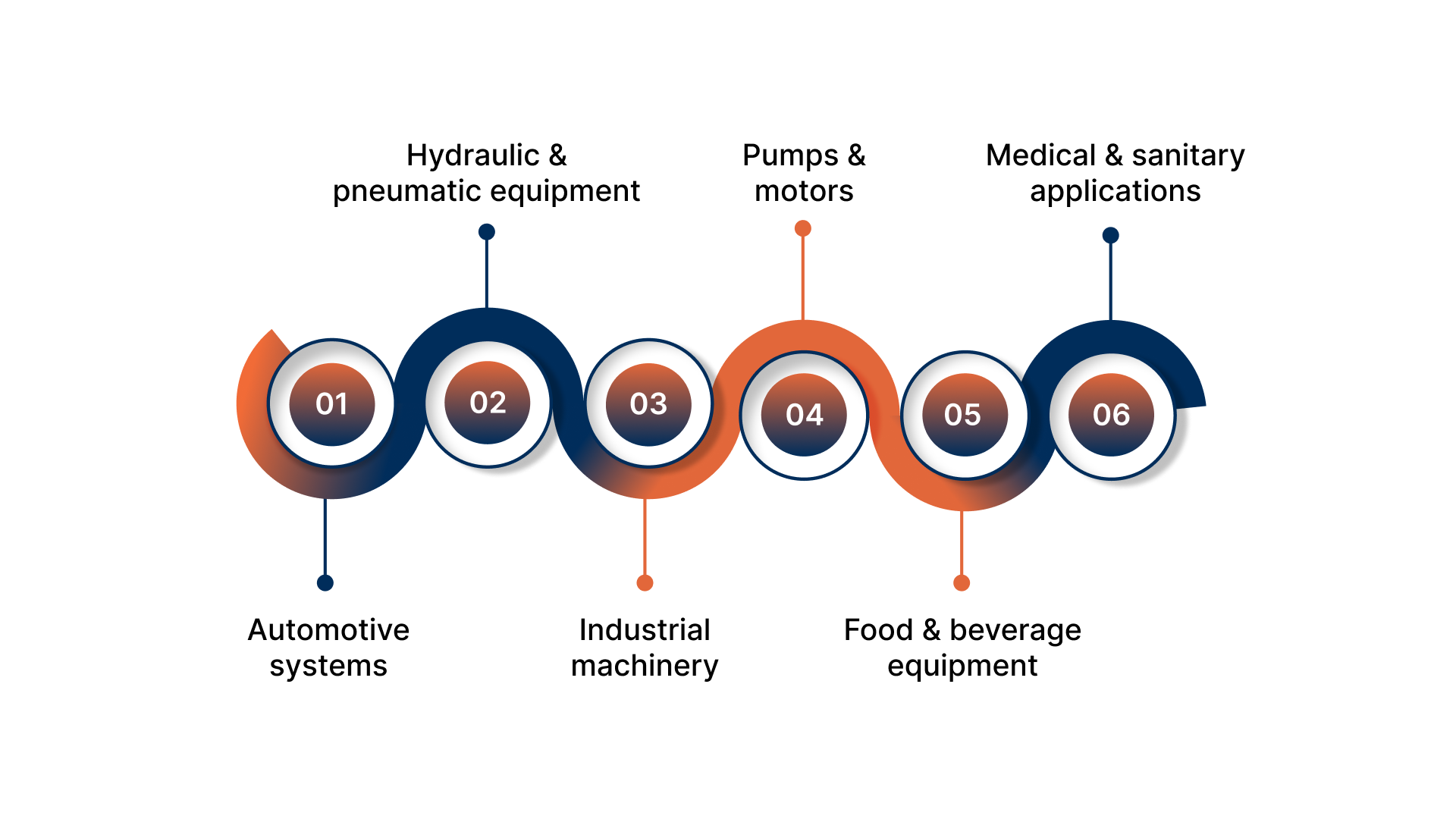
Lip seals are used across a wide range of industries where controlled sealing is required in the presence of motion. Their adaptability to different environments and operating conditions makes them a common choice in many equipment designs.
Automotive systems: Used in engines, transmissions, wheel hubs, and drivetrains to retain lubricants and limit the entry of dirt and moisture.
Hydraulic and pneumatic equipment: Applied in cylinders, actuators, and valves where sealing around moving components is required to maintain system integrity.
Industrial machinery: Found in conveyors, gearboxes, and production equipment to support consistent operation and reduce wear.
Pumps and motors: Used to seal rotating shafts and prevent fluid leakage during continuous operation.
Food and beverage equipment: Specified in processing and packaging machinery, often requiring materials that meet hygiene and cleanliness standards.
Medical and sanitary applications: Used in equipment where material compatibility, cleanliness, and resistance to cleaning agents are important considerations.
In regulated environments, lip seal materials and designs are often selected to align with industry standards related to cleanliness, safety, and media compatibility.
Benefits of Lip Seals
Lip seals are widely used in industrial equipment due to their ability to provide dependable sealing in applications involving motion. Key benefits include:
Effective leak prevention in rotary and reciprocating applications
Compact design that fits easily into space-limited housings
Cost-effective sealing solution compared to more complex seal assemblies
Long service life when correctly specified for speed, temperature, and media
Adaptability across industries, making them suitable for a broad range of equipment and operating environments
These advantages make lip seals a practical choice for both standard and specialized sealing requirements.
Common Lip Seal Failure Modes & Maintenance Tips
Lip seal performance is closely tied to proper design, installation, and operating conditions. When these factors are not aligned, premature failure can occur.
Common causes of lip seal failure include:
Improper material selection, leading to swelling, hardening, or loss of flexibility when exposed to certain fluids or temperatures
Shaft misalignment or surface irregularities can cause uneven wear on the sealing lip
Excessive shaft speed or elevated temperatures, increasing friction, and accelerating material degradation
Contamination, such as dirt or debris, that damages the sealing edge and reduces effectiveness
To help extend seal life, several maintenance and design considerations are important:
Verify shaft finish and alignment during installation
Maintain adequate lubrication to reduce friction and wear
Match seal material to the actual operating environment
Protect the sealing area from external contaminants where possible
Many of these failure modes can be avoided during the specification stage. Selecting a lip seal that aligns with actual operating conditions is a key step in achieving reliable, long-term performance.
How to Choose the Right Lip Seal
A seal that performs well in one application may fail prematurely in another if key variables are overlooked. Important selection factors include:
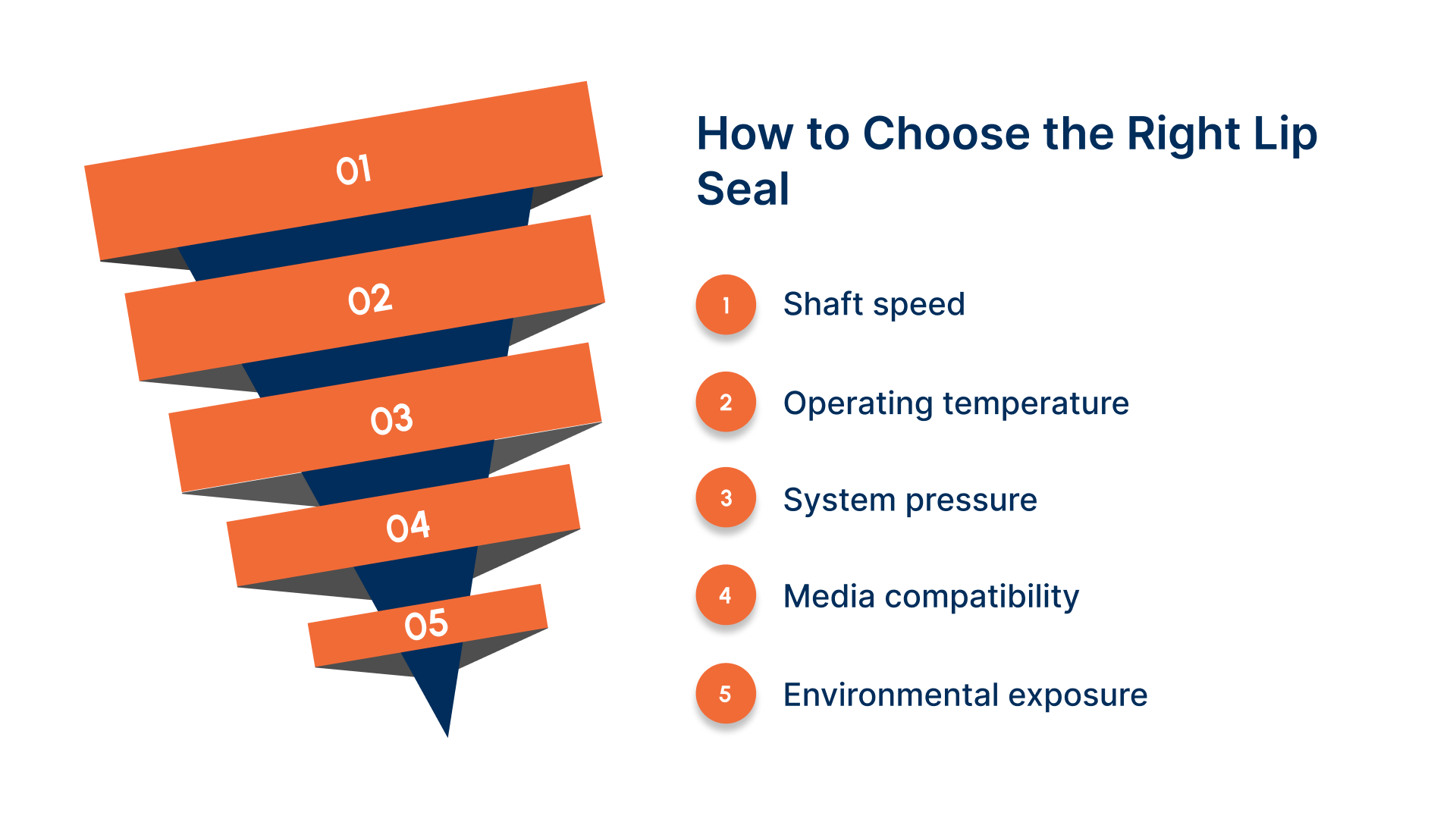
Shaft speed, which influences heat generation and wear
Operating temperature affects material flexibility and durability
System pressure, which can alter sealing behavior
Media compatibility, ensuring the seal material resists the fluids being sealed
Environmental exposure, such as dirt, moisture, or cleaning agents
Because these factors often interact, working with an experienced sealing partner such as Detroit Sealing Components can help ensure the selected lip seal meets both performance and longevity requirements. Their application engineering support and access to both standard and custom lip seal solutions allow design teams to address specific operating challenges with greater confidence.
Conclusion
Lip seals are often treated as standard components, yet their impact on equipment reliability is closely tied to how well they are specified for the application. Factors such as motion type, material compatibility, and environmental exposure can influence performance long after installation. Addressing these considerations early in the design or maintenance process helps reduce avoidable wear and downtime.
For applications that demand consistent sealing performance, Detroit Sealing Components supports engineers and manufacturers with application-focused guidance and access to both standard and custom lip seal solutions.
To discuss specific requirements or evaluate the right lip seal for your system, contact our technical support team for recommendations.
FAQs
1. How do you measure or size a lip seal correctly?
Lip seal sizing is based on shaft diameter, housing bore diameter, and seal width. Accurate measurement is essential, as improper sizing can lead to leakage or premature wear. Manufacturer sizing charts are typically used to confirm fit.
2. Can lip seals be used in dry-running applications?
Most lip seals are designed to operate with some level of lubrication. Dry running can increase friction and heat, leading to rapid wear. In applications where lubrication is limited, alternative materials or seal designs may be required.
3. What shaft surface finish is recommended for lip seals?
Shaft surface finish plays a major role in seal performance. A finish that is too rough can damage the sealing lip, while one that is too smooth may not retain lubrication. Recommended surface finish values vary by material and application.
4. Are lip seals reusable after removal?
Lip seals are generally not intended for reuse. Removal can distort the sealing lip or reduce its ability to maintain contact pressure, potentially compromising performance if reinstalled.
5. How do storage conditions affect lip seal performance?
Improper storage can cause material aging, deformation, or loss of elasticity. Lip seals should be stored in clean, dry conditions away from direct light, heat sources, and ozone-generating equipment to maintain material integrity.