Dynamic sealing fails for predictable reasons: friction heat, pressure spikes + clearance gaps, misalignment/runout, and contamination.
This guide shows how to choose the most reliable seal setup for reciprocating and rotary motion: when an O-ring works, and if not, when an X-ring or back-up ring is the fix, and when a hydraulic or rotary seal is the right move.
Key takeaways
Start with motion: reciprocating and rotary fail differently, so “best material” isn’t a shortcut.
Spikes matter more than steady pressure: most blowouts come from clearance + pressure spikes, not average PSI.
Dynamic sealing is friction management: lubrication and surface condition often decide life before the compound does.
Groove control is non-negotiable: squeeze and clearance determine whether you seal or extrude.
If failures repeat, change the setup, not just the rubber: stop compound roulette and address the failure driver.
7 factors that make a dynamic seal setup reliable
Dynamic sealing reliability is predictable when you check the variables that actually control wear, heat, and extrusion. Use these seven factors as your baseline before choosing a seal style or compound:
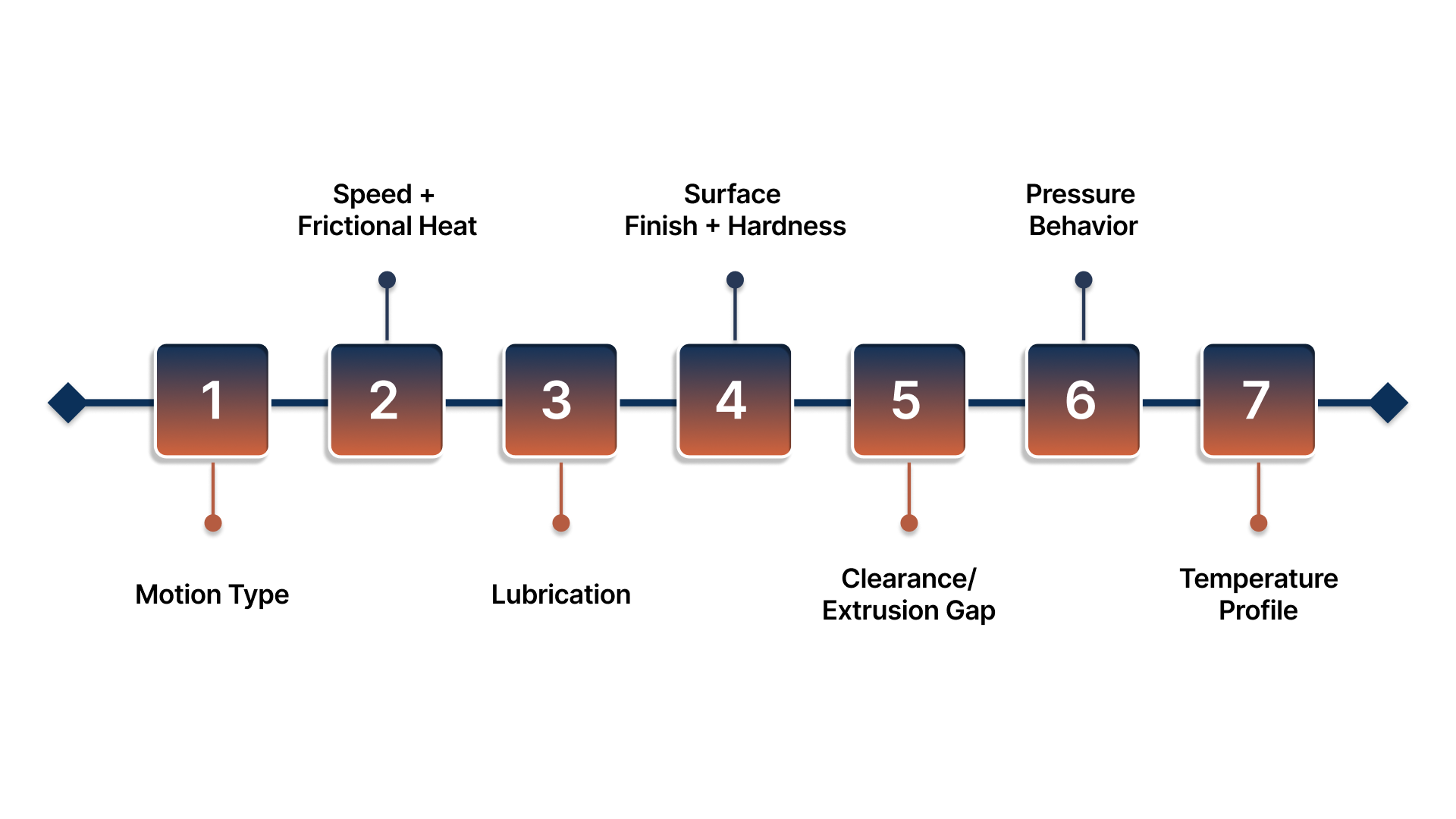
Motion type: reciprocating vs rotary changes the dominant failure mode (twist/wear vs heat/runout).
Speed + frictional heat: faster motion and higher contact load increase heat and wear, even if the bulk fluid temperature looks “safe.”
Lubrication (and compatibility): wrong/no lube accelerates wear and can trigger stick-slip, tearing, or spiral damage.
Surface finish + hardness: rough surfaces cut seals; overly smooth surfaces can worsen stick-slip in some cases.
Clearance/extrusion gap: pressure + gap = extrusion risk; this drives nibbling/blowouts in “otherwise correct” O-rings.
Pressure behavior: spikes and pulsation break seals that survive steady-state pressure.
Temperature profile: continuous vs peaks vs cycling determines aging and compression set, not just a single “max temp” number.
Once you know the failure driver, the choice becomes a table lookup.
Dynamic sealing decision table: most reliable setup by situation
Situation | Best choice | Why it’s reliable | What to verify |
|---|---|---|---|
Reciprocating, light duty, low speed (short stroke, modest pressure) | O-ring (with the right compound + lube) | Works when the friction and extrusion risk are low, and the gland controls the squeeze | Correct gland squeeze/clearance, compatible lubricant, surface finish, no sharp edges |
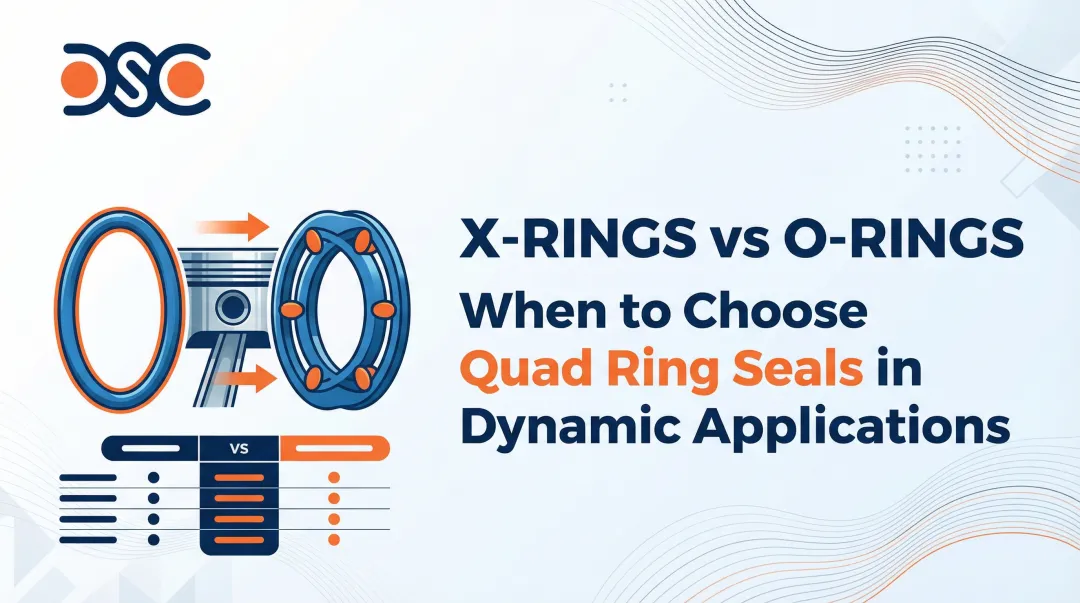
Reciprocating and you’re seeing twist/spiral damage or uneven wear | X-ring (quad ring) | A more stable cross-section reduces rolling/twist in motion vs a standard O-ring | Groove compatibility, lubrication plan, surface finish, side-load/misalignment |
High pressure and/or spikes with any clearance gap risk | O-ring + back-up ring | Back-up ring blocks extrusion into the clearance gap, the usual cause of “mystery blowouts.” | Extrusion gap at pressure, pressure direction (back-up ring placement), spike magnitude, gland design |
High-cycle hydraulic cylinder duty (tight leakage control, contamination, side load) | Hydraulic seal set (rod/piston seals + wipers as needed) | Built for wear + contamination + cycle life; O-rings aren’t usually the primary dynamic seal here | Seal/gland design, rod/piston surface finish, contamination level, lubrication, alignment/runout |
Rotary shaft sealing (continuous rotation, higher surface speed) | Rotary shaft seal (often with an excluder) | Rotary duty is heat/runout driven; purpose-built rotary seals handle it better than O-rings | Shaft finish, runout/misalignment, speed, lubrication, temperature at the lip/contact |
Contamination present (dust, grit, slurry, washdown splash) | Wiper/V-seal + primary seal | Excluders prevent abrasive ingress, the #1 driver of accelerated wear and leakage | Entry path, placement, shaft/rod finish, exposure type (abrasive vs washdown), seal stack order |
Elevated temperature and dynamic wear (seal life is short, even when the compound is “rated”) | Seal style upgrade + friction control (X-ring or dedicated dynamic seal) | Dynamic reliability at heat is usually friction/heat management, not “harder rubber.” | Lubrication compatibility, surface finish, PV(pressure × velocity)/heat generation, compound set resistance, cooling/heat soak |
“We changed the O-ring/compound, and it still leaks.” | Re-check hardware + seal family (often a design/support issue) | Repeat failures usually mean that the squeeze, clearance, alignment, or pressure spikes are wrong, not the compound | Gland dimensions, extrusion gap under load, thermal growth, assembly damage points, pressure spike profile |
Before you pick from the table, lock these 5 inputs (they prevent wrong answers): motion type + speed/cycle rate, pressure + spikes, temperature profile (continuous vs peaks), full exposure list (media + additives + cleaners), and the seal size (ID + cross-section) plus gland details/drawing if available.
If it’s already failing, here are the 3 fastest tells
Spiral/twist marks (reciprocating seals) → The seal is rolling/twisting under friction.
First move: switch to an X-ring/quad-ring or reduce friction drivers (confirm lubrication, surface finish, and gland geometry).
Nibbling/extrusion (chewed edge, missing “bites”) → Pressure is forcing the seal into a clearance gap, often made worse by spikes.
First move: add a back-up ring (and verify clearance + spike behavior), or move to a pressure-rated seal set if duty is high.
Immediate leaks + small nicks/cuts → It’s usually installation damage, not “bad material.”
First move: add/verify lead-in chamfers, protect past threads/ports, and use a compatible assembly lubricant.
If the same damage keeps coming back after you apply the first fix, it’s usually a sign you’re forcing the wrong seal type for the duty cycle, so the next step is changing the seal setup, not the compound.
Dynamic sealing options DSC supports
Your decision table isn’t theoretical; the reliable outcome comes from choosing the seal family that matches the failure driver. DSC supports the common step-ups that map directly to the scenarios in the table:
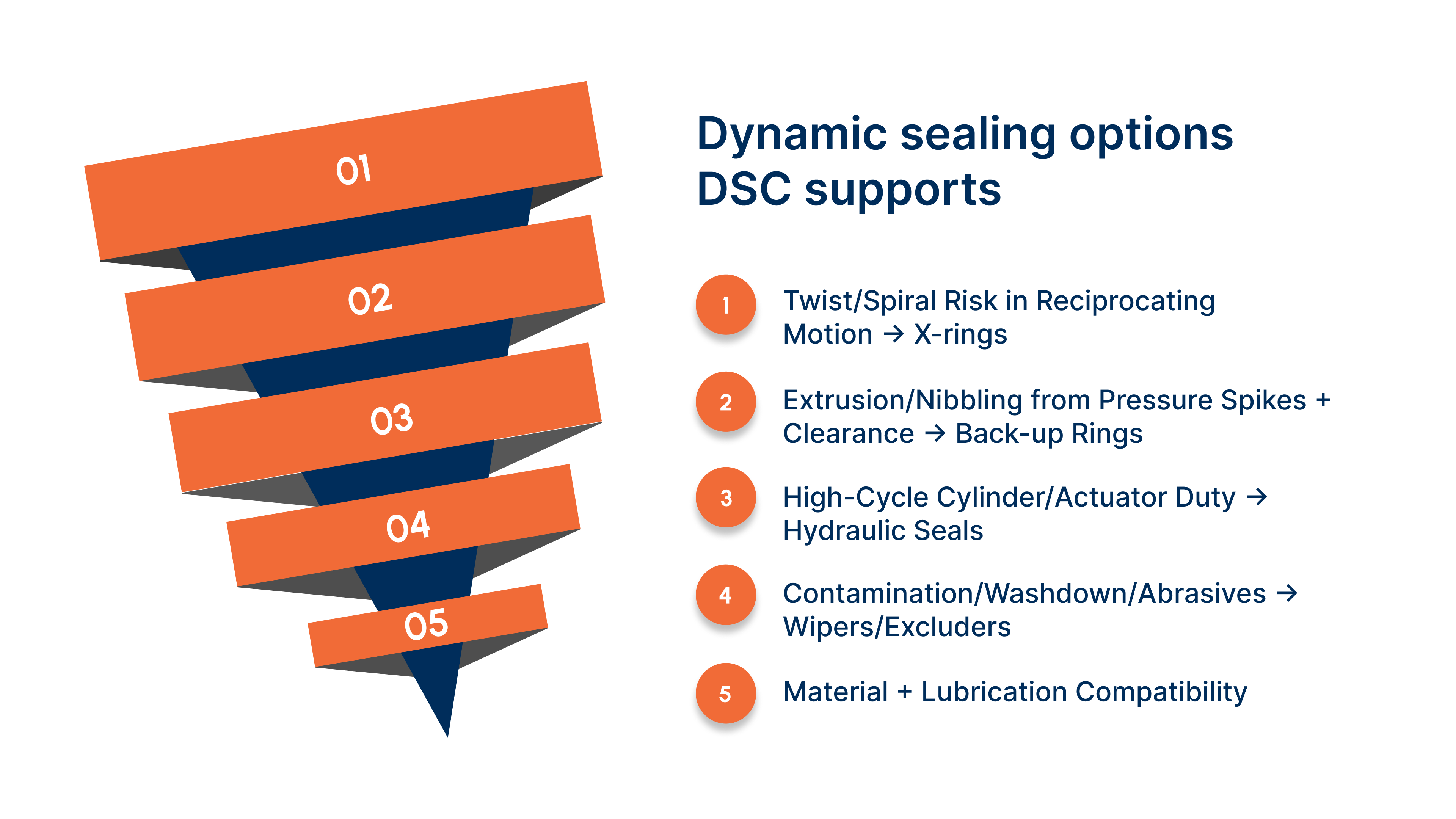
Twist/spiral risk in reciprocating motion → X-rings: DSC supplies X-rings as a stability upgrade when standard O-rings roll/twist under friction and start showing spiral damage.
Extrusion/nibbling from pressure spikes + clearance → back-up rings: DSC supplies back-up rings to pair with O-rings when the limiting factor is extrusion into a gap (especially under spikes).
High-cycle cylinder/actuator duty → hydraulic seals: DSC supplies hydraulic seal sets when wear + leakage control under motion is the real requirement (not another O-ring compound).
Contamination/washdown/abrasives → wipers/excluders: DSC supplies wipers/V-seals to keep debris out and protect the primary seal, often the difference between “works” and “keeps failing.”
Material + lubrication compatibility (so the setup survives): DSC can help match compound choice and lubrication compatibility to your media/cleaners, temperature profile, and dynamic friction needs.
Share your motion type, pressure/spikes, temperature profile, media/cleaners, and gland details. Detroit Sealing Components can help confirm the most reliable seal setup for your application.
Conclusion
Most ‘most reliable dynamic seal’ problems are solved by removing the failure driver and locking down the controls that prevent it.
If you address twist with a more stable seal style, block extrusion with proper support, manage friction/heat with the right surface and lubrication, and keep contamination out before it reaches the interface, dynamic sealing becomes predictable.
The win is a setup that matches the duty cycle and holds up under spikes and real-world variation, not a cycle of material swaps after every leak.
FAQs
What’s the most reliable O-ring for dynamic sealing?
There isn’t one. Reliability comes from matching seal style + compound + gland design + lubrication + extrusion support to your motion, pressure spikes, and temperature.
Are O-rings good for dynamic (moving) seals?
Sometimes mainly lighter-duty dynamic motion with the right groove, surface finish, and lubrication. Higher-duty motion often needs a dedicated dynamic seal.
When should I use an X-ring (quad-ring) instead of an O-ring?
When reciprocating motion shows twist/spiral marks, rolling, or uneven wear, X-rings are typically more stable in motion.
When do I need a back-up ring?
When pressure spikes + clearance gaps create extrusion/nibbling risk (chewed edges/bites missing), especially at higher pressure.
Why do dynamic O-rings fail even when the material is “rated”?
Because friction heat, poor lubrication, rough surfaces, spikes, or extrusion gaps can kill the seal before “the material rating is the limit."