Sealing devices play a quiet but critical role in how industrial systems operate. From keeping fluids contained to protecting equipment from contamination, the right seal can determine whether a machine runs reliably or fails prematurely.
As industrial applications grow more demanding, understanding how sealing devices work, what materials they are made from, and where each type is best used becomes essential for engineers and decision-makers.
This guide breaks down the fundamentals of sealing devices to help you make informed, application-specific choices that support performance, safety, and long-term reliability.
Quick Overview
Sealing devices are critical for system integrity, directly impacting safety, efficiency, and equipment longevity.
Selecting the right type, i.e., static vs dynamic, depends on motion, pressure, and application requirements.
Material choice (elastomers, PTFE, metals) determines performance under temperature, chemical, and environmental conditions.
Design considerations like groove geometry, compression, surface finish, and assembly practices ensure reliable sealing.
Custom solutions and expert guidance, such as from Detroit Sealing Components, are essential for specialized or high-demand industrial applications.
The Role of Sealing Devices in the Industrial Environment
Sealing devices are components designed to prevent the unwanted passage of fluids, gases, or contaminants within mechanical and fluid systems. By creating a controlled barrier between mating surfaces or moving parts, they allow industrial equipment to operate reliably under varying pressures, temperatures, and operating conditions.
In many applications, the overall system performance depends on how effectively a sealing device maintains containment. At a functional level, sealing devices play a critical role in day-to-day industrial operations:
Prevent leakage of liquids or gases that can compromise system performance
Protect internal components from contamination and environmental exposure
Maintain pressure and separation within static and dynamic assemblies
Impact of Sealing Devices on Safety, Efficiency, and Equipment Life
The value of sealing devices becomes clearer when their performance is evaluated over time. When seals are properly selected and installed, they help maintain safe operating conditions and reduce the likelihood of failures that can disrupt industrial systems.
Their impact is seen across several critical areas:
Improved safety through reduced risk of fluid leaks, pressure loss, and hazardous exposure
Greater operational efficiency as systems maintain stable pressure and consistent performance
Lower energy losses caused by leakage or inefficient containment
Over the long term, sealing devices also play an important role in preserving equipment health. Effective sealing limits unnecessary stress on components and supports predictable maintenance cycles.
Reduced wear on mating surfaces and internal parts
Slower material degradation from environmental or chemical exposure
Extended service life and fewer unplanned shutdowns
With their critical role in system reliability, it’s important to see where sealing devices are applied across various industrial environments.
Common Industrial Applications of Sealing Devices
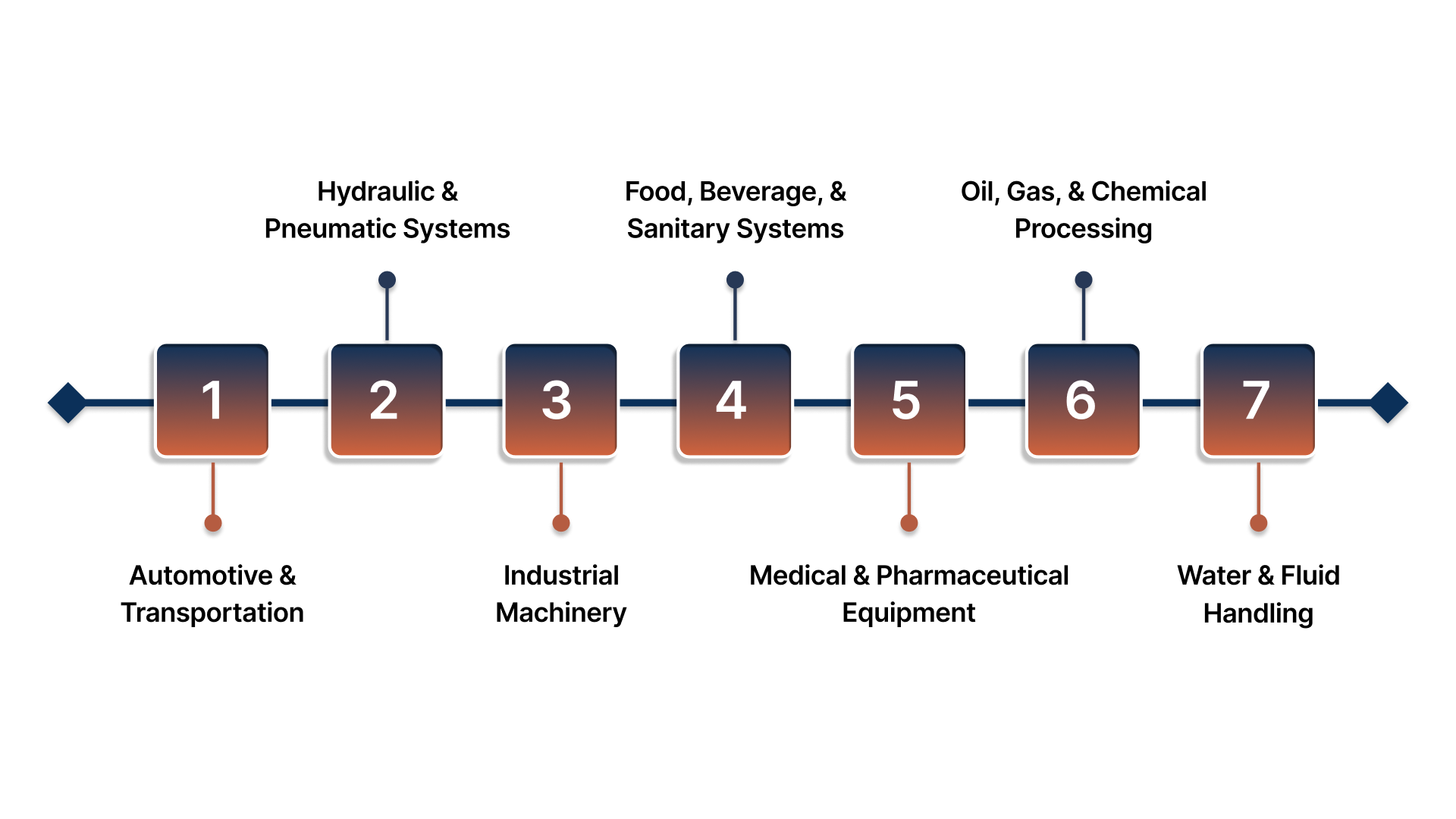
Sealing devices are used across many industries where controlling fluids, gases, and contaminants is essential for reliable operation. Application requirements vary widely, which makes proper seal selection critical to system performance.
Automotive and Transportation
Sealing devices support engines, transmissions, braking systems, and fluid lines. They help maintain pressure, reduce leakage, and protect components from heat, vibration, and environmental exposure.
Hydraulic and Pneumatic Systems
These systems depend on effective sealing to manage pressurized fluids and air. Seals help maintain consistent force transmission, support smooth motion, and limit energy losses during operation.
Industrial Machinery
Sealing devices protect bearings, shafts, and housings by containing lubricants and preventing dust, debris, and moisture from entering critical components.
Food, Beverage, and Sanitary Systems
Seals used in these environments support hygiene and compliance requirements. They must prevent contamination while withstanding frequent washdowns and exposure to cleaning agents.
Medical and Pharmaceutical Equipment
Sealing devices in medical applications support precision and cleanliness. Materials are selected to perform reliably under sterilization processes and controlled operating conditions.
Oil, Gas, and Chemical Processing
Seals in these industries operate under extreme pressure, temperature, and chemical exposure. Durability and material compatibility are essential to maintain containment and system safety.
Water and Fluid Handling
Sealing devices are used in pumps, valves, and piping systems to maintain flow efficiency and reduce leakage that can lead to performance loss or infrastructure damage.
If your application involves complex operating conditions or industry-specific requirements, Detroit Sealing Components works with engineers to evaluate sealing needs and recommend reliable, application-appropriate solutions.
Core Functions & Performance Requirements of Industrial Seals
Industrial seals must perform consistently under specific operating conditions. Their effectiveness depends on how well they meet critical performance requirements under pressure, temperature, environmental, and motion conditions.
Pressure Resistance: Pressure resistance defines a seal’s ability to maintain containment without deformation or extrusion. Seals in high-pressure systems must remain stable while sustaining continuous internal forces.
Temperature Tolerance: Temperature tolerance determines how a seal responds to heat or cold during operation. Operating beyond a material’s temperature limits can affect elasticity and lead to loss of sealing effectiveness.
Chemical Compatibility: Ensures sealing materials remain stable when exposed to oils, fuels, solvents, or process fluids. Incompatible materials may degrade, swell, or crack over time.
Friction and Wear Resistance: Friction and wear resistance are critical in dynamic applications where movement occurs between components. Poor resistance can increase wear rates and reduce overall system efficiency.
Service Life and Reliability: Service life reflects how long a seal can perform reliably before replacement is required. Durable sealing solutions help reduce maintenance frequency and support consistent system performance.
Once the essential functions and performance criteria are understood, selecting the right type of sealing device becomes the next critical step.
Major Types of Sealing Devices Used in Industry
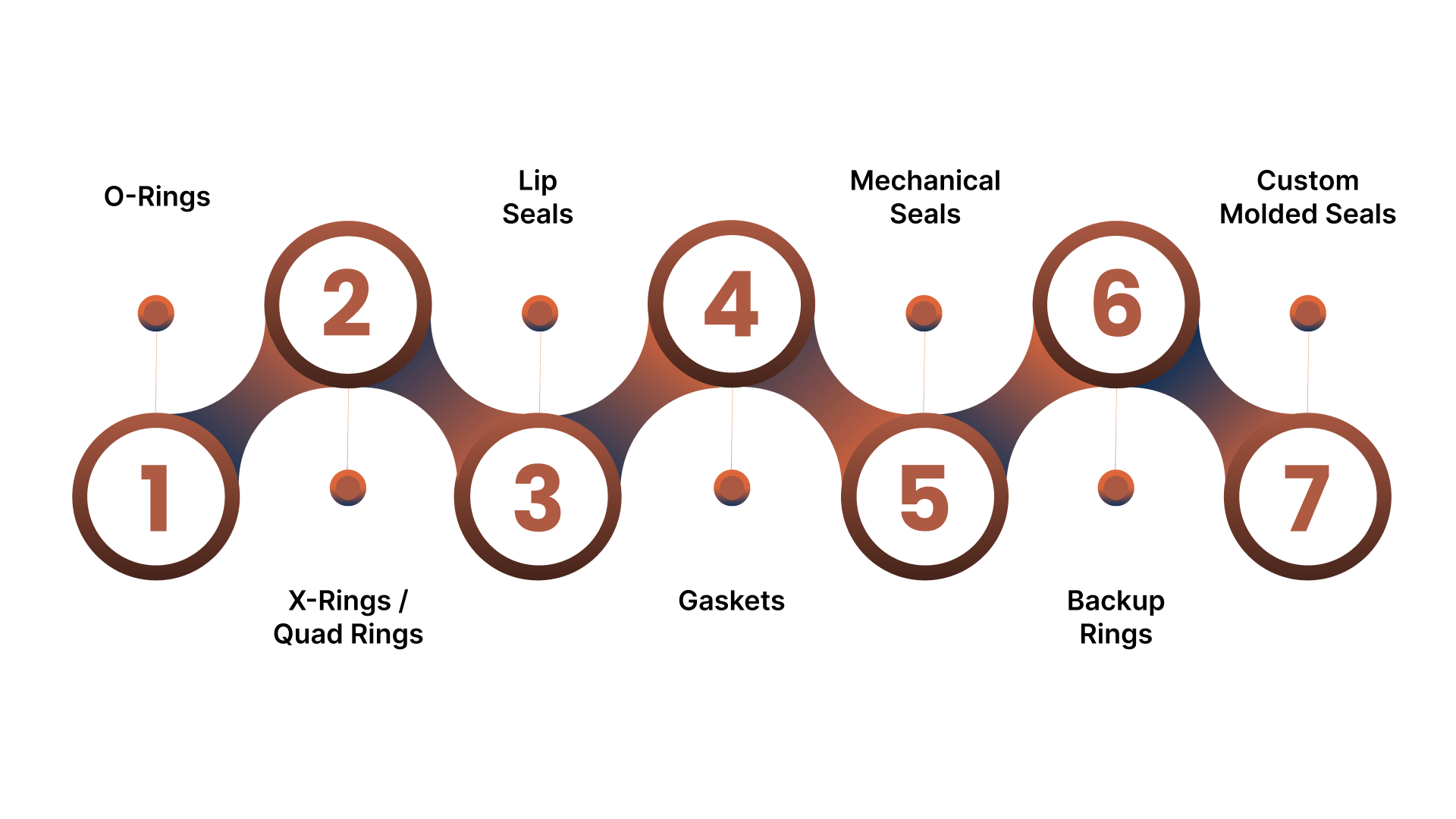
Industrial systems rely on different sealing devices depending on movement, pressure, and operating conditions. Each type is designed to perform effectively in either static or dynamic applications, or both.
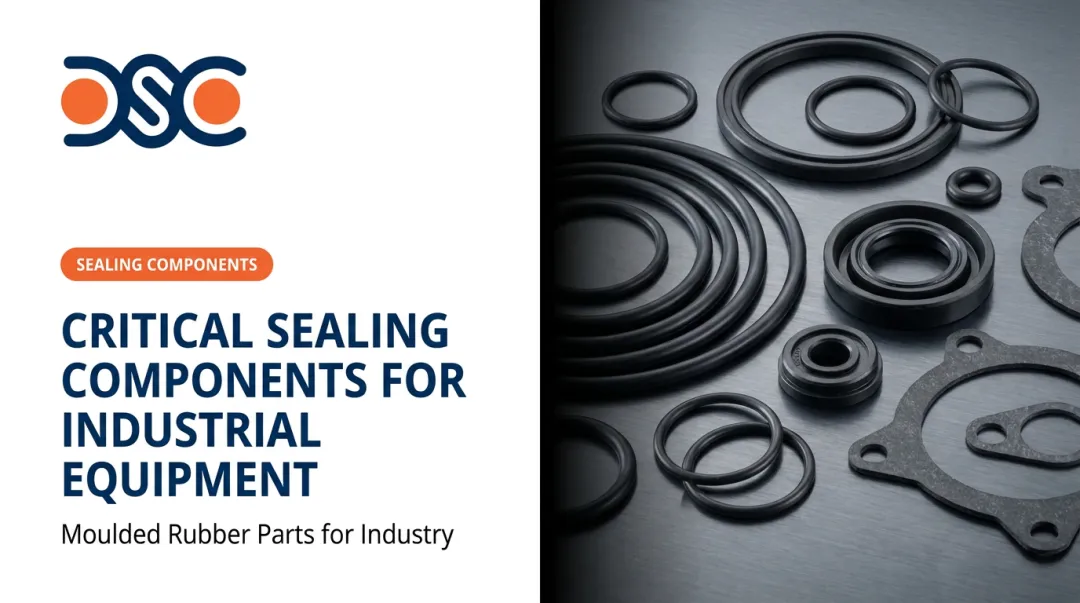
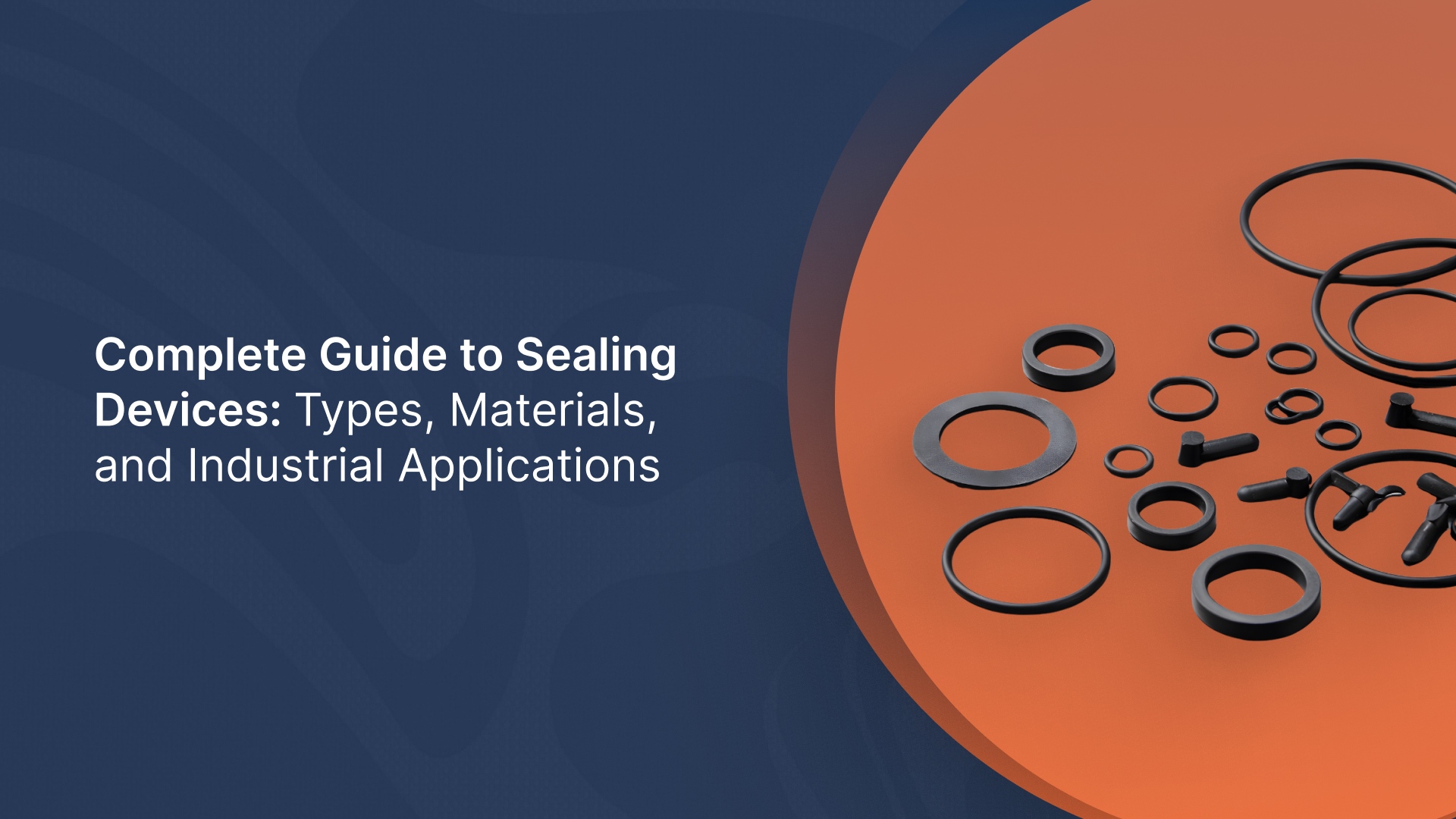
O-rings are one of the most widely used sealing devices due to their simple design and versatility. They are typically used in static applications, such as flanges and housings, as well as in dynamic applications with limited motion. O-rings create a seal through compression between mating surfaces.
X-Rings / Quad Rings
X-rings, also known as quad rings, feature a four-lobed profile that improves sealing efficiency. They are commonly used in dynamic applications where movement occurs, as the design reduces friction and twisting while maintaining consistent sealing contact.
Lip Seals
Lip seals are designed for dynamic applications involving rotating or reciprocating shafts. They use a flexible lip that maintains contact with the shaft surface to retain lubricants and exclude contaminants during operation.
Gaskets are primarily used in static sealing applications between flat surfaces. They provide a seal through compression and are commonly found in flanged connections, covers, and enclosures where movement is minimal or absent.
Mechanical Seals
Mechanical seals are used in dynamic applications involving rotating equipment such as pumps and compressors. They rely on precisely engineered mating faces to control leakage under high-pressure and temperature conditions.
Backup Rings
Backup rings are used alongside primary sealing devices, most often O-rings, in static and dynamic applications. Their function is to prevent seal extrusion in high-pressure environments and support overall sealing performance.
Custom Molded Seals
Custom molded seals are designed for applications with unique geometries or performance requirements. They can be used in both static and dynamic environments and are often selected when standard sealing devices do not meet specific design or operational needs.
While each sealing device has a distinct design, how it performs ultimately depends on whether the application involves motion or remains stationary.
Static vs Dynamic Sealing: Choosing the Right Type for the Job
Aspect | Static Sealing | Dynamic Sealing |
Definition | Static sealing occurs when there is no relative movement between the sealed surfaces after installation. | Dynamic sealing occurs when there is movement between components during operation, such as rotation or reciprocation. |
Primary Function | Maintains containment between fixed components by creating a compressed barrier. | Maintains containment while accommodating continuous or intermittent motion. |
Typical Challenges | Compression set, material compatibility, and uneven surface finishes can affect sealing performance over time. | Increased friction, wear, heat generation, and seal deformation are common challenges. |
Seal Design Focus | Emphasis on proper compression, material stability, and surface contact. | Emphasis on wear resistance, lubrication, and controlled friction. |
Common Seal Types | O-rings, gaskets, flat seals, backup rings. | Lip seals, X-rings, mechanical seals, and dynamic O-rings. |
Example Applications | Flanged connections, valve bodies, pipe joints, and static housings. | Rotating shafts, hydraulic cylinders, pumps, and actuators. |
Once the sealing approach is defined, material selection becomes the next key factor influencing performance and durability.
Choosing the Right Materials for Industrial Sealing Devices
Material selection plays a central role in how sealing devices perform over time. Operating conditions such as temperature, pressure, chemical exposure, and motion all influence which materials are best suited for a given application.
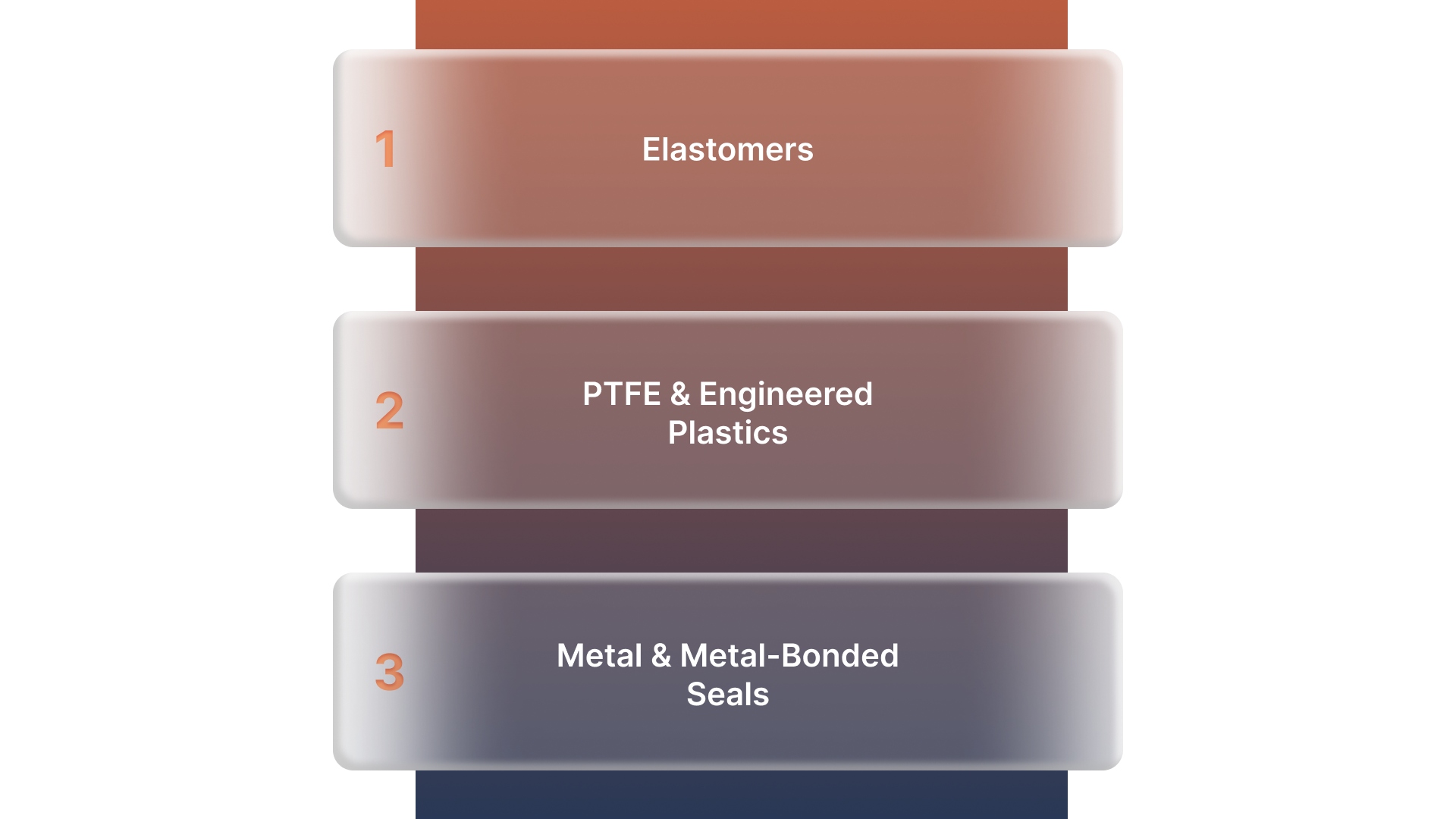
Elastomers
Elastomers are widely used sealing materials due to their flexibility and ability to maintain a seal under compression. Common elastomers include NBR, EPDM, FKM, and silicone, each offering different resistance to oils, chemicals, heat, and environmental exposure. Their elastic properties make them suitable for both static and low- to moderate-motion dynamic applications.
PTFE and Engineered Plastics
PTFE and other engineered plastics are selected for applications that demand low friction and high chemical resistance. These materials perform well in environments involving aggressive media or extreme temperatures. Their lower elasticity compared to elastomers often requires a precise design to maintain effective sealing.
Metal and Metal-Bonded Seals
Metal seals and metal-bonded elastomer seals are used in demanding applications where conventional materials may not perform reliably. They offer strength and stability under high pressure and temperature while providing controlled sealing in harsh operating conditions.
However, material selection alone does not determine sealing performance. How a seal is designed and integrated into its housing plays an equally important role in achieving consistent, long-term results.
Key Design Considerations for Effective Sealing Devices
Several factors influence the effectiveness and longevity of a seal in industrial applications. Here are some you need to consider:
Groove and Housing Design
The geometry of the groove and housing determines how a seal sits and performs under pressure. Properly sized grooves ensure uniform compression and prevent extrusion, which is critical for maintaining a reliable seal.
Compression and Squeeze
Seals rely on controlled compression to create a tight barrier. Too little squeeze can result in leaks, while excessive compression can accelerate wear or cause deformation. Optimizing the balance is essential for both static and dynamic applications.
Surface Finish and Tolerances
The mating surfaces’ finish and dimensional tolerances directly affect seal performance. Smooth, consistent surfaces minimize wear and enhance sealing efficiency, while overly rough or uneven surfaces can lead to premature failure.
Environmental Exposure
Sealing devices must withstand the operating environment, including temperature extremes, chemical exposure, and UV or ozone degradation. Understanding environmental conditions guides material selection and design decisions.
Assembly Constraints
Ease of installation and handling during assembly is another key consideration. Proper assembly reduces the risk of damage to the seal, ensures correct placement, and supports long-term reliability in both static and dynamic applications.
While these design principles apply broadly, sealing requirements often change based on industry, operating conditions, and application-specific demands.
Industry-Specific Sealing Solutions and Case Uses
Different industries pose unique challenges that require tailored sealing solutions. Standard products are not always sufficient, especially when precision, durability, and regulatory compliance are critical.
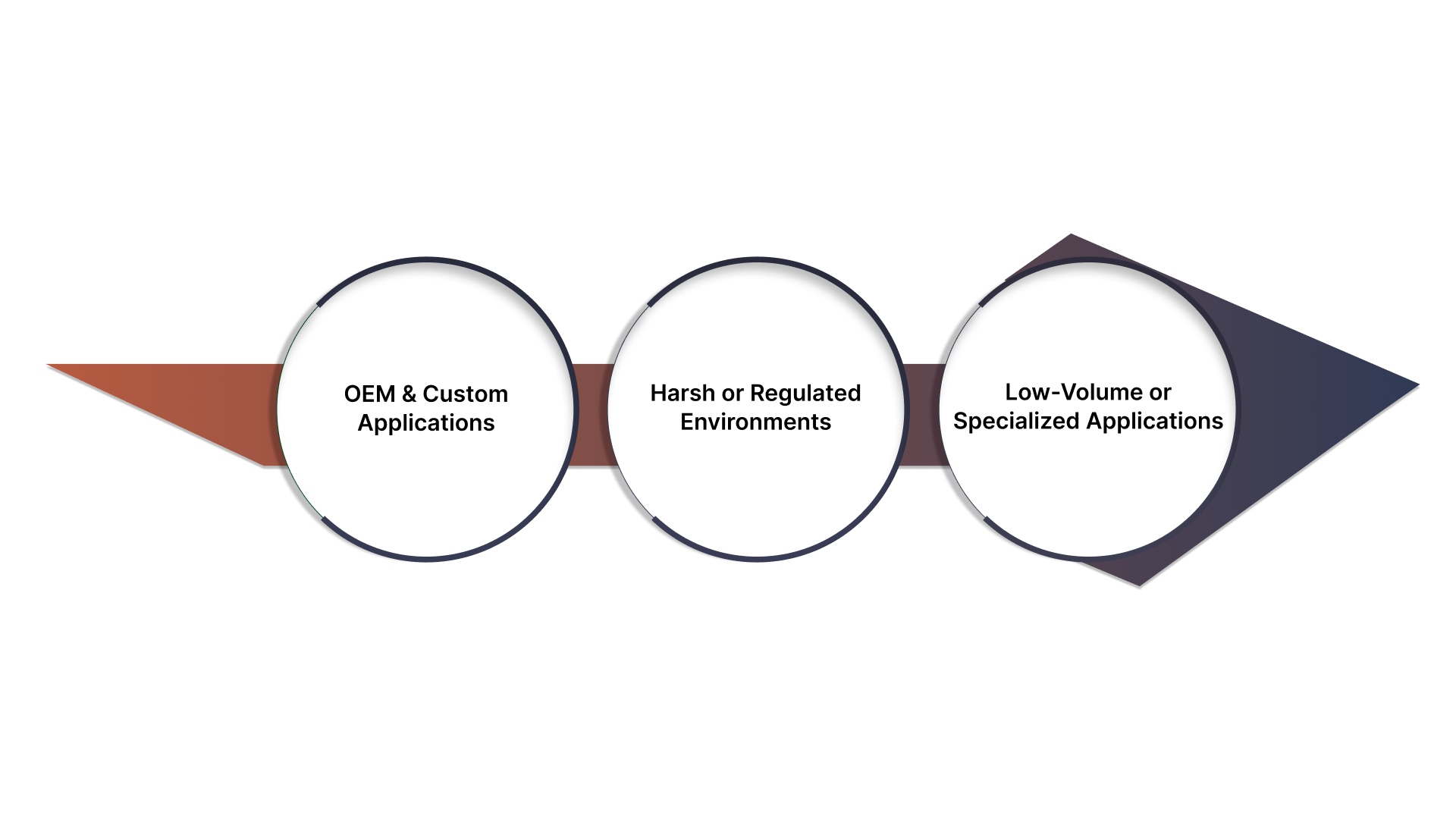
OEM and Custom Applications: Seals must match precise geometries and performance specifications to ensure reliable operation in complex assemblies.
Harsh or Regulated Environments: Applications in chemical processing, food, and pharmaceutical systems demand materials and designs that withstand extreme conditions while meeting strict safety standards.
Low-Volume or Specialized Applications: Certain projects require custom solutions when off-the-shelf products cannot deliver the necessary performance or fit.
Sealing specialists like Detroit Sealing Components provide guidance on custom design, tooling, and material selection. Their expertise ensures that each solution is tailored to the application, supporting reliable performance and long-term durability.
Installation, Assembly Methods, and Best Practices
Proper installation and handling are critical to ensure sealing devices perform reliably throughout their service life. Even the best-designed seal can fail prematurely if installed incorrectly or subjected to improper conditions.
Proper Installation Techniques: Use the correct tools and methods to avoid damaging the seal during placement. Ensuring alignment and controlled compression helps maintain a tight and consistent seal.
Common Installation Mistakes: Avoid twisting, stretching, or over-compressing the seal. Installing on rough or contaminated surfaces can also lead to leaks and early failure.
Handling and Storage Tips: Store seals in a clean, cool, and dry environment, away from direct sunlight, ozone, and chemicals that may degrade the material. Handle with care to prevent nicks or deformation.
Assembly Considerations for Longevity: Confirm that grooves, housings, and mating surfaces meet design tolerances. Proper lubrication, where applicable, and following manufacturer guidelines help reduce friction and wear, extending seal life.
Even with proper installation and assembly, seals are still subject to wear and operating stresses over time, making it important to understand common failure modes and maintenance needs.
Common Seal Failures, Troubleshooting, and Maintenance
Sealing devices can fail for several reasons, but most issues are preventable with proper selection and maintenance.
Extrusion: Seal material is forced out of the groove under high pressure.
Chemical Degradation: Exposure to incompatible fluids causes swelling, cracking, or softening.
Wear and Abrasion: Friction from motion or contaminants wears down the seal surface.
Compression Set: Permanent deformation reduces sealing effectiveness over time.
Preventive Maintenance: Regular inspection, proper lubrication, and timely replacement help avoid failures and extend service life.
Awareness of these issues helps engineers diagnose problems early and maintain consistent sealing performance.
Conclusion
The right sealing device ensures systems operate safely, efficiently, and reliably, even under demanding industrial conditions. Engineers and maintenance teams know that material choice, design, and installation directly impact performance and equipment lifespan.
For applications where precision, durability, or unique requirements are critical, partnering with a specialist can make all the difference. Detroit Sealing Components provides expert guidance, custom solutions, and engineering support to help industrial teams select and implement sealing devices that deliver consistent, long-term results.
To discuss your application or request technical support, connect with our team today!
FAQs
1. What are sealing devices used for?
They prevent leaks, block contaminants, and maintain pressure in industrial systems, ensuring safe and efficient operation.
2. What is the most common industrial sealing device?
O-rings are the most common due to their simplicity and versatility in both static and dynamic applications.
3. What material is best for sealing devices?
Material choice depends on conditions; elastomers suit general use, PTFE and engineered plastics handle chemicals and heat, while metal seals work under extreme pressure.
4. What causes sealing device failure?
Common causes include extrusion, chemical degradation, wear, compression set, improper installation, or harsh environmental exposure.
5. How do I choose the right sealing device?
Assess operating conditions, performance needs, and application type, and consult specialists for optimal material and design selection.