Small components make a meaningful difference in automotive system reliability. In vehicles, wiring harnesses, hoses, and cables frequently pass through metal body panels, firewalls, and engine compartments. Constant vibration, heat, and sharp edges can accelerate wear if these openings are not properly protected.
Grommets are widely used in automotive applications to protect wiring and fluid lines, reduce vibration-related damage, and support cleaner, safer assemblies. The global grommets market is projected to reach USD 5.1 billion by 2033, growing at a CAGR of 4.9%. This growth highlights the increasing demand for durable component protection in vehicles operating under mechanical stress and harsh conditions.
This guide explains what a grommet is, how grommets are used in cars, the different types and materials available, and how to select the right grommet for automotive applications.
Key Takeaways
A grommet is used to protect cables, hoses, and tubing from sharp panel edges while reducing wear caused by movement and vibration.
Different grommet types, such as open, blind, split, and strain relief, serve specific installation and performance needs.
Material choice matters; rubber, plastic, and metal grommets perform differently based on temperature, exposure, and mechanical stress.
Correct sizing depends on accurate measurement of the panel hole, panel thickness, and the component passing through.
Standard grommets work for many uses, but industrial applications often require custom designs to meet precise fit and performance requirements.
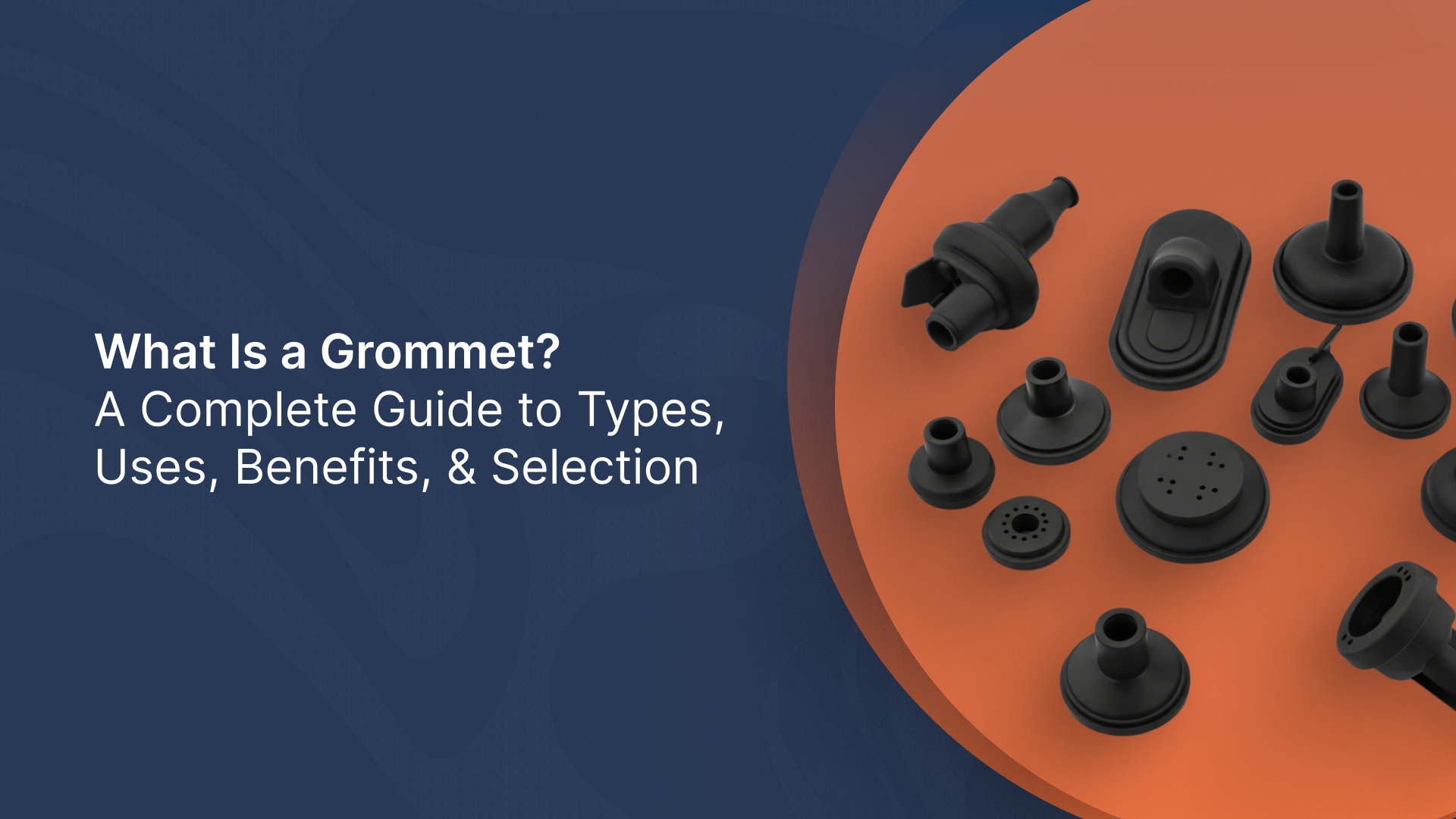
What Is a Grommet?
A grommet is a ring-shaped component installed into a hole in a vehicle panel or structural surface to protect materials and components that pass through it. In automotive applications, grommets create a smooth, finished edge around openings in body panels, firewalls, and enclosures, helping prevent damage caused by sharp edges, vibration, heat, or repeated movement.
The primary purposes of a grommet in automotive systems include:
Protection: Shields wires, cables, hoses, and tubing from abrasion and cuts as they pass through metal vehicle panels
Reinforcement: Strengthens panel openings to reduce tearing or deformation caused by vibration and continuous motion
Sealing: Helps limit the entry of dust, moisture, fumes, or debris into vehicle compartments in certain applications
Strain relief: Reduces stress on wiring harnesses and fluid lines caused by bending, pulling, or engine and road vibration
A common automotive example is a wiring harness routed through a vehicle firewall or body panel. Without a grommet, the insulation on the wiring can wear down against the sharp edge of the metal opening. A grommet designed for the specific panel, harness, and operating conditions cushions the wiring, keeps it centered, and helps extend its service life under real-world driving conditions.
Benefits of Using Grommets in Automotive Applications
Grommets provide practical advantages that support vehicle reliability, safety, and long-term performance, particularly in systems exposed to vibration, heat, and constant movement.
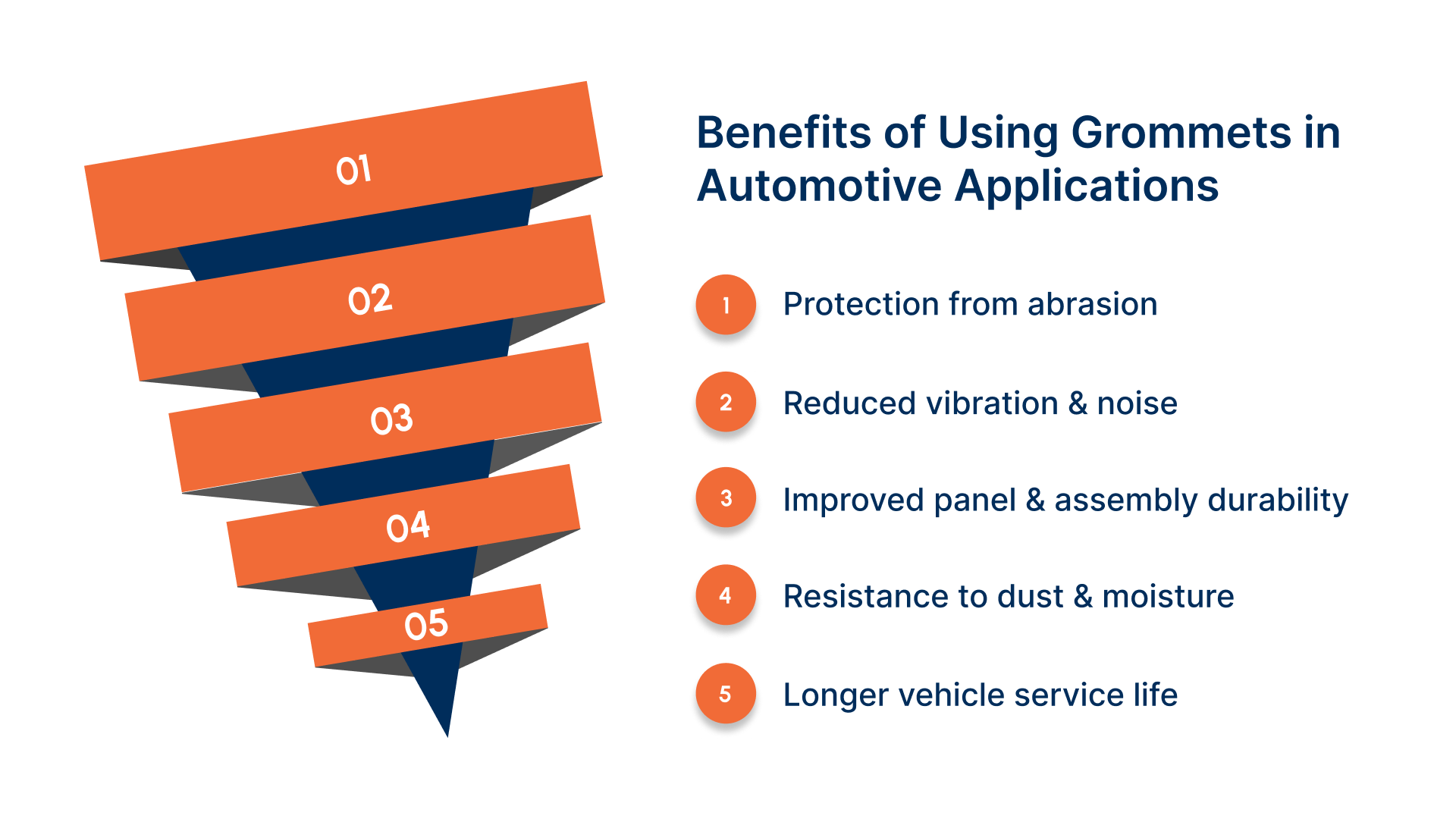
Protection from abrasion: Automotive grommets create a smooth barrier between sharp metal edges and passing wires, cables, and hoses, helping prevent cuts, wear, and insulation damage in body panels, firewalls, and engine compartments.
Reduced vibration and noise: By cushioning contact points, grommets help absorb vibration generated during driving and engine operation, reducing rattling, noise, and stress on wiring harnesses and fluid lines.
Improved panel and assembly durability: Reinforcing panel openings with grommets helps prevent cracking, tearing, or deformation of vehicle body panels over time, especially in high-vibration areas.
Resistance to dust and moisture: Certain grommet designs and materials help limit the entry of water, dust, fumes, and road debris into vehicle compartments, supporting cleaner and more reliable operation.
Longer vehicle service life: By protecting critical contact points and reducing mechanical wear, grommets help automotive systems perform reliably throughout the vehicle’s service life.
The benefits of automotive grommets become clearer when looking at where they are used within a vehicle.
Where Are Grommets Used in Automotive Applications?
Grommets are used throughout vehicles to protect wiring, hoses, and tubing as they pass through metal panels and structural components.
Firewall grommets
Firewall grommets are used where wiring harnesses, cables, or fluid lines pass through the vehicle firewall. They protect components from sharp metal edges while helping isolate heat, vibration, and fumes between the engine bay and passenger compartment.
Wiring harness and cable pass-throughs
Grommets are commonly installed anywhere wiring harnesses pass through body panels, dashboards, or enclosures. They prevent abrasion, reduce movement caused by vehicle vibration, and help maintain insulation integrity over time.
Engine bay applications
In the engine compartment, grommets protect hoses and wiring exposed to heat, vibration, and fluids. Materials such as EPDM, NBR, or silicone are often used to withstand temperature extremes and contact with oils or coolants.
Door panels and body panels
Door and body panel grommets guide wiring and components through sheet metal openings while reducing noise, rattling, and wear caused by vehicle movement and repeated door operation.
Fuel, brake, and HVAC line routing
Grommets are used to protect fuel lines, brake lines, and HVAC tubing as they pass through panels or brackets. Proper grommet selection helps prevent chafing and supports safe, secure routing of critical vehicle systems.
Aftermarket and service installations
During repairs, upgrades, or aftermarket installations, grommets may be required to protect wiring and hoses passing through new or existing openings. In these cases, split or retrofit grommet designs can be engineered to allow installation without full disassembly while still meeting performance and durability requirements.
The specific demands of each automotive application influence the type of grommet required.
Types of Automotive Grommets
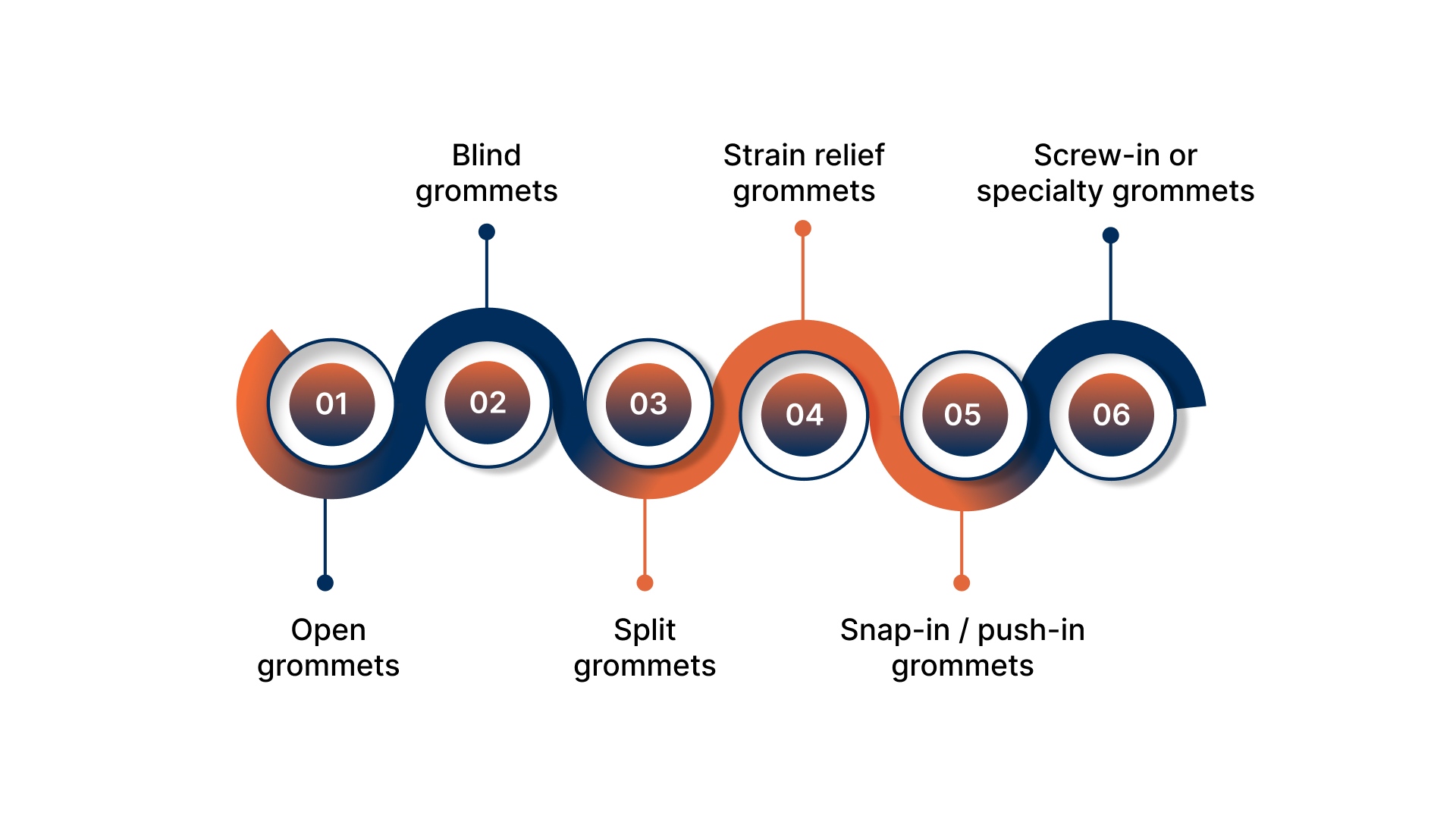
Grommets are available in several designs, each suited to specific installation needs and application requirements.
Open grommets
The most common type in automotive applications, open grommets allow wiring, cables, or hoses to pass through freely. They are widely used in vehicle body panels, dashboards, and engine compartments to protect components from sharp metal edges.
Blind grommets
Blind grommets are closed at the center and are used to seal unused holes in vehicle body panels or enclosures. They help block dust, moisture, fumes, and road debris while providing a finished appearance.
Split grommets
Split grommets feature a side slit that allows installation without disconnecting existing wiring or hoses. They are commonly used during automotive repairs, retrofits, or aftermarket installations.
Strain relief grommets
These grommets reduce bending and pulling forces on automotive wiring and cables. They are often used where wires exit housings or pass through panels exposed to vibration and movement.
Snap-in / push-in grommets
Snap-in grommets are designed for quick, secure installation in vehicle panel holes and are commonly used in automotive manufacturing where consistent fit and ease of assembly are important.
Screw-in or specialty grommets
Screw-in and specialty grommets provide added retention or sealing and are typically used in high-stress automotive areas such as engine bays or under-body applications.
Each grommet type relies on specific material properties, making material selection an important consideration.
Common Grommet Materials and Their Uses
Grommets are manufactured from a range of materials to suit different environments and performance requirements. Selecting the right material helps ensure reliable fit, protection, and service life.
Rubber grommets (EPDM, NBR, Neoprene, Silicone)
They are flexible and vibration-damping, commonly used in automotive panels and engine compartments.
EPDM: Weather-resistant, ideal for exterior panels and under-hood use.
NBR: Resistant to oils and fuels, suitable for engine bay applications.
Neoprene: Balanced resistance to chemicals and weathering, for general automotive use.
Silicone: High-temperature tolerance, used near engines or exhaust components.
Plastic / Nylon grommets
Plastic and nylon grommets provide good dimensional stability and resistance to abrasion. They are commonly used in automotive electrical applications where wiring needs protection, but flexibility is less critical.
Metal grommets
Metal grommets offer strong reinforcement for high-wear or heavy-duty locations in vehicles. They are ideal for areas exposed to mechanical stress, such as underbody panels or engine mounts. While less flexible than rubber or plastic, they provide excellent structural protection and long-lasting durability.
Material selection should consider operating conditions such as temperature range, chemical exposure, vibration, and environmental contact to ensure consistent performance. These material choices directly influence where and how grommets are used in real-world applications.
Applications of Grommets
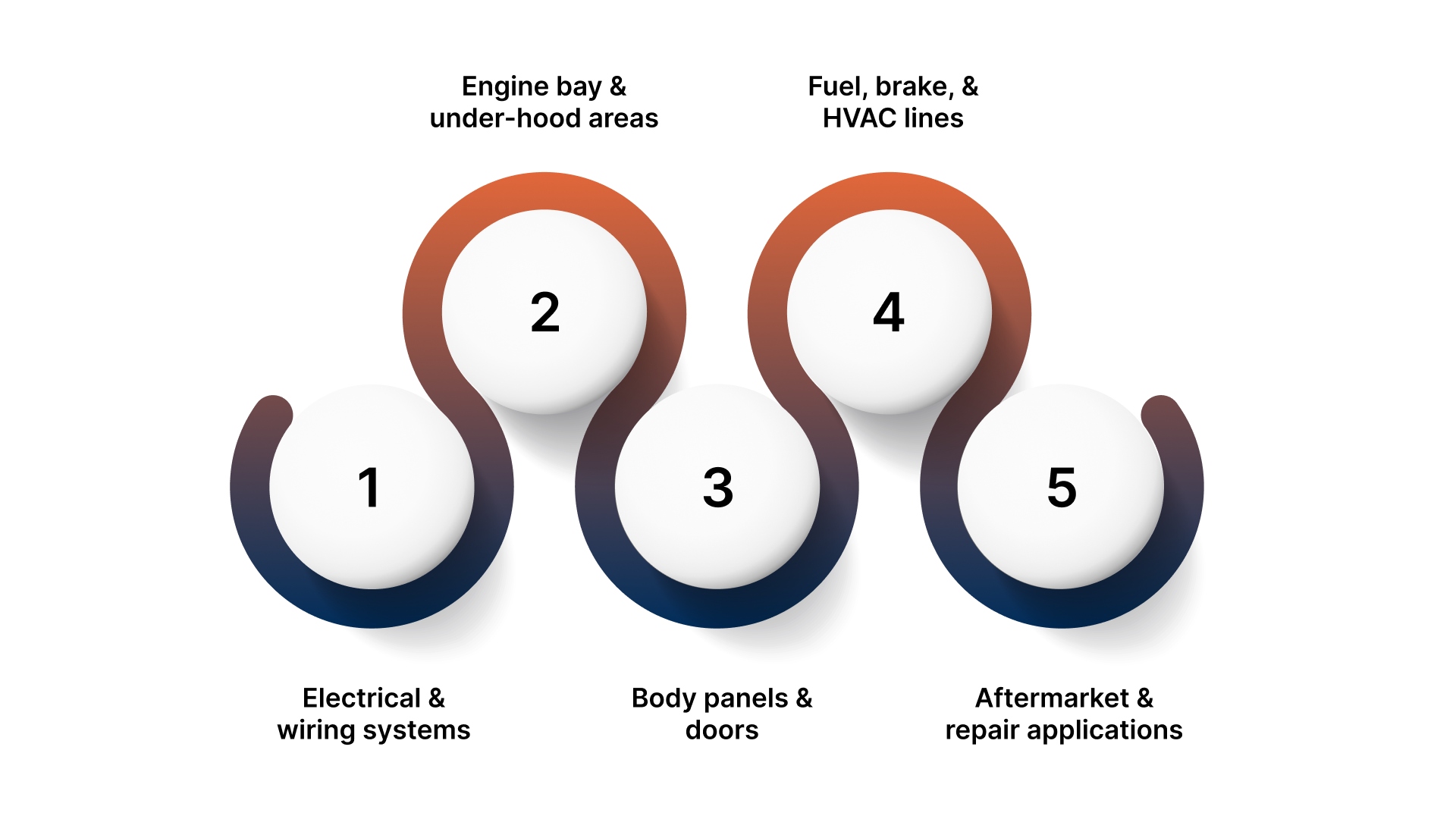
Grommets are essential in vehicles for protecting wiring, hoses, and tubing while supporting durability and safety.
Electrical and wiring systems: Grommets protect wiring harnesses and cables as they pass through dashboards, body panels, and enclosures. They prevent abrasion, reduce movement from vibration, and maintain insulation integrity.
Engine bay and under-hood areas: Rubber and silicone grommets shield hoses and wires from high temperatures, oils, fuels, and mechanical stress, helping ensure reliable engine operation.
Body panels and doors: Grommets guide cables and fluid lines through metal panels, reducing noise, wear, and rattling while maintaining panel integrity.
Fuel, brake, and HVAC lines: Grommets protect critical lines from abrasion and movement as they pass through panels or brackets, supporting vehicle safety and performance.
Aftermarket and repair applications: Split or retrofit grommets are used when adding new wiring or hoses to existing vehicles without disassembly, providing protection and secure routing.
Detroit Sealing Components supplies industrial-grade rubber grommets and molded components designed for use in applications where material performance and consistency matter.
How to Choose the Right Grommet For Automotive Use
Selecting the right grommet is essential for vehicle reliability and safety. Consider the following factors:
Panel hole size and thickness: Ensure the grommet fits securely and seats properly in body panels, firewalls, or enclosures.
Cable, hose, or tubing diameter: Match the grommet opening to the component passing through to prevent abrasion and wear.
Temperature and fluid exposure: Choose materials that can withstand engine heat, oils, fuels, and other automotive fluids.
Vibration and mechanical stress: Select grommets that provide cushioning or strain relief in areas subject to movement or vibration.
OEM vs. aftermarket considerations: Determine whether the grommet is for original equipment installation or repair/retrofit applications.
Standard vs. custom automotive grommets: While standard sizes work for many applications, custom grommets may be required for unique panel shapes, specialized lines, or extreme conditions.
Detroit Sealing Components supports material selection and provides custom molded grommet solutions for industrial applications where off-the-shelf components are not suitable.
Best Practices for Installing Grommets
Proper installation ensures grommets protect wiring, hoses, and tubing while remaining secure in vehicles.
Basic installation steps
Measure the panel hole and component diameter, and confirm the correct grommet size.
Clean the hole to remove sharp edges, debris, or burrs.
Press the grommet evenly into the opening until it seats fully.
Check that the grommet sits flush and holds the component securely.
Common installation mistakes to avoid
Using the wrong size can lead to a loose fit, wear, or damage to wiring and hoses.
Forcing the grommet into place, causing tearing or deformation.
Ignoring panel thickness, which can prevent proper seating and protection.
Applications with tight tolerances, unusual panel designs, or demanding conditions may require custom-fit grommets or installation guidance, where Detroit Sealing Components can assist with material selection and fit considerations.
Grommet Sizes and Measurement Basics in Automotive Applications
Grommets used in automotive systems are typically custom-sized based on application requirements rather than selected from standard dimensions. Accurate measurement ensures proper fit, secure retention, and long-term protection in environments exposed to vibration, heat, and mechanical stress.
Application-driven sizing: Custom grommet dimensions are determined by panel hole size, panel thickness, routing constraints, and operating conditions. These factors guide the overall geometry required for secure seating and durability.
Inner diameter vs. groove diameter: The inner diameter (ID) is engineered to accommodate the cable, hose, or tubing without causing abrasion, while the groove diameter and width are designed to match the panel opening and thickness for proper retention.
Importance of accurate measurement: Small variations in hole size, panel thickness, or component diameter can affect fit and performance. Precise measurements help prevent movement, wear, and pull-out over time.
Custom sizing for automotive applications: Non-standard panel designs, high-vibration zones, and exposure to heat or fluids often require custom grommet dimensions to ensure reliable performance where off-the-shelf components are not suitable.
Careful measurement reduces installation issues and supports consistent performance over time.
Conclusion
For automotive engineers, OEMs, and maintenance teams, selecting the right grommet can mean the difference between a reliable wiring harness and premature system failure. Properly engineered grommets protect critical wiring, hoses, and fluid lines from abrasion, vibration, and heat, ensuring vehicle assemblies meet performance and safety standards.
Detroit Sealing Components delivers custom automotive grommets designed to exact specifications, helping teams reduce downtime, simplify installation, and maintain long-term reliability across vehicle systems.
Reach out to our team to identify the ideal grommet solutions for your next automotive project.
FAQs
1. What is a grommet used for in vehicles?
Grommets protect wiring harnesses, hoses, and tubing as they pass through body panels, firewalls, and enclosures. They prevent abrasion, reduce vibration stress, and help maintain reliable vehicle performance over time.
2. What materials are best for automotive grommets?
Material selection depends on the application. Rubber grommets (EPDM, NBR, Neoprene, Silicone) offer flexibility and vibration damping, plastic or nylon grommets provide rigidity and wear resistance for electrical routing, and metal grommets give strong reinforcement for high-load or high-stress areas.
3. Are automotive grommets waterproof?
Some grommets provide sealing against water, dust, and road debris, but full waterproofing depends on the design, material, and proper fit within the panel or enclosure.
4. How do I choose the right grommet size for a vehicle?
Accurately measure the panel hole, component diameter, and panel thickness. Correct sizing ensures secure fit, proper sealing, and long-term protection for wiring, hoses, and fluid lines.
5. Can automotive grommets be custom-made?
Yes. Custom grommets can be designed for unusual panel shapes, high-stress areas, or unique environmental conditions, ensuring precise fit and optimal performance in demanding automotive applications.