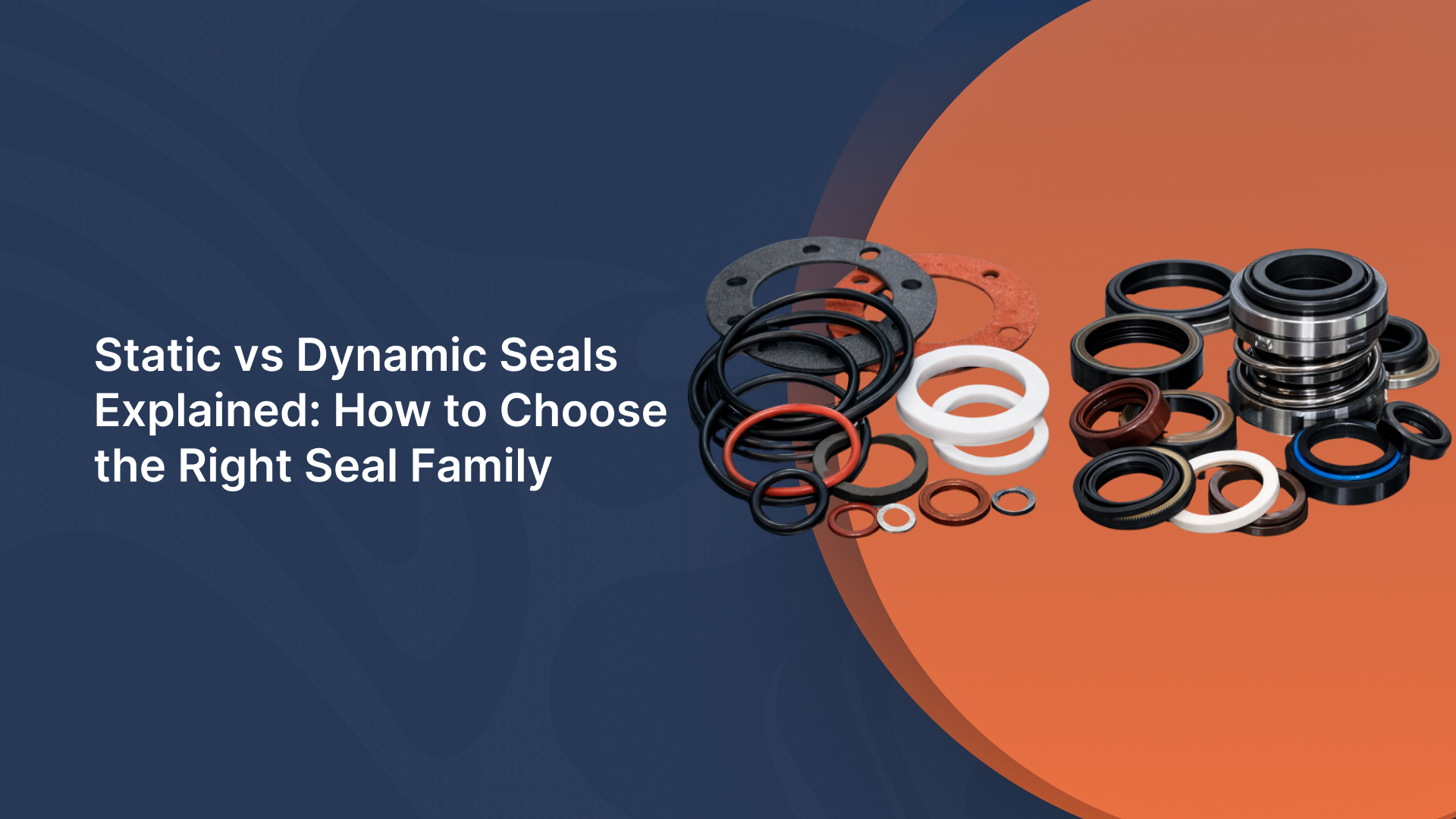
A seal can look “right” on the bench and still fail in service, usually because the joint is moving (or seeing pressure spikes) in a way the seal type wasn’t designed to handle. That’s the real static vs dynamic split: no motion vs motion, and everything that comes with motion (wear, friction heat, lubrication, runout, extrusion).
This guide gives you a clean way to classify your joint, pick the correct seal family (not just a material), and sanity-check the few operating inputs that decide whether the seal holds up long-term.
Key Takeaways
Static seals: no relative motion; seal force comes mainly from the initial squeeze + pressure.
Dynamic seals: parts move (reciprocating/rotary). Reliability depends on wear, friction, heat, lubrication, runout, and extrusion control.
Pick the seal family using: motion type + pressure/spikes + clearance gap + media/temperature + contamination.
Static vs dynamic seals, in practical terms
Before you pick a material or a “better seal,” classify the joint. Most wrong seal choices happen because a dynamic problem gets treated like a static one (or vice versa).
Static seal = no relative motion
The parts don’t slide or rotate against each other during operation.
Common examples: covers/flanges, plugs, ports, threaded bosses, manifolds, end caps.
Dynamic seal = motion is present
The seal is working at a moving interface, so it’s also managing wear + friction, not just leakage.
Reciprocating (rod/piston motion): back-and-forth stroke (cylinders, actuators).
Rotary (shaft rotation): continuous or frequent rotation (motors, pumps, gearboxes).
A dynamic seal is a wear interface, not just a leak barrier, so friction heat, lubrication, alignment/runout, and extrusion control often determine seal life more than the elastomer choice alone.
Once you classify the joint (static, reciprocating, or rotary), seal selection becomes a best-fit seal family decision, not a trial-and-error swap.
Static vs Dynamic Seals: Best-Fit Seal Family by Application
Static seals work where parts don’t move. Dynamic seals work where parts reciprocate or rotate, so wear, friction, heat, lubrication, alignment/runout, and extrusion control become reliability drivers. Use the table below to match the joint type + duty to the seal family built for it.
Situation | Best-fit seal family | Why it fits | What to verify |
|---|---|---|---|
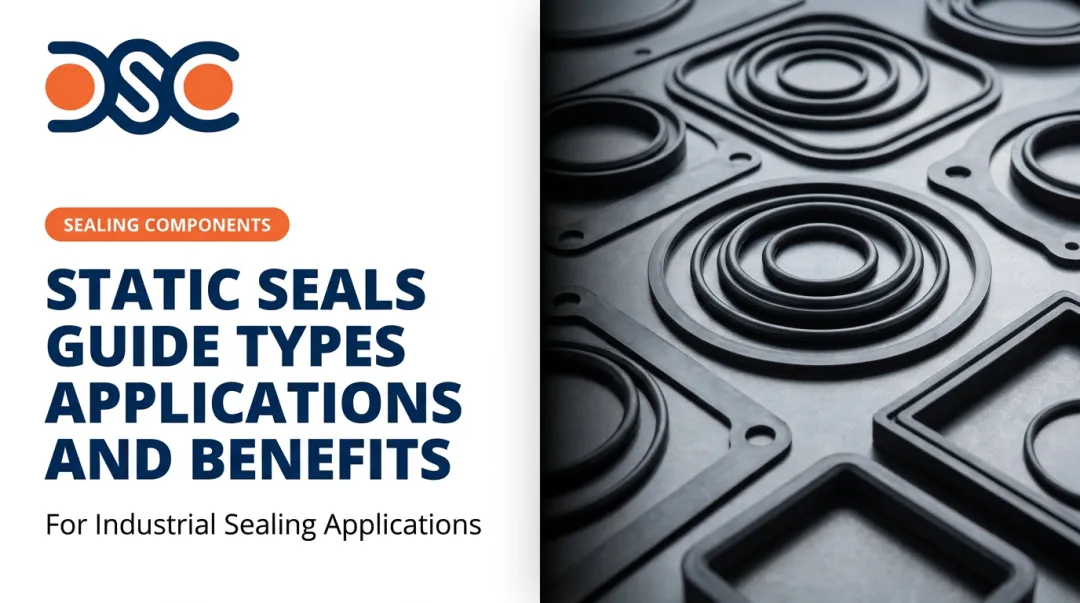
Static face (flange/cover) | Gasket | Seals across a flat joint; tolerates minor face variation better than groove-style seals | Flatness/finish, bolt-load pattern, gasket thickness |
Static radial (with a designed gland/groove) | O-ring | Simple and reliable when the squeeze is controlled by the gland and there’s no wear interface. | Groove dimensions/squeeze, stretch, surface condition |
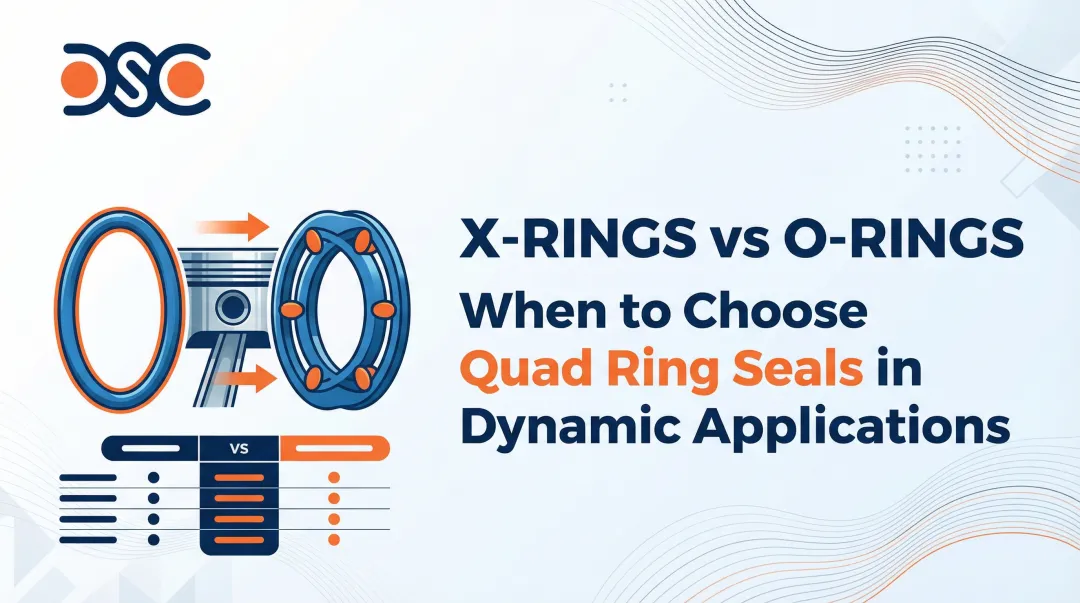
Reciprocating (light duty) | O-ring or X-ring (quad-ring) | Can work at modest speeds/loads; X-ring improves stability if rolling/twist shows up | Lubrication plan, surface finish, alignment/side-load, groove fit |
Reciprocating (high-cycle/high-duty) | Hydraulic seal set (rod/piston + wiper) | Built for wear life + leakage control under cycle rate, side-load, and contamination | Seal-stack design, rod/piston finish, runout, contamination control |
Rotary shaft (continuous rotation) | Rotary lip seal (O-ring rarely primary) | Designed for rotation where surface speed, heat, and runout dominate | Shaft finish, runout, speed, lubrication, and temperature at contact |
High pressure/spikes + gap risk | O-ring + back-up ring (or pressure-rated seal/gland design) | Back-up ring blocks extrusion into clearance gaps—the common spike failure | Extrusion gap under load, spike magnitude, pressure direction/backup placement |
Abrasives/washdown/dirty environment | Wiper/excluder + primary seal | Keeps debris out so the primary seal isn’t destroyed by abrasion | Entry path, placement, exposure type, stack order |
Dynamic sealing fails for different reasons than static sealing. Here are the five factors that most often decide seal life once motion is involved.
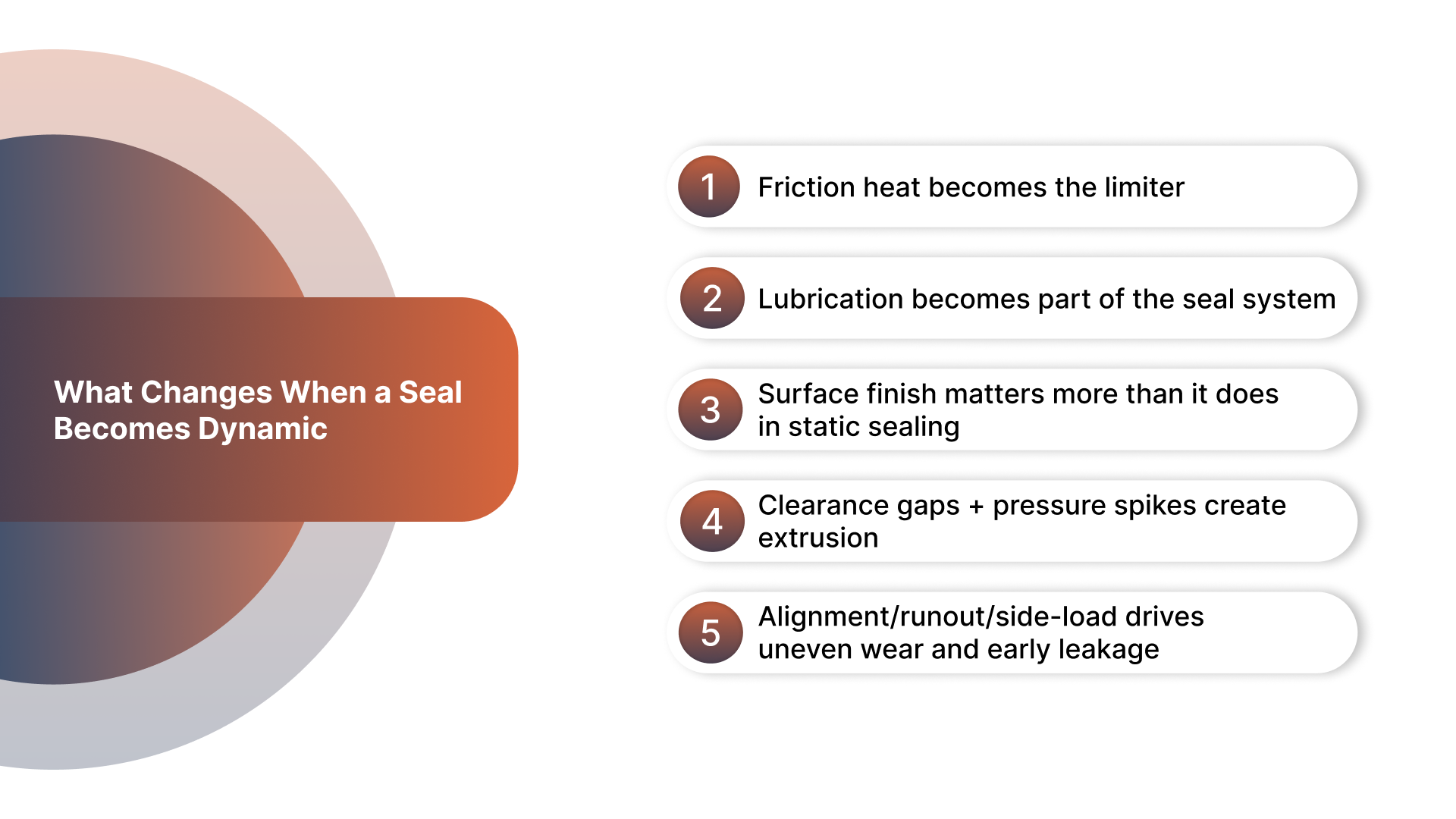
What Changes When a Seal Becomes Dynamic: 5 Reliability Drivers
Once parts start moving, a seal isn’t just “blocking a leak path” anymore—it’s operating as a rubbing interface. That shift changes what controls seal life and which seal families work best.
Friction heat becomes the limiter (PV effect)
Motion creates heat at the contact line. Higher pressure + higher surface speed = more heat and faster wear, even if the bulk fluid temperature looks fine.
Lubrication becomes part of the seal system.
Dynamic seals often live or die on lubrication. Too little lubrication increases wear and stick-slip; the wrong lubricant can cause swelling, softening, or accelerated degradation.
Surface finish matters more than it does in static sealing
Rough surfaces chew seals. Surfaces that are “too smooth” can also cause stick-slip in some dynamic cases. Dynamic sealing needs a finish that supports an oil film and controlled wear.
Clearance gaps + pressure spikes create extrusion/nibbling risk
Under pressure, an elastomer wants to flow into any available gap. Spikes make this worse and can cause “chewed edges” or blowouts even when the seal looks “right” by size.
Alignment/runout/side-load drives uneven wear and early leakage
Misalignment turns uniform contact into edge loading. That concentrates wear, increases heat, and creates leakage paths long before the material is “worn out.”
If a system is already leaking or wearing out fast, the wear pattern usually points to which one of these drivers is dominating.
Seal Failure Diagnostics: Symptom → Cause → First Check
When a seal fails, the removal evidence usually points to the mechanism: twist, extrusion, friction heat, or installation damage. Use these quick tells to pick the first check that’s most likely to change the outcome.
What you see | What it usually means | First check (what to do first) |
|---|---|---|
Spiral/twist marks (usually reciprocating) | Rolling/twist instability from friction + side-load | Check lubrication (type + presence), surface finish, and side-load/misalignment. If the twist keeps repeating, step up to an X-ring/quad-ring for better stability in motion. |
Chewed edge / “bites missing” / nibbling | Extrusion into a clearance gap (often worse with spikes) | Check where the gap opens under load and how big the spikes are. If gap + spikes are real, add a back-up ring (placed for pressure direction) or tighten support/clearance. |
Heat glazing / rapid wear in motion | Friction heat + lubrication/surface mismatch dominating | Check lubrication compatibility + supply, surface condition, and alignment/runout. If duty is high-cycle/high-speed, move to a dedicated dynamic seal family instead of forcing an O-ring geometry. |
Cuts/nicks right after install | Installation damage from lead-ins/edges/threads | Check chamfers/lead-ins, burrs + thread protection, and assembly lubricant compatibility. Fix the install path before changing size or seal type. |
If a swap improves things but doesn’t last, it’s often a geometry/duty mismatch. Here are the common selection mistakes behind those repeated failures.
Common selection mistakes
Most “wrong seal” calls aren’t about material; they’re about choosing a seal family that doesn’t match the joint’s motion or the hardware’s ability to control squeeze and extrusion. These are the four mistakes that create the most repeated failures:
Treating rotary like reciprocating (or vice versa)
Rotary sealing is usually driven by surface speed, runout, and heat. Reciprocating sealing is usually driven by wear pattern, side-load, and lubrication film. Swapping the same seal style between them often guarantees a short life.
Forcing an O-ring into hardware with no real gland control
If the joint doesn’t have a proper groove (or the groove isn’t controlling squeeze consistently), an O-ring becomes a “maybe” seal—pinching, shifting, and leaking depending on assembly and tolerance stack-up. In those cases, the right move is usually a gasket (static face) or machining/verifying the gland (radial/groove sealing).
“Thicker seal stops leaks,” thinking.
Going thicker often just creates over-squeeze, which leads to pinch/cuts on assembly, higher friction/heat in motion, and early wear. A leak that’s really caused by poor squeeze control or surface condition won’t be fixed by stuffing in more rubber.
Ignoring pressure spikes/clearance and blaming the material
If there’s a clearance gap that opens under load, pressure spikes can drive extrusion/nibbling even with a “good” compound. That’s an extrusion support problem (back-up ring / tighter support / pressure-rated design), not a “try a tougher rubber” problem.
To avoid repeat failures, the goal is to match the seal family to the joint’s motion and the hardware’s ability to control squeeze and extrusion, then support it with the right companion components (backup rings, wipers, etc.) where the duty demands it.
Dynamic sealing options Detroit Sealing Components supports
Once you’ve classified the joint (static vs reciprocating vs rotary) and identified the failure driver (twist, extrusion, friction heat, contamination), the next step is turning that diagnosis into a setup that actually lasts.
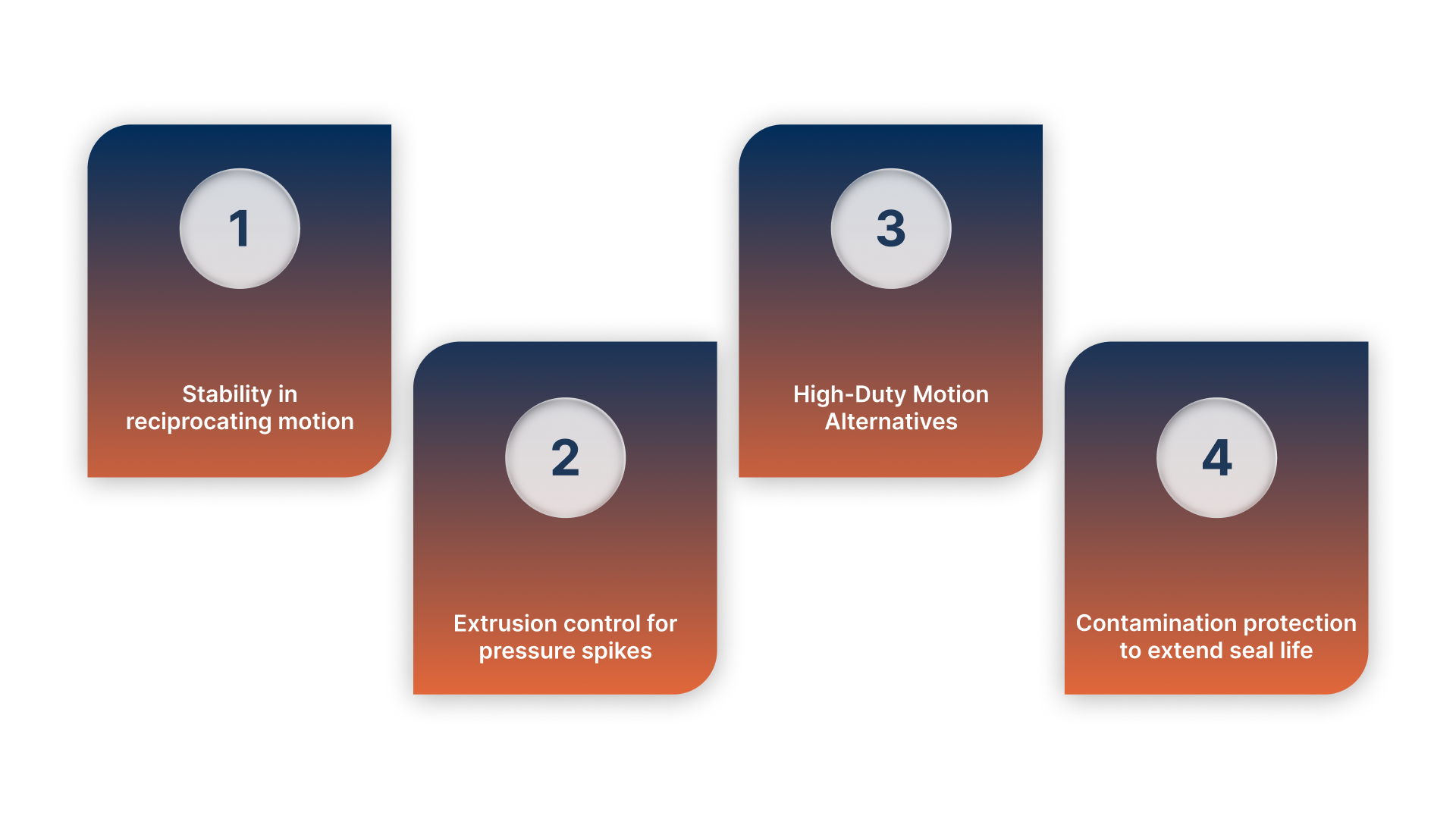
Detroit Sealing Components supports the seal families and the “reliability add-ons” that map directly to the decision table above, so you can spec a solution instead of repeating the same swap.
Stability in reciprocating motion (twist/rolling control)
If you’re seeing spiral marks, uneven wear, or short life in back-and-forth motion, DSC can supply O-rings and X-rings/quad-rings that are commonly used to improve stability in light-to-moderate dynamic duty, along with helping confirm the groove fit and lubrication assumptions that make them work.
Extrusion control for pressure spikes and clearance gaps
When the failure signature is nibbling/chewed edges or the system sees spikes, DSC can supply back-up rings to support the O-ring and block extrusion into the clearance path. This is often the difference between “it seals at startup” and “it fails on the first pressure event.”
High-duty motion where O-rings aren’t the reliability path
For high-cycle cylinders/actuators or tighter leakage control, DSC supports hydraulic/dynamic seals (rod/piston seals and related components) designed for wear life under motion, side-load, and real-world duty cycles where forcing an O-ring solution typically stays fragile.
Contamination protection to extend seal life
If dirt, grit, slurry, or washdown is part of the environment, DSC can supply wipers, V-seals, and excluders to keep debris out of the sealing interface and protect the primary seal, often the most cost-effective reliability upgrade in dirty service.
Share your joint type (static/reciprocating/rotary), pressure and spikes, media + temperature (including cleaners), contamination exposure, and any groove/gland details. Detroit Sealing Components can help confirm the best-fit seal family and the support components needed for your duty.
Conclusion
Static vs dynamic sealing comes down to one decision that prevents most repeat leaks: match the seal family to the joint’s motion and the hardware’s ability to control squeeze and extrusion.
Static joints reward simple compression sealing (gaskets, properly-glanded O-rings). As soon as motion enters the picture, seal life is usually decided by friction heat + lubrication, alignment/runout, and clearance gaps under pressure spikes, which is why dynamic duty often needs stability upgrades (X-rings), extrusion support (back-up rings), or purpose-built dynamic seals (hydraulic/rotary) plus exclusion in dirty environments.
Use the table to pick the right family, use the failure symptoms to confirm the driver, and you’ll end up with a seal setup that holds up in service, not just on the bench.
FAQs
What is the difference between static and dynamic seals?
Static seals work between parts that don’t move relative to each other. Dynamic seals work where parts move (reciprocating or rotary), so wear, friction, heat, lubrication, alignment/runout, and extrusion control become the main reliability drivers.
Can O-rings be used for dynamic sealing?
Yes—especially in lighter-duty reciprocating motion when the gland, surface finish, and lubrication are right. For higher duty cycles, higher speeds, or tighter leakage requirements, a dedicated dynamic seal family is usually more reliable.
What seal is best for a reciprocating motion?
For light-duty reciprocating applications, an O-ring or X-ring (quad-ring) can work. For high-cycle, higher pressure, side-load, or contamination-heavy applications, a hydraulic seal set (rod/piston seals plus wipers as needed) is typically the best-fit choice.
What seal is best for a rotating shaft?
For continuous rotation, a rotary lip seal is usually the best primary seal because it’s designed for surface speed, heat, and runout. O-rings are more commonly used for static sealing or limited-motion cases unless the design is purpose-built for rotary O-ring sealing.
Why do dynamic seals fail faster than static seals?
Because dynamic seals are wear interfaces, motion creates friction heat, surfaces abrade the seal, lubrication can be imperfect, and misalignment/runout concentrates wear. Add pressure spikes and clearance gaps, and you can also get extrusion/nibbling—failure that static joints often don’t face.