Introduction
When engineers specify the wrong seal for a stationary joint, the consequences are predictable: premature failure, fluid leaks, and unplanned shutdowns that cost far more than the seal itself. Siemens' 2024 research estimates unplanned downtime costs the world's 500 largest companies $1.4 trillion annually. A single misapplied gasket or O-ring is often the trigger.
Static seals are sealing elements installed between two non-moving surfaces. No relative motion between mating parts — just compression or clamping force holding back fluid, gas, or contaminants. Getting the material, geometry, and groove specification wrong still leads to failure.
This guide covers what engineers and procurement teams need to get the selection right:
- Static vs. dynamic seals — key distinctions
- Main seal types and their use cases
- Material selection by operating condition
- Industry applications across sectors
- A practical selection framework
Key Takeaways
- Static seals work between stationary mating surfaces — no sliding or rotary motion involved
- The main types are O-rings, gaskets, backup rings, bonded seals, and X-rings/square-cut seals
- Material choice (NBR, FKM, EPDM, PTFE, silicone) depends on fluid type, temperature range, and pressure
- Static seals appear across oil & gas, automotive, food & beverage, aerospace, and semiconductor applications
- Groove geometry, surface finish, and compression percentage (typically 15–30% for O-rings) directly determine whether a seal holds or leaks
Static Seals vs. Dynamic Seals
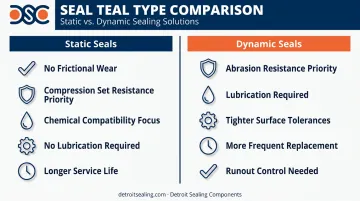
The defining line is motion. Static seals join surfaces that don't move relative to each other — flanges, cover plates, pipe joints, end-cap assemblies. Dynamic seals accommodate continuous movement: reciprocating rod seals, rotary shaft seals, and wiper seals all fall into this category. That difference shapes every design decision that follows.
Why the Difference Matters for Design
Static seals are simpler by nature:
- No frictional wear between the seal and mating surface
- Longer service life when correctly specified
- Easier to install — groove preparation and correct compression are the primary variables
- No lubrication requirement at the sealing interface
Dynamic seals carry additional requirements:
- High abrasion resistance to survive continuous sliding contact
- Lubrication at the seal lip or face
- More frequent replacement intervals
- Tighter tolerances on surface finish and runout
These functional differences extend directly into material selection. Dynamic seals prioritize abrasion resistance above all other properties. Static seals prioritize compression set resistance (the ability to maintain sealing force after prolonged squeeze), chemical compatibility, and stability through pressure and temperature cycling. A material that performs well on a rod seal may be entirely wrong for a static flange application exposed to the same fluid.
Types of Static Seals
Static seals come in several form factors. Each suits a different geometry, pressure range, and installation configuration.
O-Rings
O-rings are the most widely used static seal in industrial applications. A torus-shaped elastomer defined by two dimensions — inner diameter and cross-section — generates sealing force when compressed in a machined groove.
What makes them particularly effective in static applications is their self-energizing behavior: system pressure pushes the O-ring toward the clearance gap, increasing contact force and improving the seal under load.
Two groove configurations apply in static service:
- Axial (face) seals — O-ring compressed along its axis; common in end-cap joints, cover plates, and flanged connections
- Radial (bore) seals — O-ring compressed across its diameter; used in plug-in fittings and bore housings
Groove dimensions must conform to SAE AS568D or ISO 3601-1 for dimensional standardization, with gland design per SAE AS5857 for static applications. Getting groove depth and width wrong — even slightly — results in either insufficient compression or excessive squeeze that accelerates deterioration.
Detroit Sealing Components stocks O-rings across all major international series: AS568, ISO metric, BS 4518, JIS B2401, and more. Size range runs from 0.5mm ID × 0.4mm CS up to 1600mm ID × 50mm CS, with hundreds of compound options across all major elastomer families.
Gaskets and Flat Seals
Gaskets seal flanged joints, valve bodies, pipe connections, and bolted assemblies. Unlike O-rings, they rely on bolt clamping force to generate compression across the sealing face rather than groove interference.
Material selection follows the application demands:
| Gasket Type | Materials | Typical Use |
|---|---|---|
| Soft/nonmetallic | PTFE, graphite, NBR, EPDM, aramid fiber | Chemical flanges, water systems, general piping |
| Semi-metallic | Spiral wound (metal strip + filler) | High-pressure steam, refinery flanges |
| Metal | Ring joint, corrugated metal | Wellheads, extreme temperature/pressure |
ASME B16.20 covers metallic gaskets (ring-joint, spiral wound, metal-jacketed); ASME B16.21 covers nonmetallic flat gaskets for pipe flanges. PTFE offers near-universal chemical resistance but is prone to cold flow under sustained compressive load — groove design must account for this creep behavior. Flexible graphite handles temperatures up to 454°C in oxidizing conditions, making it the material of choice for high-temperature steam systems.
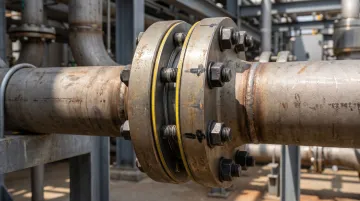
DSC's gaskets and packings catalog covers over 8,000 tooled articles, with new parts added regularly.
Other Static Seal Types
Several additional seal formats fill gaps where O-rings aren't the right fit:
| Seal Type | Function | Typical Application |
|---|---|---|
| Backup rings (anti-extrusion) | Blocks O-ring extrusion on the low-pressure side | Elevated-pressure hydraulic systems; available in 90 durometer NBR, FKM, and PTFE |
| Bonded (Dowty) seals | Metal washer + vulcanized rubber insert | Threaded hydraulic port connections where a separate O-ring isn't practical |
| X-rings (quad-rings) | Resists twisting; more stable seating than O-rings | Static grooves requiring consistent compression; tooled for all AS568 gland sizes |
| Square-cut seals | Better gap-extrusion resistance with minimal cross-section deformation | Static grooves in higher-clearance housings |
DSC stocks backup rings for the full AS568 series and X-rings in both FKM and NBR, with custom sizing available for non-standard housings.
Materials Used in Static Seals
No single elastomer covers every application. Fluid type, temperature range, and system pressure all drive material selection — a mismatch in any one of these causes premature failure.
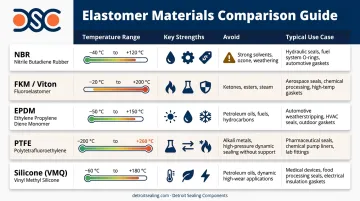
Here's a quick-reference summary before the detailed breakdown:
| Material | Temp Range | Strengths | Avoid |
|---|---|---|---|
| NBR | -30°C to +100°C | Petroleum oils, hydraulic fluids | Aromatic solvents, ozone |
| FKM / Viton | -20°C to +200°C | Fuels, acids, solvents | Cost-sensitive low-temp apps |
| EPDM | -45°C to +150°C | Water, steam, ozone | Petroleum-based fluids |
| PTFE | -200°C to +260°C | Broad chemical resistance | High sustained compression |
| Silicone (VMQ) | -50°C to +175°C | Extreme temps, food/pharma | Mechanical load, abrasion |
NBR (Nitrile)
The workhorse elastomer for static seals. NBR delivers excellent resistance to petroleum-based oils, fuels, and hydraulic fluids with good mechanical strength. Operating temperature range: -30°C to +100°C (compound-specific).
Best for: automotive hydraulics, industrial fluid power, and oil & gas ground-level equipment where aromatic solvent and ozone exposure are limited.
FKM / Viton
When temperatures climb or chemical exposure intensifies, FKM is the go-to. It resists fuels, mineral oils, acids, and many solvents across a temperature range of -20°C to +200°C. The cost premium over NBR is real, so it's best reserved for applications where performance genuinely demands it.
Typical applications: automotive fuel systems, chemical processing flanges, and aerospace hydraulic/pneumatic systems.
EPDM
Purpose-built for water, steam, weathering, and ozone exposure. Temperature range: -45°C to +150°C. One firm limitation: EPDM is incompatible with petroleum-based fluids — using it in oil service causes rapid swell and failure.
Common in HVAC, water treatment, and outdoor static joints.
PTFE
Not a traditional elastomer. PTFE resists acids, solvents, and oxidizers that would attack any rubber compound, covering an exceptional temperature range of -200°C to +260°C. Used as soft seals, backup rings, and gasket material.
The trade-off: PTFE cold-flows under sustained compression load, so groove design must compensate to maintain sealing force over time.
Silicone (VMQ)
Silicone handles extremes at both ends of the temperature scale: -50°C to +175°C. Good electrical insulation properties make it a common choice in food, pharmaceutical, and aerospace static seals.
Lower mechanical strength than NBR or FKM limits silicone to low-pressure static interfaces. Avoid it where significant mechanical loading or abrasion is possible.
Static Seal Applications Across Industries
Oil & Gas and Chemical Processing
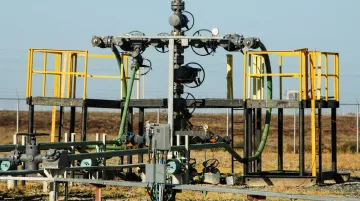
Static seals in oil & gas face some of the harshest conditions in any industrial sector. API 6A pressure classes for wellhead equipment reach 138 MPa (20,000 psi), combined with aggressive hydrocarbons, H₂S exposure, and wide temperature swings.
Common applications and seal choices:
- Wellhead assemblies and valve bonnets — FKM or HNBR O-rings, PTFE backup rings
- Pipeline flanges — spiral wound or ring-joint metallic gaskets to ASME B16.20
- Pressure vessels — elastomeric O-rings in face-seal configurations with backup rings at high pressure
Materials must meet ISO 15156 / NACE MR0175 for H₂S-sour service, and elastomers must be qualified per ISO 23936-2 for petroleum service.
Automotive and Transportation
Static seals appear throughout the powertrain and fuel system — any joint between stationary mating surfaces qualifies:
- Head gaskets and oil pan gaskets (multi-layer steel or graphite composites)
- Fuel filler cap gaskets and fuel pump O-rings
- Coolant circuit O-rings and thermostat housing seals
- Transmission cover gaskets
NBR handles most oil and coolant service. FKM is specified wherever fuel contact or elevated temperatures exceed NBR's capability. A real-world example of failure consequences: NHTSA recall 26V106 involved 69,153 Subaru hybrid vehicles with insufficient sealing in the fuel cap assembly — remedied by incorporating a proper O-ring.
Food, Beverage, and Pharmaceutical
Regulatory compliance governs material selection. Any seal in contact with consumables or sterile processes must meet FDA 21 CFR 177.2600 (rubber food-contact articles) or 21 CFR 177.1550 (PTFE/perfluorocarbon resins). EU applications must comply with Regulation EC 1935/2004 and EU 10/2011.
One important distinction: compliance applies to specific tested formulations, not entire material families. "FDA-grade silicone" means a formulation tested and qualified under the relevant regulation — not any silicone compound.
DSC stocks FDA-compliant formulations across silicone, EPDM, and PTFE, including compounds certified to NSF 61, NSF 42, WRAS, and W270 for drinking water contact. Material compliance documentation is available on request.
Aerospace and Semiconductor
Aerospace static seals must survive pressure and temperature cycling across fuel, hydraulic, and pneumatic systems. Key standards and material choices:
- Dimensions and gland design — SAE AS568D and SAE AS5857
- Fuel and hydraulic service — FKM O-rings
- Combined fuel + low-temperature service — FVMQ (fluorosilicone)
Semiconductor manufacturing adds a different constraint: material cleanliness. Seals in process chambers and gas distribution lines must minimize particle generation and outgassing:
- Aggressive process chemistries and plasma environments — FFKM (perfluoroelastomer)
- Vacuum service groove geometry — dovetail or face-type O-ring grooves
- Contact surface finish — 16 rms or better per Parker's vacuum sealing guidance
DSC serves both segments with technical-grade compounds, including FFKM and FVMQ, and can develop custom compounds through its ISO 17025 accredited lab when standard materials don't meet application requirements.
How to Choose the Right Static Seal
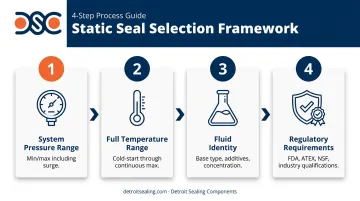
Start with Four Parameters
Before specifying any seal, gather at least these four data points:
- System pressure range — minimum and maximum, including surge conditions
- Full temperature range — cold-start minimum through continuous operating maximum
- Fluid identity — not just "oil" but base type, additives, and concentration
- Regulatory requirements — FDA, ATEX, NSF, or industry-specific qualifications
A mismatch in any one of these causes failure. Temperature range errors lead to compression set loss or hardening; fluid incompatibility causes swell, shrinkage, or chemical attack; pressure underestimation leads to extrusion.
Surface Finish and Groove Geometry
Static seals generally need smoother mating surfaces than dynamic applications, but specification still matters. Per Parker's O-ring handbook guidance:
- Standard static O-ring seals: surface finish ≤32 microinch rms
- Face-type gas seals: ≤16 microinch rms
- Static vacuum seals (to 10⁻⁸ Torr): approximately Ra 0.8 µm on contact areas
- Target O-ring compression/squeeze: 15–30% for most static elastomeric applications — 30% is the practical upper limit before excessive squeeze accelerates compression set
Too rough creates leak paths through the seal contact zone. Too smooth on certain elastomers can reduce initial seating. Groove dimensions should follow ISO 3601-2 or SAE AS5857. Slight deviations in groove depth or width directly affect compression percentage and service life, which is exactly why these standards exist.
When Standard Catalog Parts Aren't Enough
Standard O-rings and gaskets cover the majority of static seal applications. But three situations push toward custom:
- Complex geometry — cross-sections or profiles that don't match standard round-cord O-rings
- Extreme media combinations — a fluid + temperature + pressure combination that standard compound grades don't satisfy
- Space constraints — envelope dimensions that don't accommodate standard seal cross-sections
DSC's engineering team uses FEA to model seal behavior under real operating conditions before cutting tooling, simulating deformation, stress distribution, and sealing force across the application envelope. Custom designs can be bench-tested under customer conditions before production. When no existing compound meets the requirement, DSC's ISO 17025 accredited lab develops and validates a custom elastomer formulation from the ground up.
Frequently Asked Questions
What is a static seal?
A static seal is a sealing element installed between two stationary surfaces that don't move relative to each other. It prevents leakage of fluid, gas, or contaminants through compression or clamping force — found in flanges, cover plates, pipe joints, and bolted assemblies.
What is the difference between a static seal and a dynamic seal?
Static seals have no relative motion between mating surfaces, which means simpler design, no frictional wear, and longer service life. Dynamic seals accommodate movement (rotation or reciprocation) and require greater abrasion resistance, lubrication, and more frequent replacement.
What are the different types of static seals?
The main types are O-rings, gaskets and flat seals, backup/anti-extrusion rings, bonded (Dowty) seals, square-cut seals, and X-rings (quad-rings). Each suits different geometries, pressure levels, and installation configurations.
Which is better for static seals — nitrile or Viton?
NBR is the cost-effective default for oil and fuel resistance in moderate temperatures (-30°C to +100°C). FKM is specified where temperatures are higher or chemical exposure is more aggressive. Match the compound to your actual fluid and operating temperature before specifying.
What surface finish is required for a static seal?
For standard static O-ring grooves, Parker guidance specifies a maximum of 32 microinch rms; face-type gas seals require 16 microinch rms or better. Always verify against the applicable standard (ISO 3601-2, SAE AS5857) or the seal manufacturer's specification.