Material selection plays a critical role in seal performance, especially in applications exposed to heat, moisture, chemicals, or outdoor environments. Choosing the wrong elastomer can lead to swelling, cracking, compression set, or premature failure, often resulting in leaks, downtime, or increased maintenance costs.
EPDM seal material is widely used across industrial, automotive, water, and HVAC applications due to its excellent resistance to weathering, ozone, steam, and many chemicals. However, EPDM is not suitable for every environment, making it important to understand both its strengths and limitations before specifying it for sealing applications.
This guide explains EPDM seal material properties, performance characteristics, typical applications, compatibility considerations, and when EPDM is the right choice for reliable, long-term sealing.
Need to know
EPDM seal material is widely used for applications exposed to heat, water, steam, ozone, and outdoor environments.
Key EPDM properties include strong weathering resistance, good temperature stability, and reliable performance in water-based systems.
EPDM offers good chemical compatibility with water, steam, dilute acids, and alkalis but is not suitable for oils, fuels, or hydrocarbons.
Common EPDM applications include automotive weather seals, drinking water systems, HVAC equipment, and static industrial sealing.
Selecting the correct EPDM compound and understanding its limitations helps prevent premature seal failure and improves long-term reliability.
What Is EPDM Seal Material?
EPDM (Ethylene Propylene Diene Monomer) is a synthetic elastomer commonly used in sealing applications where exposure to heat, water, steam, and environmental elements is expected. Its molecular structure provides strong resistance to ozone, UV radiation, and oxidation, making it well suited for outdoor and weather-exposed systems.
EPDM seal material is available in a range of hardness levels, formulations, and certifications, allowing it to be tailored for specific performance and compliance requirements.
EPDM Seal Material Properties for Industrial Applications
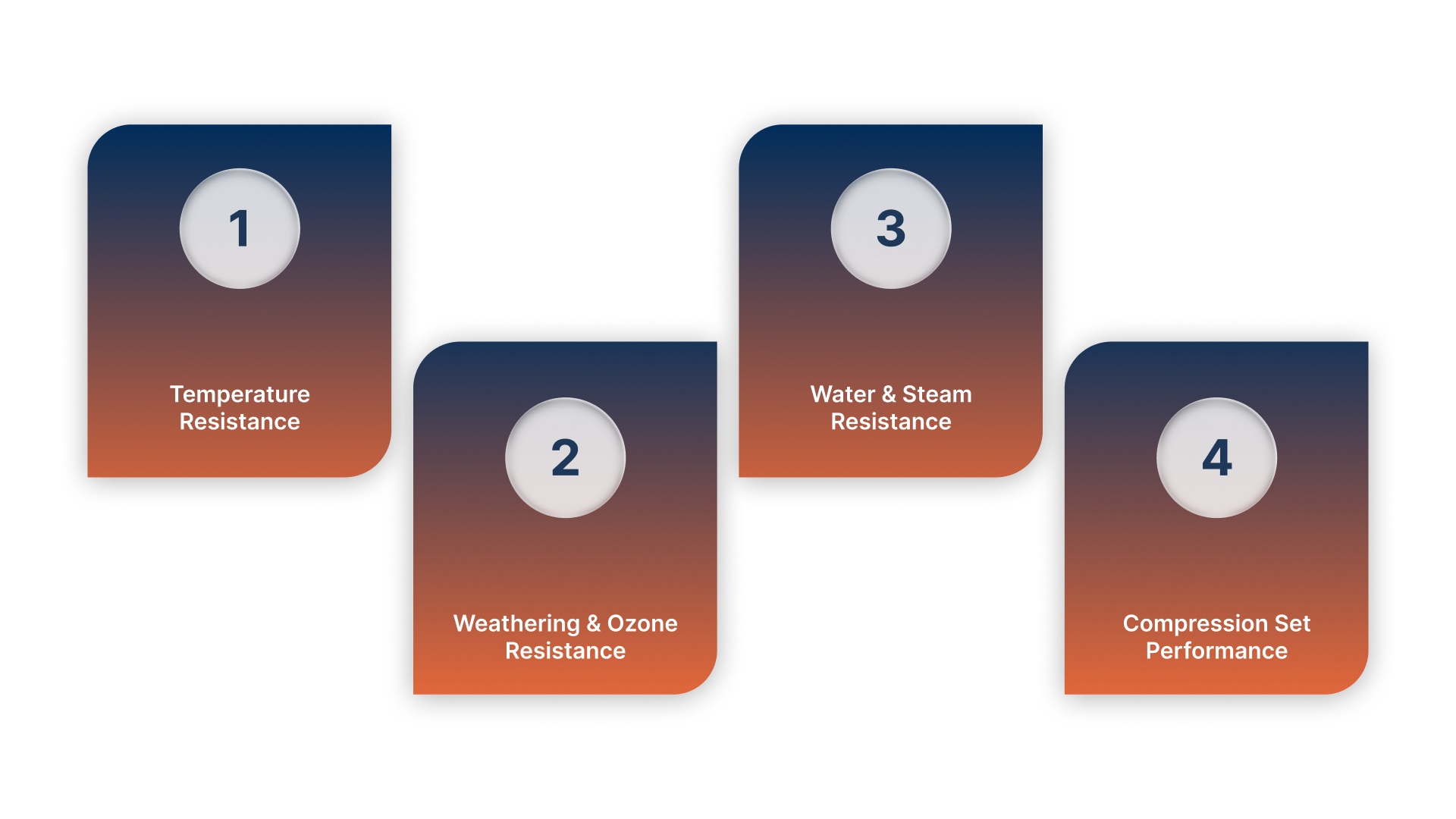
Understanding EPDM’s material properties helps determine where it performs best and where alternative elastomers may be required.
1. Temperature Resistance
EPDM performs well across a wide temperature range:
Typical operating range: -40°C to +120°C (-40°F to +248°F)
Special formulations may handle higher short-term temperatures
This makes EPDM suitable for applications involving hot water, steam, and outdoor temperature fluctuations.
2. Weathering and Ozone Resistance
One of EPDM’s strongest advantages is its resistance to environmental exposure.
Excellent resistance to ozone and UV radiation
Maintains elasticity in outdoor conditions
Resists cracking and surface degradation over time
These properties make EPDM a common choice for exterior seals and weather-exposed components.
3. Water and Steam Resistance
EPDM is highly resistant to:
Water
Steam
Dilute acids and alkalis
This is why EPDM seal material is widely used in drinking water systems, plumbing, HVAC, and sanitary applications.
4. Compression Set Performance
Compression set refers to a material’s ability to return to its original shape after being compressed.
EPDM offers good compression set resistance when properly formulated
Performance varies by compound, temperature, and load duration
Correct compound selection is important for long-term sealing effectiveness.
Chemical Compatibility of EPDM Seal Material
EPDM seal material is widely valued for its resistance to water, steam, and many chemicals, making it suitable for a range of industrial and sanitary applications. Understanding its chemical compatibility helps ensure EPDM seals maintain performance and durability when exposed to specific fluids or environments.
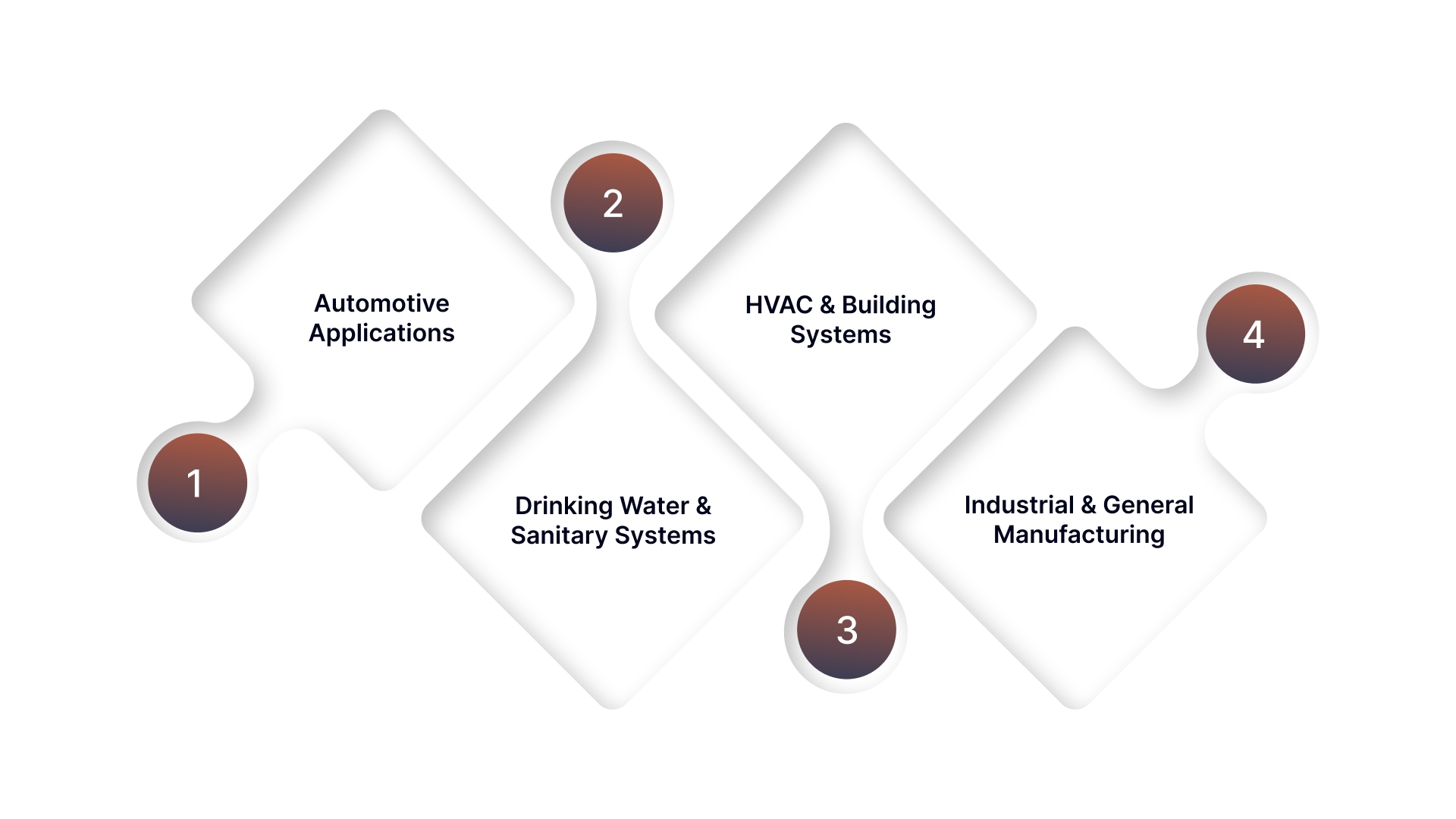
1. Automotive Applications
EPDM is widely used in automotive systems where exposure to heat, ozone, and outdoor conditions is common.
Weather seals: Used around doors, trunks, and sunroofs to prevent water and air ingress while maintaining flexibility over time.
Door and window seals: EPDM maintains elasticity under repeated compression and temperature cycling, supporting long-term sealing performance.
Cooling system components: Commonly used in radiator hoses and cooling system seals due to its resistance to heat and water-based coolants.
EPDM is preferred in automotive applications where durability against environmental exposure is more critical than resistance to oils or fuels.
2. Drinking Water and Sanitary Systems
EPDM is frequently selected for water-related applications due to its compatibility with potable water and steam.
O-rings and gaskets for potable water: EPDM can be compounded to meet drinking water standards and resist degradation in continuous water contact.
Plumbing and valve seals: Provides reliable static sealing in valves and fittings exposed to hot or cold water.
Wastewater treatment equipment: EPDM resists moisture, weathering, and many treatment chemicals used in water systems.
Properly formulated EPDM compounds can meet drinking water and sanitary compliance requirements, making them suitable for regulated environments.
3. HVAC and Building Systems
EPDM is commonly used in HVAC applications where seals are exposed to fluctuating temperatures, moisture, and airflow.
Duct seals: Maintains flexibility and sealing performance across temperature changes.
Expansion joints: Absorbs movement caused by thermal expansion without cracking or hardening.
Air handling units: Resists moisture and aging, supporting long service life in continuous operation systems.
EPDM’s resistance to temperature variation and environmental exposure helps reduce maintenance needs in building systems.
4. Industrial and General Manufacturing
In industrial settings, EPDM is often used in applications involving water, steam, or outdoor exposure.
Static sealing applications: Suitable for flanges, covers, and enclosures where movement is limited.
Equipment exposed to weather or moisture: Performs well in outdoor or washdown environments.
Non-oil-based fluid systems: Compatible with water-based fluids, mild chemicals, and steam applications.
EPDM is typically selected where environmental resistance and durability are required, and contact with oils or fuels is not present.
EPDM vs Other Common Elastomers
Selecting the right elastomer depends on the operating environment, fluid exposure, and performance requirements. Comparing EPDM with commonly used elastomers helps clarify where each material is best suited.
Property / Material | EPDM | NBR (Nitrile) | FKM (Viton®) | Silicone |
Water & Steam Resistance | Excellent | Fair | Good | Excellent |
Weather / Ozone Resistance | Excellent | Poor | Good | Excellent |
Heat Resistance | Good | Moderate | Excellent | Excellent |
Oil & Fuel Resistance | Poor | Excellent | Excellent | Poor |
Chemical Resistance | Good (acids, alkalis) | Moderate | Excellent (wide range) | Moderate |
Low-Temperature Flexibility | Good | Moderate | Good | Excellent |
Typical Applications | Water systems, HVAC, weather seals | Oil seals, fuel systems | High-temp chemical sealing | Medical, food, temperature extremes |
This comparison highlights why EPDM seal material is commonly chosen for water, outdoor, and weather-exposed applications, while other elastomers may be more suitable for oil, fuel, or high-chemical environments.
When EPDM May Not Be Suitable
While EPDM seal material offers excellent resistance to heat, weathering, and water-based media, it is not suitable for every application. Understanding its limitations is important to avoid premature seal failure or performance issues.
EPDM may not be the right choice when:
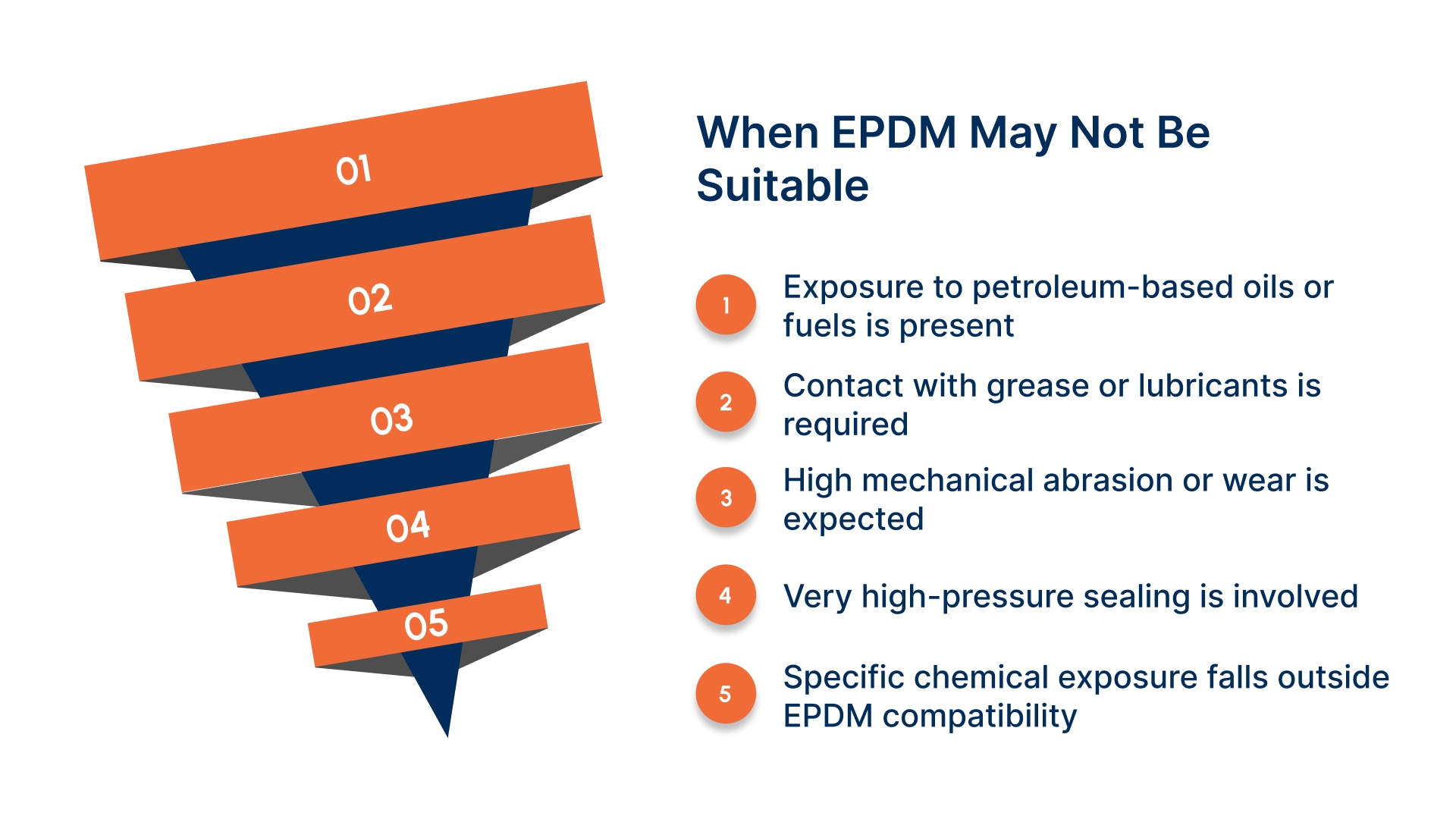
Exposure to petroleum-based oils or fuels is present: EPDM is not compatible with mineral oils, gasoline, diesel, or most hydrocarbon-based fluids and can swell or degrade in these environments.
Contact with grease or lubricants is required: Applications involving oil-based lubricants typically require alternative elastomers such as NBR or FKM.
High mechanical abrasion or wear is expected: EPDM is generally better suited for static or low-movement sealing rather than high-wear dynamic applications.
Very high-pressure sealing is involved: In extreme pressure environments, other elastomers or reinforced seal designs may provide better extrusion resistance.
Specific chemical exposure falls outside EPDM compatibility: While EPDM performs well with many acids and water-based chemicals, certain solvents and hydrocarbons can cause degradation.
Evaluating the operating environment, fluid media, pressure, and movement is essential when determining whether EPDM is the appropriate seal material for a given application.
Common Applications of EPDM Seal Material
EPDM seal material is widely used across industries where resistance to heat, ozone, weathering, water, and steam is critical. The table below outlines common EPDM seal applications and why the material is well suited for each use case.
Industry / System | Typical EPDM Applications | Why EPDM Is Used |
Automotive | Weather seals, door and window seals, cooling system components | Resists heat, ozone, and long-term outdoor exposure |
Drinking Water & Sanitary Systems | O-rings, gaskets, valve seals, wastewater equipment | Can be formulated for potable water and sanitary compliance |
HVAC & Building Systems | Duct seals, expansion joints, air handling units | Handles temperature variation, moisture, and aging |
Industrial & General Manufacturing | Static seals, enclosures, outdoor equipment | Performs well in moisture and weather-exposed environments |
Electrical & Utility Systems | Cable grommets, enclosure seals | Provides insulation and environmental protection |
EPDM’s combination of durability, flexibility, and environmental resistance supports long service life in applications where oil resistance is not required.
When to Choose EPDM Seal Material
EPDM seal material is best suited for applications where environmental exposure, temperature variation, and long-term durability are key concerns. Its properties make it a reliable choice in systems that prioritize weather resistance and compatibility with non-oil-based media.
EPDM is a good choice when:
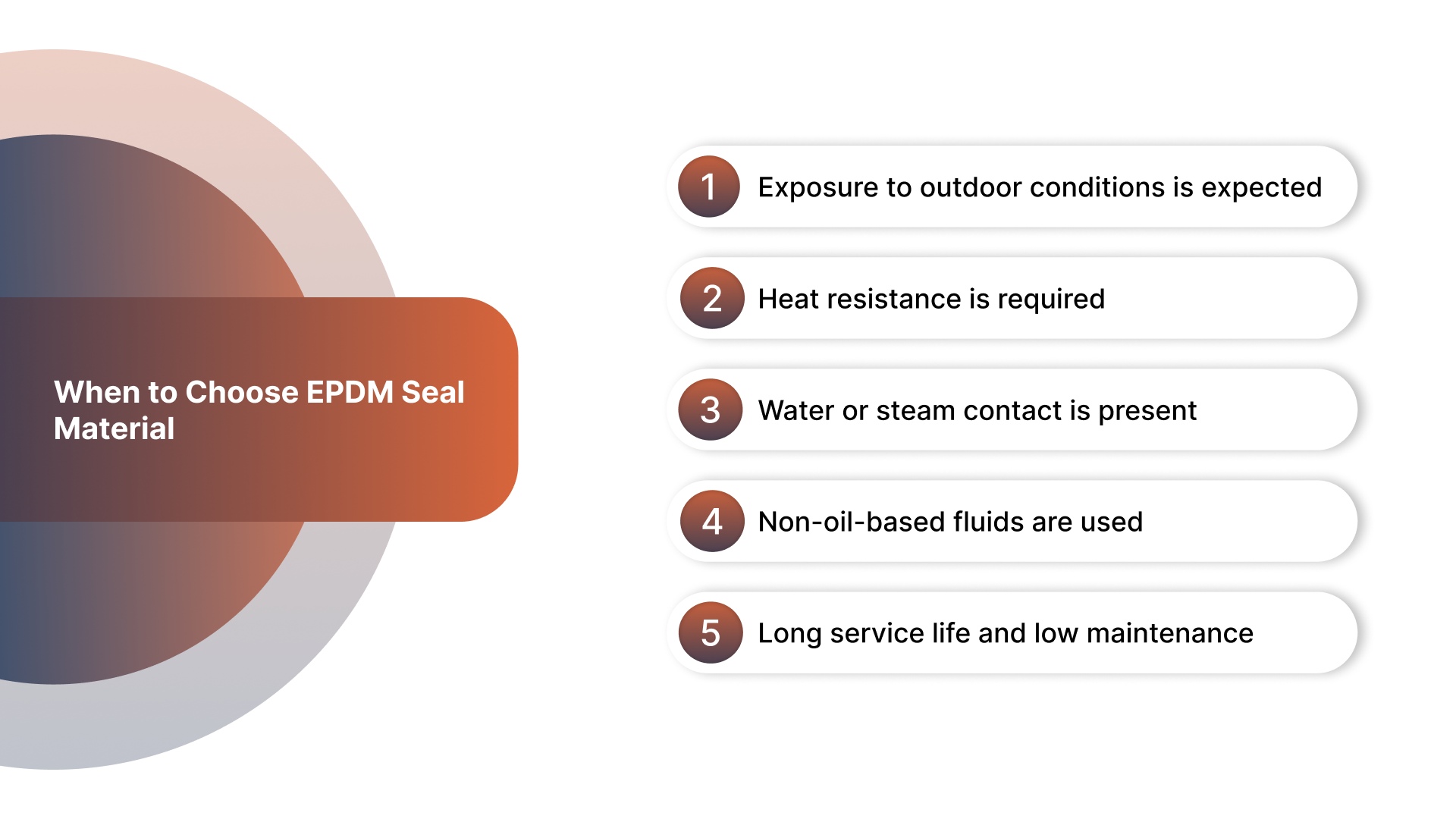
Exposure to outdoor conditions is expected, including ozone, UV radiation, and weathering
Heat resistance is required, typically in moderate to high-temperature environments
Water or steam contact is present, such as in potable water, plumbing, or sanitary systems
Non-oil-based fluids are used, including water, coolants, and some chemicals
Long service life and low maintenance are important in static sealing applications
Selecting EPDM in these conditions helps maintain seal integrity, reduce degradation over time, and support consistent performance across a wide range of industrial and commercial applications.
Conclusion
EPDM seal material offers excellent resistance to weathering, ozone, water, and steam, making it a reliable choice for many industrial, automotive, and sanitary applications. Understanding its material properties and compatibility limitations is essential for preventing premature seal failure.
By selecting the right EPDM compound and design for the application, organizations can improve reliability, reduce maintenance, and extend service life. Detroit Sealing Components provides the technical support and material expertise needed to specify EPDM seals with confidence. Contact Detroit Sealing Components today.
FAQs
1. What is EPDM seal material commonly used for?
EPDM seal material is commonly used for water systems, HVAC equipment, automotive weather seals, and outdoor applications due to its resistance to heat, ozone, and moisture.
2. Is EPDM compatible with oils or fuels?
No, EPDM is generally not compatible with petroleum oils, fuels, or hydrocarbon-based lubricants.
3. Can EPDM seals be used for drinking water applications?
Yes, EPDM compounds can be formulated to meet potable water and sanitary compliance requirements.
4. How does EPDM compare to nitrile rubber (NBR)?
EPDM performs better in water and outdoor environments, while NBR is better suited for oil and fuel exposure.
5. When should EPDM seals be avoided?
EPDM should be avoided in applications involving oils, fuels, or solvent-based fluids.