Leaks, swelling, and heat damage do not show up on spreadsheets until a seal fails and a line shuts down. Unplanned downtime costs the world’s 500 biggest companies $1.4 trillion each year, which is 11% of revenue, and many plants lose over 25 hours a month. What fluid is actually touching your seal right now: oil, water, fuel, or a harsh cleaner?
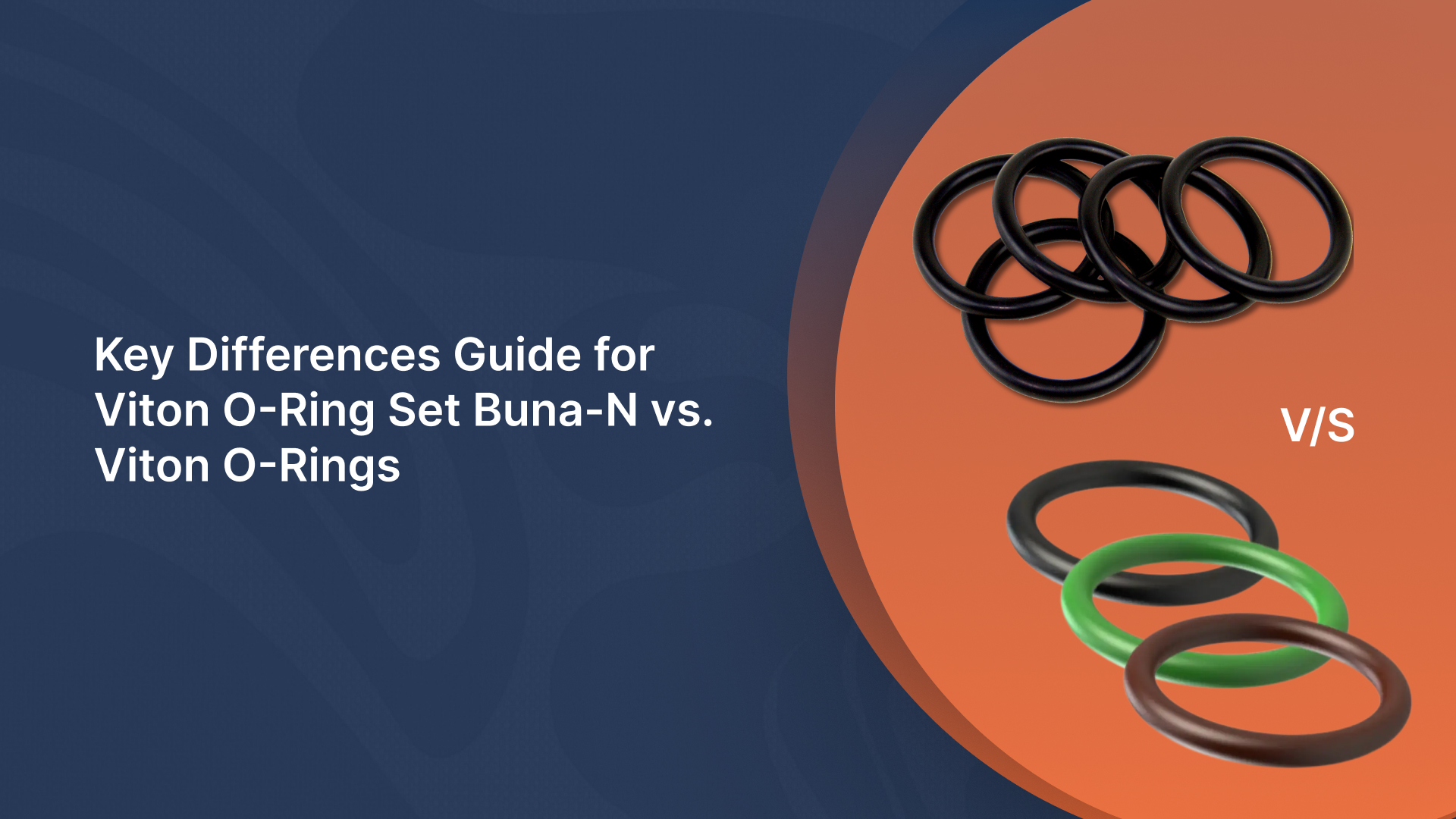
The key differences between Buna-N vs. Viton O-Rings come down to heat tolerance, chemical resistance, aging, and how long the seal survives before it leaks again. Buna-N handles oils, water, and wear well but breaks down when heat, ozone, and aggressive fluids rise.
Viton resists high temperatures, fuels, solvents, and aging but costs more and behaves differently under friction. How much downtime can your operation absorb when the wrong material goes soft, cracks, or takes a permanent set?
In this blog, we break down how to choose between Buna-N vs. Viton O-Rings so you avoid repeat failures and keep equipment running.
Key Takeaways
Material choice sets your maintenance rhythm. Buna-N favors frequent service cycles, while Viton supports long run times with fewer seal changes.
Chemical contact drives most hidden failures. The fluid in contact with your O-ring determines whether it swells, hardens, or remains stable.
Heat changes rubber before leaks appear. Seals lose shape and force long before you see oil on the floor.
Aging matters as much as friction. Some elastomers harden and flatten faster, even when wear looks minimal.
Your operating environment decides the winner. Indoor, mild service favors Buna O-rings, while harsh exposure pushes you toward Viton.
What Are The Key Distinguishing Factors Between Buna-N vs. Viton O-Rings?
You are not choosing between two brands or two product tiers. You are choosing between two polymer systems that behave very differently once heat, chemicals, and time enter your process. Buna-N vs. Viton O-Rings is a duty cycle decision that determines how often you experience leaks, downtime, and rework.
To frame this choice clearly, here is what changes when you switch materials:
Factor | Buna-N (NBR) | Viton (FKM) |
Main strength | Handles oils, water, and wear | Handles heat, chemicals, and aging |
Heat tolerance | Breaks down faster | Stays stable at high temperatures |
Chemical exposure | Limited to mild fluids | Resists fuels, solvents, and ozone |
Service life | Shorter in harsh duty | Longer in harsh duty |
How Buna O-Rings and Viton Are Chemically Built
Both materials look similar on a shelf, but their rubber backbones are very different. That backbone controls how your seal reacts to heat, fuel, steam, and cleaning agents. When you compare Buna O-rings to Viton, you are comparing two types of polymer chains.
Here is what separates them at a chemical level:
Buna-N or NBR is made from acrylonitrile and butadiene. This structure stays flexible and tough with oils, water, and mild fuels but softens when heat and aggressive chemicals rise.
Viton or FKM is a fluorocarbon elastomer. The fluorine-rich structure blocks chemical attack and slows heat-driven breakdown, which keeps the rubber stable longer.
This chemical makeup explains why Viton resists fuels, solvents, ozone, and high temperatures that Buna-N cannot tolerate.
Why Material Type Changes Seal Life
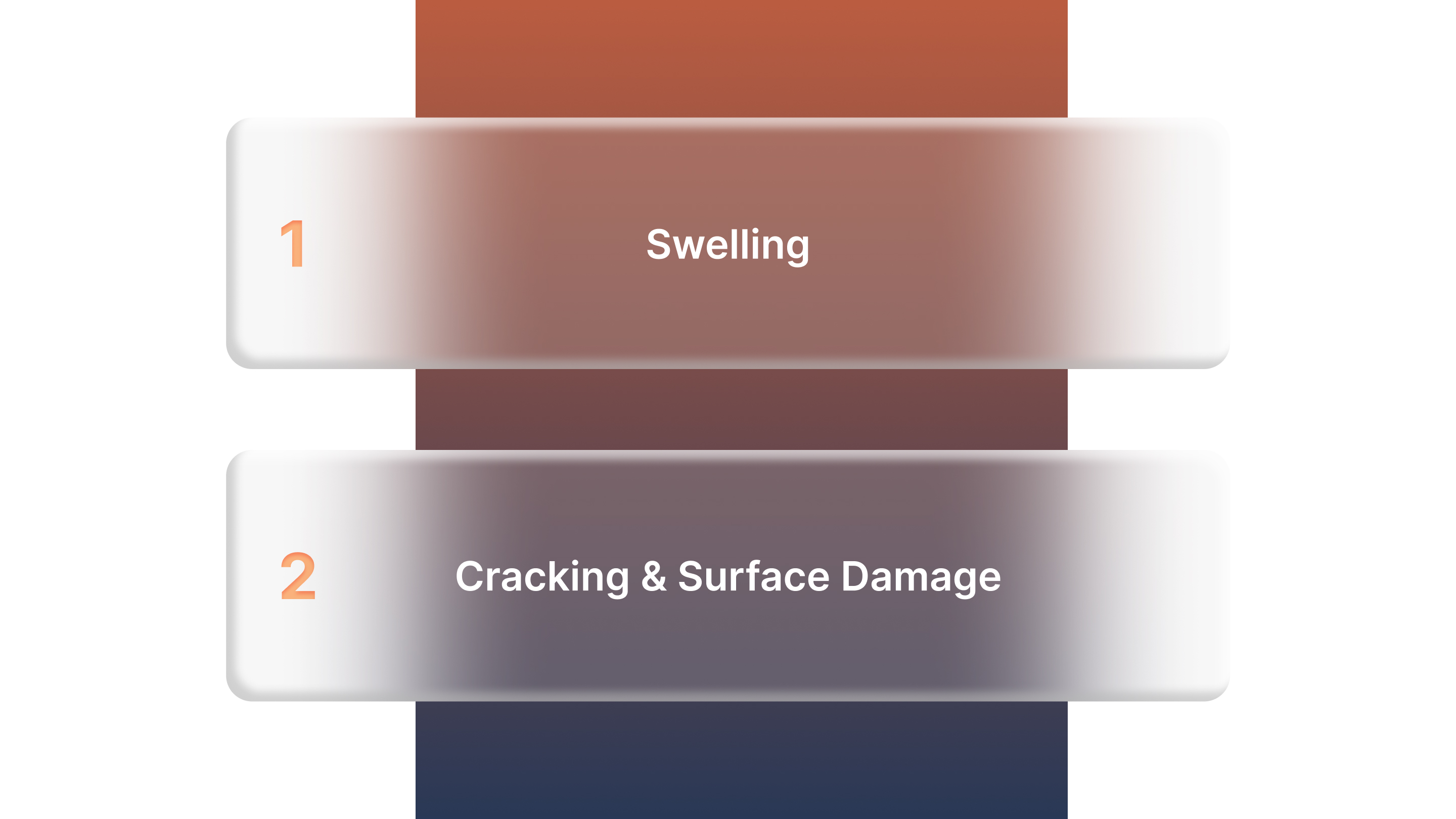
Seal failure does not start as a leak. It starts when the rubber changes shape or chemistry under stress. The material you choose controls how quickly that change happens.
These failure modes follow the polymer:
Swelling: Buna-N absorbs certain fuels and cleaners, causing it to swell and lose shape. Viton resists this absorption.
Cracking and surface damage: Heat, ozone, and UV attack Buna-N faster. Viton stays stable in these environments.
When you choose Buna-N vs. Viton O-Rings, you are deciding whether the seal will retain its shape or slowly become a leak source.
That chemistry only matters once your process adds heat and pressure to the mix. This is where the real separation between Buna-N and Viton shows up in daily operation.
Temperature, Heat, and Pressure Limits in Buna-N vs. Viton O-Rings
Heat is the most common silent seal killer in industrial systems. You may not see it, but thermal stress changes rubber long before leaks appear. Over 60% of industrial hydraulic system failures are tied to fluid breakdown caused by heat, which then attacks the seal material.
To show how this affects Buna-N vs. Viton O-Rings, this table sets the boundary:
Condition | Buna-N (NBR) | Viton (FKM) |
Continuous heat | Loses elasticity faster | Stays stable |
Pressure with heat | Takes compression set | Holds sealing force |
Hot oil and fuel | Starts to swell | Resists chemical attack |
Service life | Shortens quickly | Remains predictable |
When Viton Survives What Buna-N Cannot
Viton is built for thermal and chemical stress that destroys standard nitrile seals. This is where you rely on it to hold pressure and shape.
These are the conditions Viton handles:
High temperature oil, fuel, and exhaust environments
Oxygenated and blended fuels in modern systems
Ozone and outdoor exposure without cracking
Vacuum and pressure cycles at elevated heat
Wear and chemical exposure reshape the seal over time, and replacement frequency becomes a budget decision when material choice enters the equation.
Heat sets the stage, but the fluids flowing through your system decide how fast the seal actually breaks down. That is where Buna-N and Viton begin to separate even more clearly.
Fluid, Fuel, and Chemical Exposure Differences
Most seal failures start with fluid attack, not pressure loss. The liquid or gas in contact with the rubber slowly changes its structure until the seal no longer fits its groove. You avoid this by matching the polymer to the fluid.
This comparison helps you see the risk clearly:
Exposure Type | Buna-N | Viton |
Water and glycol | Strong | Good |
Oils and grease | Strong | Strong |
Solvents and fuels | Limited | Excellent |
Ozone and UV | Weak | Strong |
Where Buna-N O-Rings Perform Best
Nitrile works well when the fluids are mild, and wear is the main concern. These are the conditions where you see stable performance.
Use NBR in:
Water and potable fluid systems
Hydraulic oils and lubricants
Glycol-based coolants
Mild fuel and oil transfer lines
Where Viton O-Rings Are Required
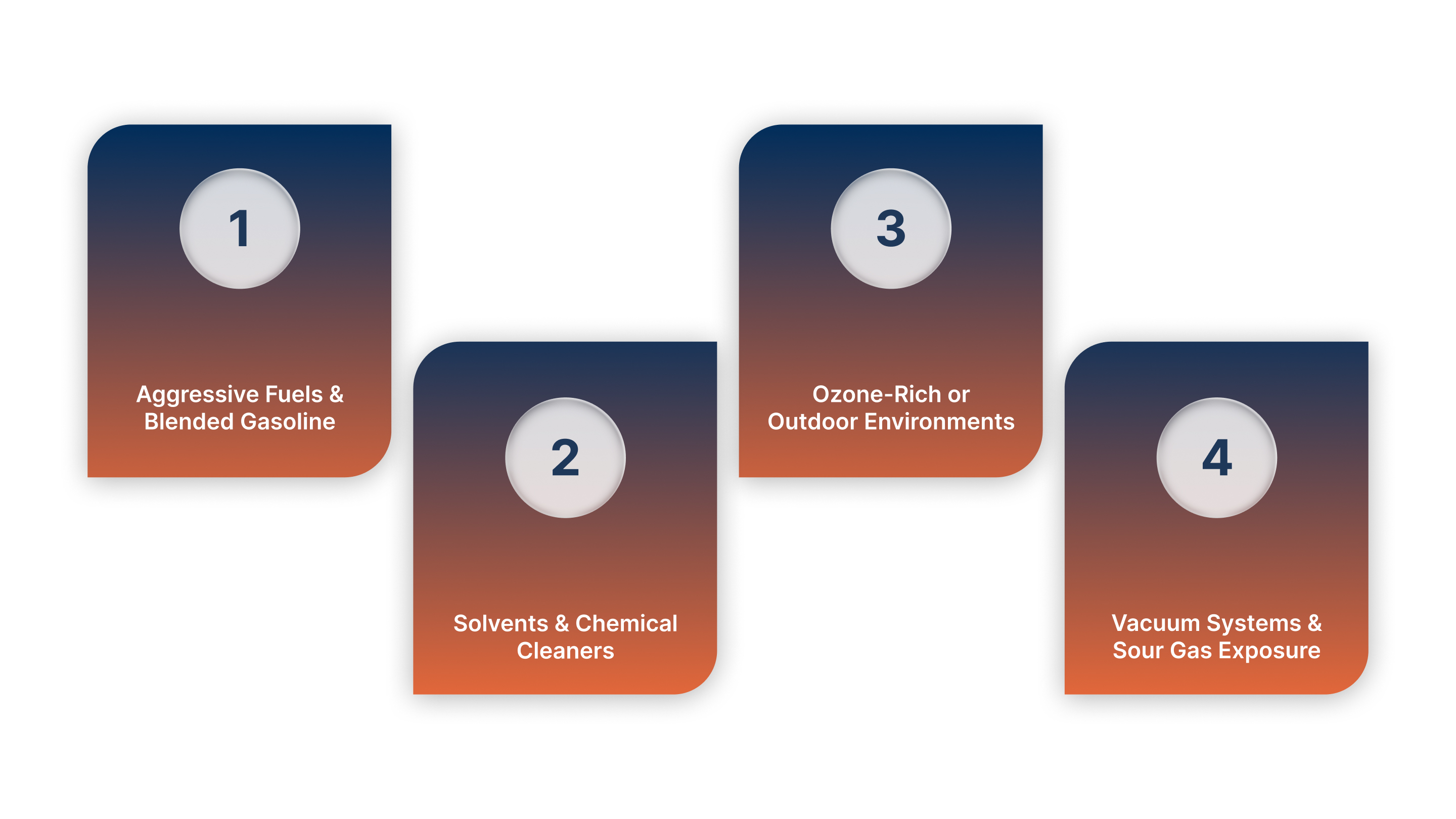
Viton is required when the fluid or environment attacks standard rubber. This is where Buna-N loses shape and Viton keeps sealing.
Use Viton in:
Aggressive fuels and blended gasoline
Solvents and chemical cleaners
Ozone-rich or outdoor environments
Vacuum systems and sour gas exposure
Mechanical Wear, Compression Set, and Aging
Every seal loses shape as it slides, squeezes, and heats up. You see this as a slow leakage that grows over time instead of a sudden failure. The material you choose controls how long the rubber keeps its sealing force.
This table shows how Buna-N vs. Viton O-Rings behave under wear and time:
Property | Buna-N (NBR) | Viton (FKM) |
Abrasion resistance | High | Moderate |
Tear strength | High | Moderate |
Compression set | Good | Excellent |
Aging and hardening | Faster | Slower |
Use this breakdown to match duty to material:
Buna-N handles sliding and friction well in pumps and cylinders
Buna-N seals wear down mechanically, but fail sooner from aging
Viton seals resist permanent flattening that leads to leaks
Cost, Replacement Cycles, and Risk Tradeoffs
Seal cost does not stop at the purchase order. The fundamental tradeoff between Buna-N vs. Viton O-Rings shows up in service intervals.
This comparison shows how costs shift over time:
Factor | Buna-N | Viton |
Unit price | Lower | Higher |
Replacement frequency | Higher | Lower |
Downtime exposure | Higher | Lower |
Planned maintenance fit | Short cycles | Long cycles |
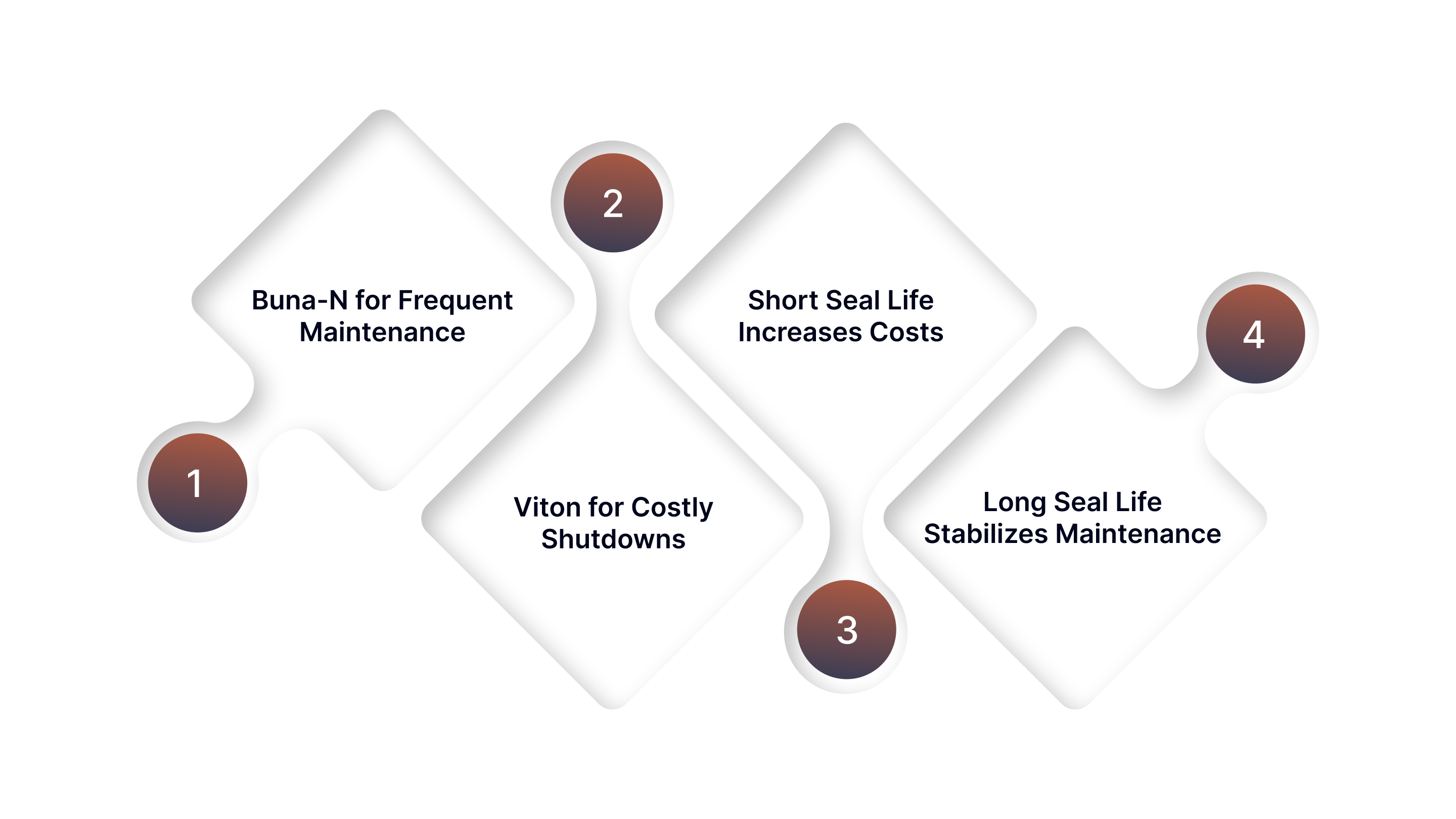
Use this to plan your spares and labor:
Buna-N fits systems with frequent scheduled maintenance
Viton fits systems where shutdowns are expensive
Short seal life raises labor costs and lost production
Long seal life stabilizes maintenance planning
Service life drives cost, so your next step is matching the material to your operating conditions using a few clear checks before you order.
How to Choose Between Buna-N vs. Viton O-Rings
You do not need complex tools to make this decision. You need clear answers about what the seal will face in service. Three conditions control the outcome.
Use this quick decision table to guide you:
Question | If this is true | Choose |
Does temperature stay below 250°F | Yes | Buna-N |
Are fuels, solvents, or steam present | Yes | Viton |
Is the seal exposed to ozone or outdoors | Yes | Viton |
Run through these checkpoints before you order:
What is the highest temperature the seal will see
What fluids touch the rubber during operation and cleaning
What environment surrounds the seal over time
Once you have those answers in hand, the next step is finding a supplier that applies them to real operating conditions. That is where the right materials, sizing, and support start to matter.
Where Detroit Sealing Fits This Decision
You are managing temperature, pressure, and motion, not just buying O-rings. Detroit Sealing Components applies Buna-N temperature ratings based on how seals behave in hydraulic, oil, and gas, water, and medical systems, where heat changes cause leaks, extrusion, and early failure. You get materials and geometries that remain within their usable operating window instead of degrading in service.
Here is how Detroit Sealing supports temperature-driven seal selection:
Buna-N O-rings in AS568, JIS, and metric sizes for static and dynamic sealing
Backup rings in NBR and FKM to prevent extrusion when heat softens the rubber
Hydraulic and pneumatic seals are built for high pressure, friction, and temperature rise
Metal-bonded rubber seals for strength in aerospace, military, and heavy machinery
O-ring kits for fast field replacement and reduced downtime
Infinite Size O-ring technology for large or non-standard diameters without tooling delays
This product range keeps Buna-N and Viton seals operating within their true temperature limits rather than failing under heat, cold, or pressure.
Explore Detroit Sealing’s full product catalog to find the right sealing solution for your application.
Conclusion
Choosing the wrong elastomer leads to leaks, unplanned shutdowns, and compliance problems that cost far more than the seal itself. Viton and Buna-N serve very different duty cycles based on heat, fluids, and environment, and Detroit Sealing Components supports this choice with stocked materials, engineered options, and application guidance.
Before you place your next order, check the temperature range, the media touching the seal, and the exposure conditions so you select a material that lasts.
Contact Detroit Sealing Components today to review your application and get matched with the right Buna-N or Viton sealing solution!
FAQs
Q: Can you mix Buna-N and Viton O-rings inside the same hydraulic manifold?
A: Yes, but you must separate circuits by fluid and temperature. Mixing materials in the same exposure zone causes uneven wear and unpredictable maintenance cycles.
Q: Do ethanol-blended fuels change O-ring groove sizing or squeeze?
A: Ethanol causes certain elastomers to swell. That swelling alters the squeeze, which can increase friction or force the seal out of tolerance.
Q: How does seal material affect vacuum pump performance?
A: Some elastomers release trapped gases under vacuum. That outgassing can reduce pump efficiency and contaminate sensitive chambers.
Q: Can switching elastomer types reduce recurring valve stem leakage?
A: Yes, material stiffness and rebound affect stem sealing force. The wrong elastomer loses contact pressure even when the stem is within tolerance.
Q: Does seal choice impact how often you need to relube moving components?
A: Certain elastomers create more drag against metal surfaces. Higher drag increases lubricant breakdown and shortens service intervals.
Q: Can seal material influence pressure spikes in closed hydraulic systems?
A: Yes, elastomer flexibility affects volume change under pressure. That change can alter how pressure surges move through the system.