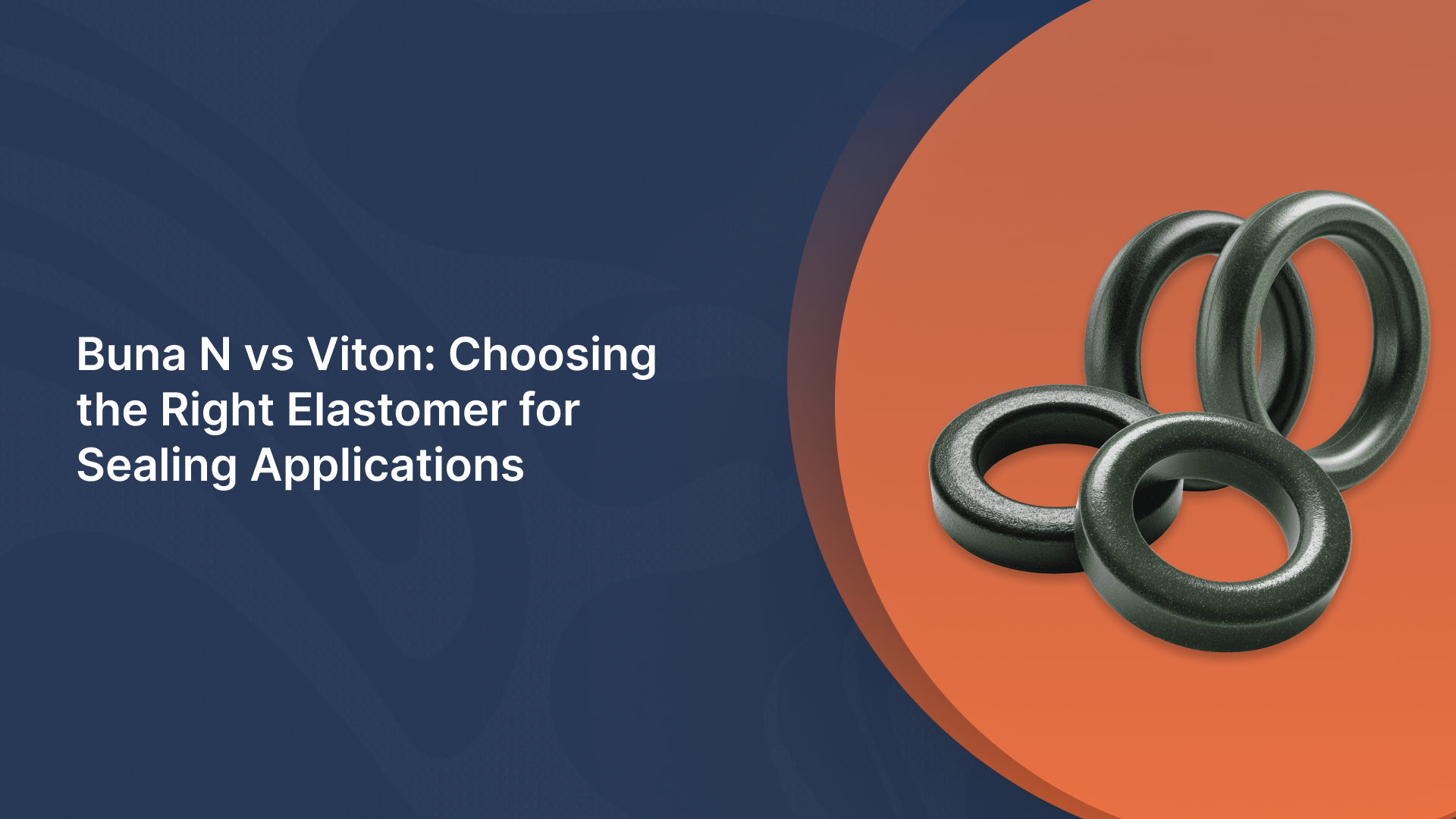
When it comes to sealing solutions, choosing the right material is everything. Among the many options available, Buna N (Nitrile) and Viton (FKM) stand out as two of the most reliable choices. But how do you know which one is best for your application?
The answer lies in understanding the key differences between these two elastomers. From temperature tolerance to chemical resistance, each has unique strengths that make it ideal for certain environments.
In this blog, we’ll dive into the Buna N vs Viton debate, helping you choose the perfect material to meet your specific sealing needs, whether you're working in aerospace, or high-temperature industrial settings.
TL;DR
Buna N is cost-effective, ideal for moderate temperatures, oil resistance, and general industrial use.
Viton excels in high-temperature and high-chemical environments, suited for aerospace, chemical processing, and light industrial fuel applicationotive.
Buna N degrades under UV and high heat, while Viton maintains flexibility and durability in extreme conditions.
Cost: Buna N is cheaper for high-volume, while Viton has a higher initial cost but better longevity.
Choose Buna N for general use and Viton for extreme conditions.
What Is Buna N (Nitrile Rubber)?
Buna N (Nitrile Butadiene Rubber, NBR) is a synthetic rubber made from acrylonitrile and butadiene, commonly used in sealing applications, particularly where oil and fuel resistance is required.
Excellent for oil and fuel seals
Ideal for hydraulic systems and light industrial fuel applicationotive applications
Performs well in moderate temperature environments
What Is Viton (FKM Fluoroelastomer)?
Viton is a fluoroelastomer (FKM) with fluorine atoms in its polymer structure, offering exceptional performance in high-temperature and chemically demanding environments.
Superior heat and chemical resistance
Used in aerospace and chemical processing
Ideal for high-temperature seals
Decision Checklist: Buna N vs Viton
Choosing between Buna N and Viton depends on several key factors. Use the following checklist to guide your decision-making process:
Factor | Buna N (NBR) | Viton (FKM) |
Operating Temperature | Moderate (–40°C to +120°C) | High (–20°C to +200°C+) |
Exposure to Oils and Fuels | Excellent (especially petroleum-based fluids) | Excellent (but can be costly for general use) |
Chemical Exposure | Good for hydrocarbons and some chemicals | Excellent for acids, solvents, and aggressive chemicals |
Abrasion Resistance | Good for general industrial applications | Excellent for high-wear, high-stress environments |
Compression Set Resistance | Moderate, may require frequent replacements | Excellent, maintains integrity over time |
Regulatory Compliance | Good for light industrial fuel application and general use | Ideal for aerospace, pharmaceutical, and harsh chemical environments |
Debunking Common Myths About Buna N and Viton
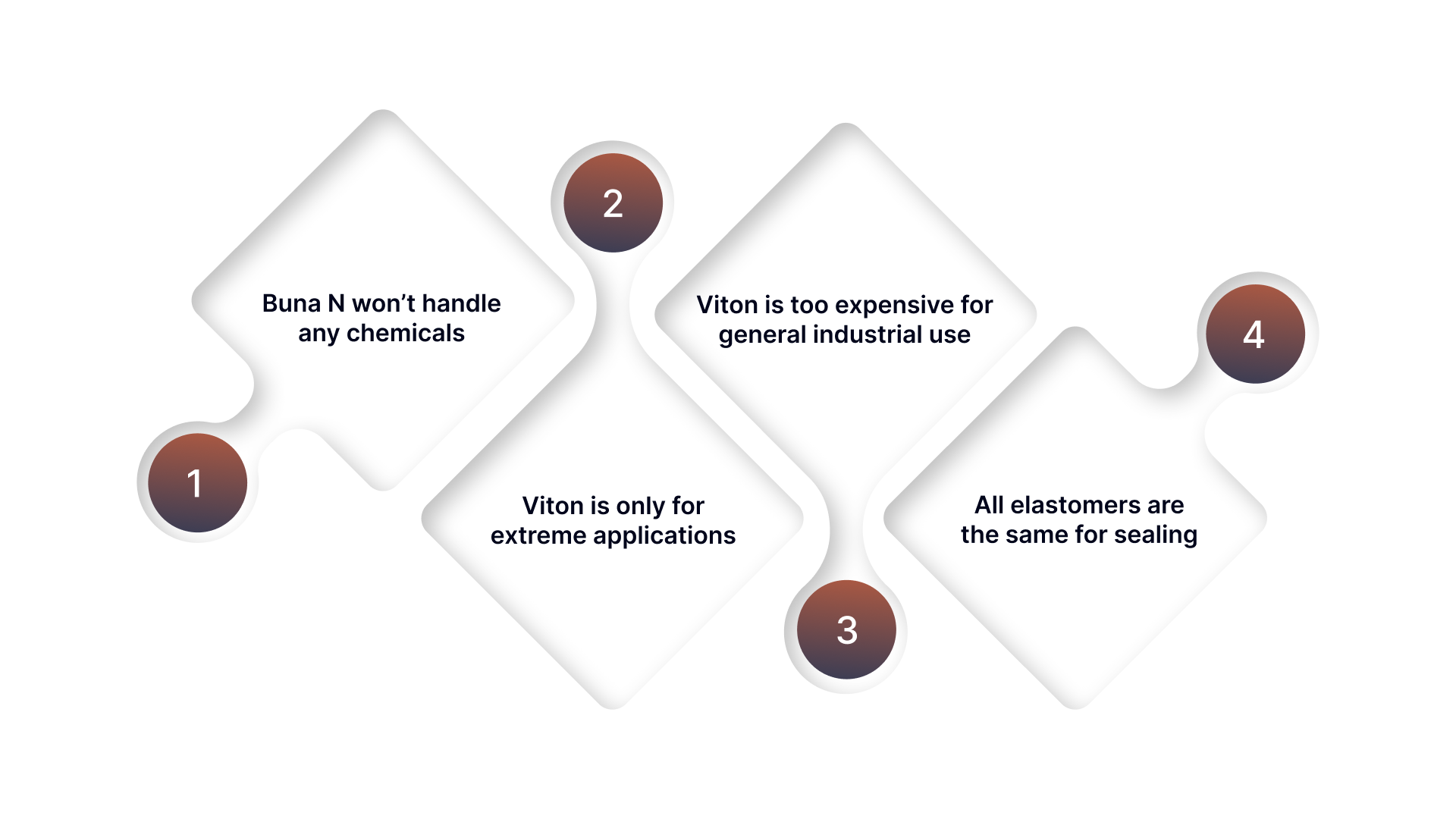
When choosing between Buna N and Viton, several misconceptions can lead to confusion. Here are some of the most common myths, along with the facts that set them straight:
1. “Buna N won’t handle any chemicals.”
Myth: Buna N can’t resist anything beyond petroleum-based fluids.
Fact: Buna N offers resistance to many hydrocarbons, oils, and some chemicals, making it ideal for fuel systems and industrial seals.
2. “Viton is only for extreme applications.”
Myth: Viton is needed only in high-performance or high-tech industries.
Fact: While Viton is perfect for extreme conditions, Buna N is often the more cost-effective solution for general industrial use, including standard seals and O-rings.
3. “Viton is too expensive for general industrial use.”
Myth: Viton is too costly for everyday industrial applications.
Fact: Viton’s higher cost is justified for harsh environments, but Buna N is typically a more affordable choice for standard applications with moderate temperature or chemical exposure.
4. “All elastomers are the same for sealing.”
Myth: Any elastomer will work for sealing in any application.
Fact: The right material choice is crucial for performance. Buna N works well for general use, while Viton is better for high-temperature or chemically aggressive environments.
Comparing Challenges: Buna N vs Viton
While both Buna N and Viton are exceptional materials for sealing solutions, they come with their own sets of challenges that can impact their performance in various applications. Below are some additional challenges to consider when choosing between the two:
Challenge | Buna N (NBR) | Viton (FKM) |
Environmental Conditions | Prone to UV and ozone degradation | Resistant to UV and ozone exposure |
Low-Temperature Flexibility | Becomes stiff in extreme cold | Maintains flexibility at lower temperatures, but less than some others |
Mechanical Load Resistance | May degrade faster under high mechanical load | Can withstand higher mechanical loads |
Processing & Handling | Easier to process, but may have tolerance issues | More difficult to mold, requires higher curing temperatures |
Aging Resistance | Can age and harden quickly, reducing flexibility | Offers superior aging resistance, maintaining flexibility over time |
Flammability | More flammable in high-heat environments | Less flammable, better for high-heat applications |
For applications with specific performance requirements, such as extreme conditions or high mechanical loads, Detroit Sealing Components can help with material selection, custom sizing, and expert guidance to ensure optimal seal performance.
Real-World Applications of Buna N and Viton
Understanding how Buna N and Viton perform in actual use cases can help clarify which material best suits your needs. Below are some practical examples of where each material excels:
Buna N Applications
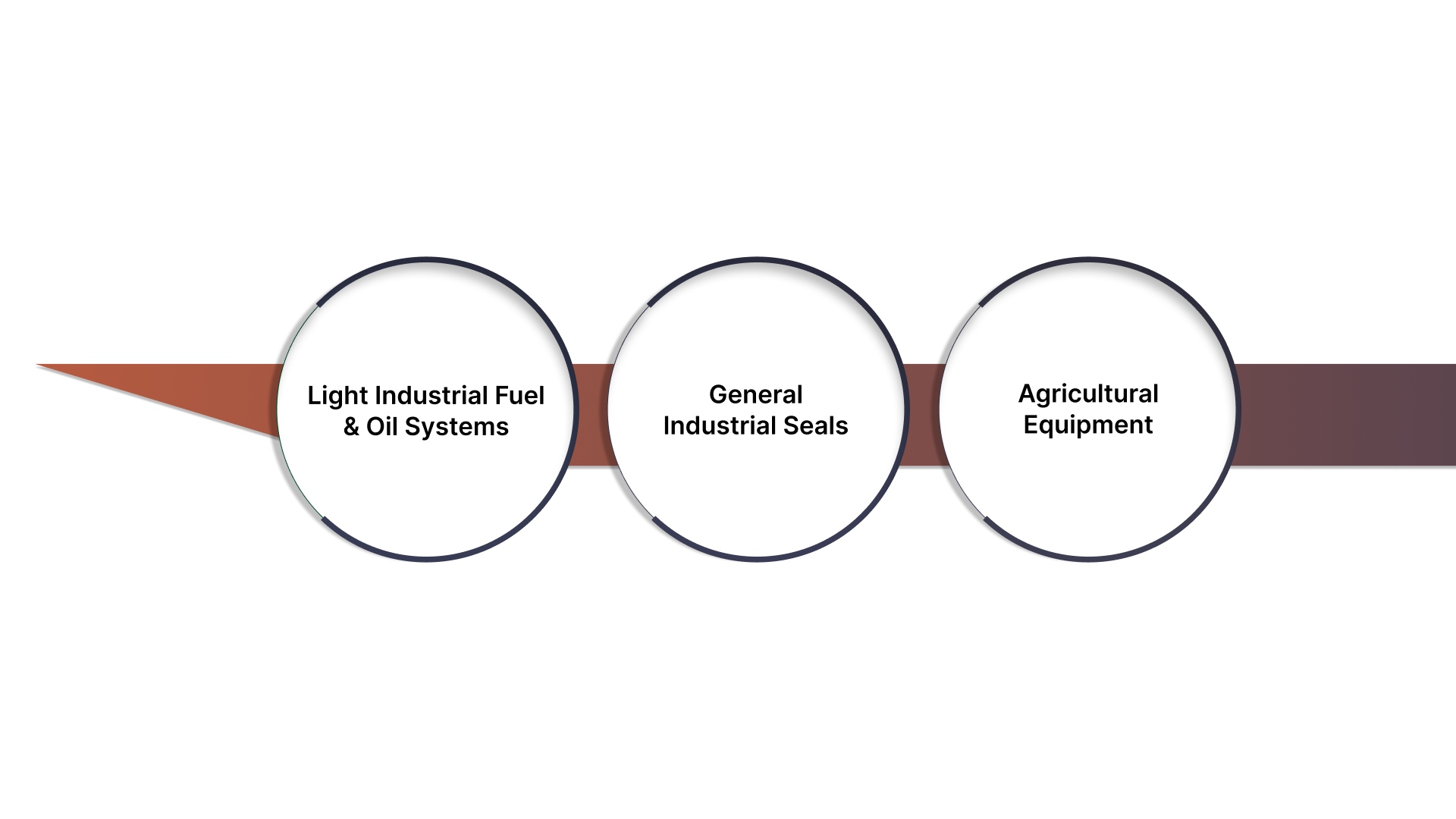
Light Industrial Fuel & Oil Systems: Buna N performs well in systems that handle petroleum oils, lubricants, and certain fuels under moderate conditions.
Example: Used in industrial pumps, generators, and machinery where exposure to oils and light fuel contact occurs without extreme temperatures or aggressive fuel blends.
General Industrial Seals: With good abrasion resistance and mechanical properties, Buna N is a solid choice for many industrial sealing applications that don’t involve high temperatures or aggressive chemicals.
Example: Common in hydraulic seals, valves, and pumps for industrial machinery that deal with moderate pressures and oils.
Agricultural Equipment: Buna N offers excellent resistance to oils, greases, and water, which are commonly present in farming equipment like tractors and harvesters.
Example: Used in O-rings and gaskets for equipment like tractors and pumps, where reliable sealing is essential to prevent hydraulic fluid leaks.
Viton Applications
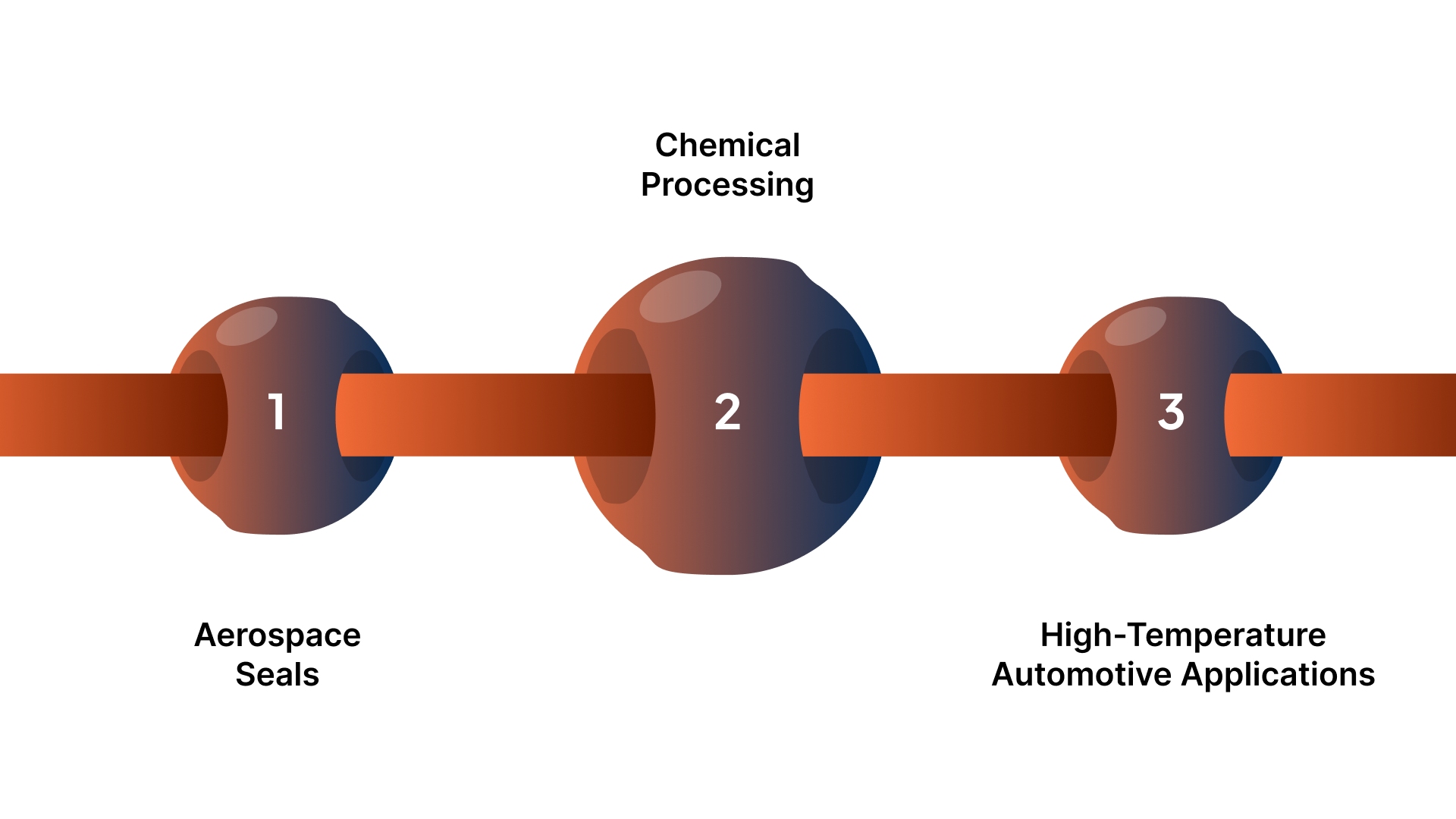
Aerospace Seals: Viton’s unmatched high-temperature stability and chemical resistance make it ideal for aerospace components exposed to extreme conditions.
Example: O-rings and gaskets used in aircraft engines, which must operate at high temperatures and handle high-pressure fluids.
Chemical Processing: Viton’s superior chemical resistance makes it perfect for environments involving acids, solvents, and other aggressive chemicals.
Example: Seals used in chemical reactors and pump systems in pharmaceutical and chemical plants, where harsh chemicals are prevalent.
High-Temperature Automotive Applications
In automotive engines, compressors, and other high-heat components, Viton ensures the O-rings and seals don't degrade under extreme conditions.Example: O-rings in turbochargers or engine seals, where Viton’s resistance to high temperatures and oil exposure ensures long-lasting durability.
Cost Comparison: Buna N vs Viton
When selecting between Buna N and Viton, cost is an important factor to consider, especially for high-volume applications. Here's a breakdown of the cost differences and how they impact your decision:
Factor | Buna N (NBR) | Viton (FKM) |
Material Cost | Lower cost, effective for high-volume use | Higher due to advanced chemical makeup |
Production Cost | Less complex production process | More complex, involving higher quality control |
Best Use Case | General industrial applications, fuel systems, and agricultural equipment | Aerospace, chemical processing, and high-performance automotive |
Longevity & Durability | May require more frequent replacements in harsh environments | Longer lifespan, especially in extreme conditions |
Total Cost of Ownership | Lower initial cost, but may incur more replacement costs | Higher initial cost, but fewer replacements and reduced downtime |
Conclusion
For engineers, OEMs, and maintenance teams, selecting the right sealing material is crucial to ensuring the reliability and performance of systems. Properly chosen Buna N or Viton seals prevent leaks, minimize maintenance costs, and protect critical components from damage caused by temperature, chemicals, and pressure.
Detroit Sealing Components offers both custom and standard Buna N and Viton seals, precisely tailored to meet the specific requirements of your applications. We help teams improve system performance, streamline installation, and maintain long-term sealing reliability.
Contact our team today to identify the perfect seal solution for your next project and ensure optimal performance in the most demanding environments.
FAQs
1. What are the main performance differences between Buna N and Viton?
Buna N is a cost‑effective elastomer with strong oil and fuel resistance suited for moderate temperatures, while Viton offers superior heat tolerance and broader chemical resistance for demanding environments.
2. Can Buna N and Viton O‑rings be used interchangeably?
Not always. Viton is generally required for high‑temperature or aggressive chemical exposure, whereas Buna N works well in standard industrial and oil‑based applications.
3. What temperature ranges do Buna N and Viton typically support?
Buna N is effective in moderate temperature ranges, whereas Viton can withstand much higher continuous temperatures and short peaks in extreme heat environments.
4. Which elastomer is more resistant to harsh chemicals?
Viton has wider chemical compatibility, resisting aggressive chemicals and solvents better than Buna N, which excels with petroleum‑based fluids but has more limited chemical resistance.
5. How should I choose between Buna N and Viton for my sealing application?
Base the choice on operating conditions, specifically temperature, chemical exposure, environmental factors, and cost constraints, to match the material’s strengths to your application’s demands.