Aircraft fuel systems punish rubber in ways most engineers never see. Jet fuel is a harsh mix of solvents, additives, and heat that slowly breaks down ordinary elastomers. Aircraft supply chain disruptions tied to maintenance issues, including fuel system failures, are projected to cost airlines over $11 billion in 2025, with $3.1 billion from aging fleet repairs alone. What happens when jet fuel attacks rubber for thousands of hours?
At the engine inlet, fuel temperatures reach about 200°F and climb to 250°F in newer aircraft, pushing seals close to their limits. Why do aircraft leaks start with the wrong compound? The best O-ring materials for aviation fuel systems are Viton, HNBR, and fluorosilicone because they resist fuel, heat, and compression loss. In this blog, we show how to choose them.
30-Second Read for Busy Engineers
Viton, HNBR, and fluorosilicone are the only fuel-safe options because they keep sealing force when jet fuel and heat attack standard elastomers.
Static fuel fittings and moving fuel components need different compounds, which is why fluorosilicone stays in joints while Viton and HNBR run pumps and valves.
Fuel systems and hydraulic circuits must never share rubber, since EPDM and polyurethane fail fast when exposed to jet fuel.
Material choice controls maintenance cycles, not just leaks, because swelling and compression loss build silently before failure appears.
A controlled supplier protects the material, ensuring the compound you specify is the compound you receive in every aircraft build.
Why Some O-Ring Materials for Aviation Fuel Systems Fail or Succeed
Aviation fuel attacks elastomers through chemical, thermal, and constant-pressure effects. You deal with a fluid that carries solvents, aromatics, and oxygenated additives that penetrate rubber and weaken it over time. Heat speeds this breakdown, while pressure locks the damage into the seal. Jet fuel allows up to 25 percent aromatics, with most fuels running 15 to 20 percent, and those compounds are the primary cause of elastomer swelling that changes sealing force.
The failure process follows a predictable pattern you can track.
What jet fuel does to an O-ring
Swelling occurs when hydrocarbons migrate into the polymer, increasing its volume and pushing the seal out of its groove.
Extraction occurs when fuel additives pull plasticizers out of the rubber, leaving it stiff and brittle.
A compression set forms when heat and pressure prevent the seal from returning to its original shape after being squeezed.
Oxidation breaks polymer chains, which leads to surface cracks and loss of elasticity.
These mechanisms do not stay theoretical. They show up as leaks, pressure loss, and fuel odor in the aircraft. Every one of these failures creates unscheduled maintenance, grounded aircraft, and safety exposure for your operation.
Those failure modes make one thing clear. If you want to stop leaks, you need materials built to survive that chemical and thermal attack, not generic rubber.
7 of the Best O-Ring Materials for Aviation Fuel Systems Ranked by Fuel Resistance
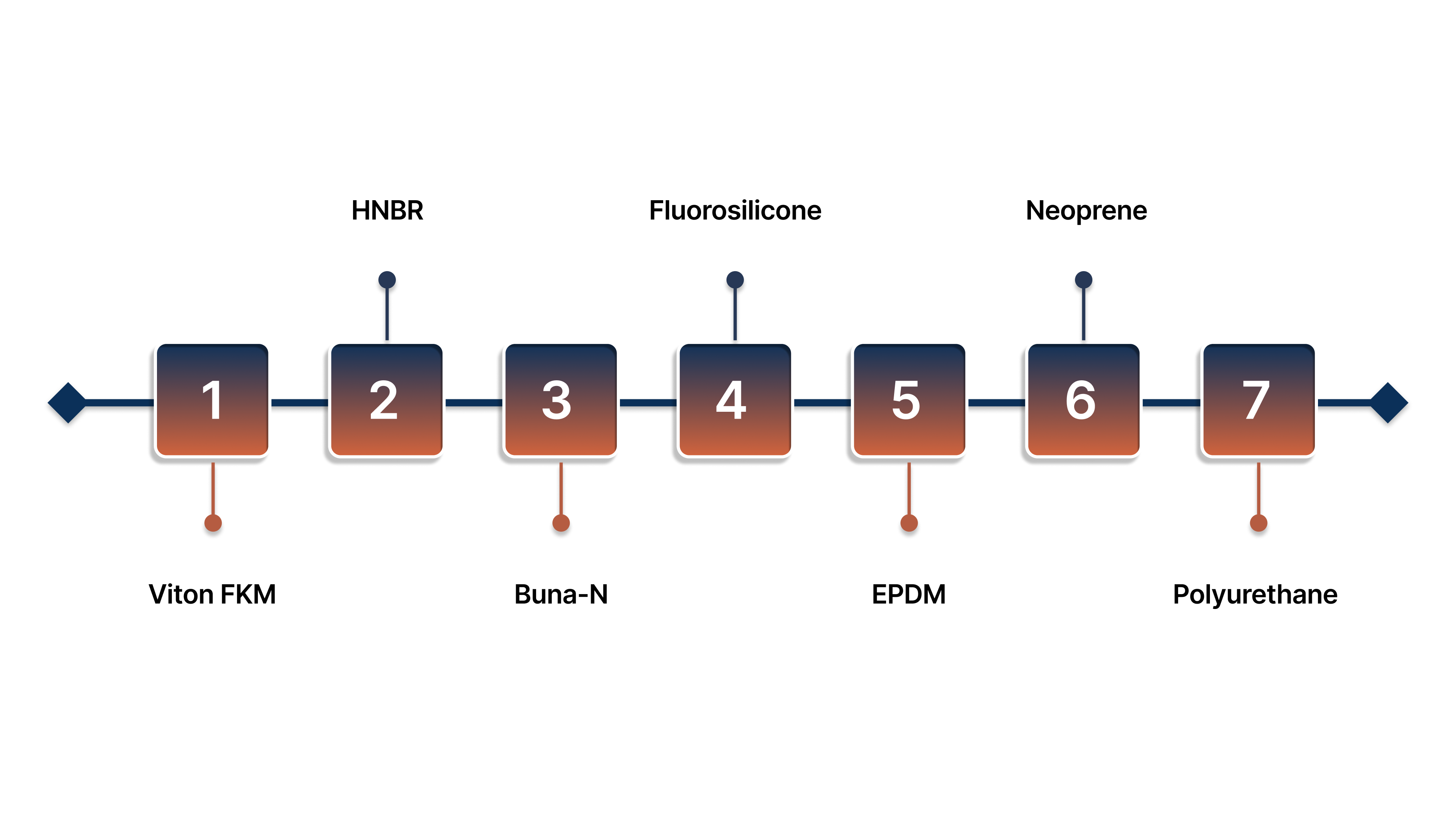
Only a few elastomers survive continuous contact with jet fuel, heat, and long service cycles. You deal with solvents, aromatics, and pressure that quickly destroy standard rubber. This is why seven materials are listed, even though only four belong in most fuel systems. Some work in static joints while others survive pumps and valves.
The ranking below separates static from dynamic fuel sealing.
1. Viton FKM
Viton FKM is the primary aerospace fuel seal because it remains stable when jet fuel and heat attack other rubbers. You get consistent sealing force even after long exposure. It handles both static and dynamic fuel components.
Here is what Viton gives you.
Benefits: resists jet fuel, aromatics, additives, and high heat. It holds low compression set under pressure.
Drawbacks: higher cost and stiffness at low temperatures.
Applications: fuel pumps, valves, injectors, and engine side fuel lines.
2. HNBR
HNBR is a nitrile that has been chemically stabilized to handle higher heat and stronger fuels. You use it when mechanical strength matters as much as fuel resistance. It fits mixed fuel and oil exposure.
Here is how HNBR performs.
Benefits: resists fuel and hydraulic oil, offers high tensile strength.
Drawbacks: less stable in jet fuel than Viton.
Applications: hot fuel and oil zones, actuators, and hybrid systems.
3. Buna-N
Buna-N works in fuel systems, but only when stress, heat, and exposure time are limited. You use it because it seals petroleum fuel and keeps costs down. It does not survive aggressive jet fuel for long.
Here is how Buna-N fits into fuel systems.
Benefits: seals petroleum-based fuels and stays affordable for large volumes.
Drawbacks: oxygenated fuels and heat cause swelling and loss of elasticity.
Applications: ground fueling equipment and low-stress aircraft fuel lines.
4. Fluorosilicone
Fluorosilicone remains flexible across extreme temperatures, making it useful in aerospace fuel zones. You do not use it in moving parts because it lacks strength. It only belongs in static joints.
Here is what fluorosilicone provides.
Benefits: wide temperature range with stable fuel resistance.
Drawbacks: poor wear resistance and low tear strength.
Applications: static fuel fittings and sealed connectors.
5. EPDM
EPDM is common in aircraft, but never where fuel is present. You use it because it resists Skydrol and other phosphate ester hydraulic fluids. Jet fuel destroys it.
This table shows where EPDM fits.
Property | EPDM performance |
Skydrol hydraulic fluid | Excellent |
Jet fuel and hydrocarbons | Rapid degradation |
Heat and compression | Stable in hydraulic service |
Applications: aircraft hydraulic systems only
6. Neoprene
Neoprene fills a narrow role in aircraft systems where oil and air exposure is light. You use it when moderate oil resistance is enough and cost matters. It does not survive contact with jet fuel.
Here is where neoprene fits.
Benefits: moderate resistance to mineral-based hydraulic oils.
Drawbacks: poor compatibility with jet fuel and fuel additives.
Applications: low-duty oil seals and air system components.
7. Polyurethane
Polyurethane is selected for wear resistance, not for chemical exposure. You choose it when seals slide, scrape, or cycle under load. Fuel additives damage it quickly.
This summary shows its role.
Benefits: high abrasion and tear resistance in dynamic motion.
Drawbacks: attacked by jet fuel and oxygenated additives.
Applications: hydraulic cylinders and actuators, never in fuel systems.
This list shows which rubbers survive jet fuel, but aircraft do not run on fuel alone. The next risk comes from mixing fuel and hydraulic fluids, which changes what each seal must endure.
Best O-Ring Materials for Aviation Fuel Systems vs O-Ring Material for Hydraulic Oil
Fuel systems and hydraulic systems attack rubber in entirely different ways. You face solvent-rich jet fuel in one and aggressive phosphate ester or petroleum-based fluids in the other. Using the wrong elastomer allows chemical attack to spread through the entire system. That is how cross-contamination starts, and seals fail in clusters.
This table shows how materialsare split between fuel and hydraulic service.
System type | Primary elastomers | What they resist |
Aviation fuel | Viton, HNBR | Jet fuel, aromatics, heat |
Skydrol hydraulics | EPDM | Phosphate ester fluids |
Petroleum hydraulics | Polyurethane, HNBR | Wear and mineral oils |
Viton and HNBR survive jet fuel while keeping the sealing force under pressure.
EPDM and polyurethane are only suitable for hydraulic circuits where fuel is not present.
Once you know which materials belong in each system, the next risk is getting the wrong version of the right compound. That is where supplier control decides whether the seal works on the aircraft or fails in service.
How Detroit Sealing Supplies Best O-Ring Materials for Aviation Fuel Systems
Aerospace fuel systems leave no room for material or supply errors. You depend on seals that must match fuel chemistry, temperature, and pressure without variation. Supplier control matters as much as compound choice. Detroit Sealing Components supports those needs with stocked aerospace-grade elastomers and documented quality systems.
This is what you get from Detroit Sealing Components:
Stocked materials: FKM, HNBR, and fluorosilicone in standard and custom O-ring sizes.
Clean production: cleanroom molding, material traceability, and controlled compounds for contamination-sensitive systems.
Engineering support: compound selection, FEA-driven seal review, and reliability testing for fuel and hydraulic circuits.
Explore our product catalog to review available O-rings, X-rings, backup rings, and custom-molded seals for aviation fuel service.
Conclusion
Jet fuel, heat, and pressure eliminate most elastomers long before their service life ends. You only get stable sealing from materials designed for this exposure, with Viton and HNBR carrying the load in most aircraft fuel systems. These compounds resist swelling, compression set, and chemical attack, where others fail.
Detroit Sealing Components gives you a low-risk supply path through stocked aerospace-grade materials, traceability, and engineering support built for critical sealing.
Contact us today to source O-rings that meet aerospace performance and compliance needs!
FAQs
Q: How do you verify incoming seals match aircraft build records?
A: You should require a lot of traceability, material certifications, and cure dates. These records help you confirm every seal matches the approved bill of materials.
Q: Can one supplier support both fuel and hydraulic seal programs?
A: You need a supplier that stocks both fuel compounds and O-ring material for hydraulic oil. That avoids split sourcing and material mix ups.
Q: What inspection steps catch seal defects before installation?
A: You should check surface finish, hardness, and cross section under magnification. Dimensional drift and surface flaws cause early leakage.
Q: How do you store aviation fuel O-rings to prevent damage?
A: You should keep them sealed, away from ozone, light, and heat. Poor storage changes elasticity before the seal ever reaches the aircraft.
Q: When should you switch compounds during a fleet retrofit?
A: You should evaluate compound upgrades when maintenance intervals shorten or leak rates increase. Material changes often restore reliability without redesign.
Q: How does test fluid choice affect seal qualification?
A: You should test seals in the same fluid used in service. Substituting fluids hides swelling and chemical attacks that appear later in flight.