Introduction
Hydraulic oil leaks represent one of the costliest maintenance issues in industrial equipment, with a single leak dripping just one drop per second wasting 420 gallons of oil annually. Beyond fluid loss, leaks reduce equipment effectiveness by up to 50% through inefficient operation and slower cycle times, while creating significant safety hazards including slip-and-fall incidents and fire risks.
Most hydraulic leaks trace back to seal failures: wrong material selection, contamination damage, installation errors, or simple wear. This guide covers how to identify the right seal for your application, recognize early failure signs, and replace seals correctly — so you avoid unplanned downtime and the emergency repair costs that follow.
Key Takeaways
- Seal failures cause 75–80% of hydraulic system problems, with contamination and improper installation as the primary culprits
- Match seal material to your hydraulic fluid type, temperature range, and pressure conditions to prevent premature degradation
- Installation errors account for 30% of seal failures—using correct tools, lubrication, and techniques is essential
- Fluid cleanliness at ISO 4406 standards, combined with routine seal inspections, extends service life from months to years
- For recurring leaks, seal specialists with custom material capabilities and failure analysis can identify root causes standard suppliers miss
Common Causes of Hydraulic Oil Leaks
Hydraulic leaks rarely happen without warning. They typically stem from seal-related issues, with multiple contributing factors that accelerate failure when combined.
Improper Seal Selection or Material Incompatibility
Using seals not designed for specific hydraulic fluids, temperatures, or pressure ranges leads to rapid chemical degradation and premature failure. Elastomers react chemically with incompatible fluids through swelling, shrinking, hardening, or cracking—all of which destroy sealing capability.
Common mismatches include:
- Installing nitrile (NBR) seals with phosphate ester fluids, which causes rapid swelling and material breakdown
- Using EPDM seals in mineral oil systems, where they fail quickly despite excellent performance in water-based fluids
- Selecting seals with inadequate temperature ratings that harden in cold or soften excessively in heat
- Mismatching seal hardness to application pressure, resulting in extrusion damage at high pressures
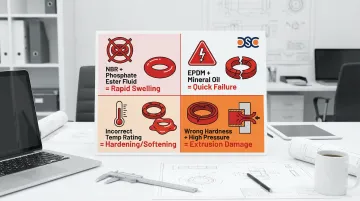
For dynamic seals, volume swell must stay under 10% to prevent excessive friction and wear. Static seals tolerate up to 25–30% swell—but beyond these thresholds, seals lose dimensional stability and fail quickly.
Seal Wear and Aging
Even properly selected seals eventually wear out. Normal wear, compression set (permanent deformation), and material degradation cause seals to lose effectiveness over time.
High-cycle environments are especially unforgiving:
- Frequent cylinder extension and retraction accelerates abrasion on dynamic sealing surfaces
- Temperature extremes speed up hardening in thermoset materials
- Seals running past their design service life without replacement leak progressively
- Constant loading causes compression set, preventing seals from maintaining adequate sealing force
Higher operating temperatures increase compression set and trigger chemical changes in the elastomer that reduce elasticity and sealing performance—making thermal management a direct factor in seal longevity.
Contamination and Abrasive Particles
Dirt, metal particles, and other contaminants act like sandpaper on seal surfaces, cutting microscopic grooves that allow fluid to bypass. Studies consistently put oil contamination behind 75–80% of hydraulic system failures, with seals as the primary casualty.
Contamination enters systems through several paths:
- Inadequate filtration allowing particles larger than 14 µm to circulate
- Damaged rod seals that allow external dirt and moisture to enter
- Improper fluid handling during maintenance and top-ups
- Worn seals generating debris that accelerates wear on surrounding components
Particles in the 5–15 µm range are particularly damaging in high-pressure systems, as they enter critical clearances between sealing surfaces and accelerate wear exponentially.
Improper Installation and Mechanical Damage
Installation errors damage seals before they ever begin operating. Roughly 30% of premature seal failures trace back to incorrect assembly—a preventable cause.
Common installation mistakes:
- Forcing seals over sharp threads or edges without protective sleeves, causing cuts and nicks
- Installing seals without proper lubrication, leading to twisting and spiral failure
- Pinching seals during assembly due to insufficient lead-in chamfers (should be 15–20°)
- Installing seals in cylinders with scored rods or barrels that act as cutting edges
Mechanical issues worsen installation problems. Misaligned components, inadequate surface finish (too rough or too smooth), and incorrect groove dimensions all contribute to premature seal failure even when installation technique is correct.
What Happens If Hydraulic Leaks Are Ignored
Ignoring hydraulic leaks triggers a chain of costly consequences that reach far beyond the initial drip. Equipment performance degrades as falling pressure slows cycle times — a 3-second cycle stretching to 6 seconds is a 50% efficiency loss with direct impact on production output.
From there, the damage compounds:
- Low fluid levels starve pumps and cause overheating, accelerating full system failure
- Contaminated fluid — entering through compromised seals — wears down components throughout the system
- Emergency repairs cost 3-5 times more than scheduled maintenance, with downtime expenses often exceeding the direct repair bill
Safety hazards escalate rapidly:
- Leaking fluid creates slip hazards, with incidents averaging $200 in lost wages alone before medical costs and liability
- Pressurized spray can atomize into fine mist that ignites on hot surfaces, causing fires that have destroyed entire facilities
- High-pressure injection injuries occur at pressures as low as 100 psi, penetrating skin and requiring immediate surgical intervention
Environmental violations add regulatory consequences. The EPA requires reporting of oil discharges that create a sheen on water, with facilities facing penalties for discharges exceeding 1,000 gallons in a single event or 42 gallons across two incidents within 12 months.
Warning Signs You're About to Experience a Hydraulic Leak
Performance indicators:
- Reduced system pressure or sluggish cylinder/motor response indicating internal seal bypass
- Increased cycle times as fluid bypasses worn seals instead of performing work
- Rising operating temperatures from internal leakage generating heat
Visual and physical signs:
- Oil misting around rod seals or slight dampness on fittings
- Oil accumulation in unexpected areas beneath equipment
- Discoloration or swelling of visible seal materials
Consumption patterns:
- Hydraulic fluid levels requiring frequent top-ups beyond normal consumption
- Fluid usage four times higher than system capacity (average for poorly maintained plants)
- Unexplained increases in fluid purchases compared to historical baselines
How to Prevent Hydraulic Oil Leaks Through Proper Seal Selection
Selecting the right seal for your specific application provides the foundation for leak prevention. Material compatibility, seal design, and hardware specifications must all align with operating conditions.
Match Seal Material to Hydraulic Fluid and Operating Conditions
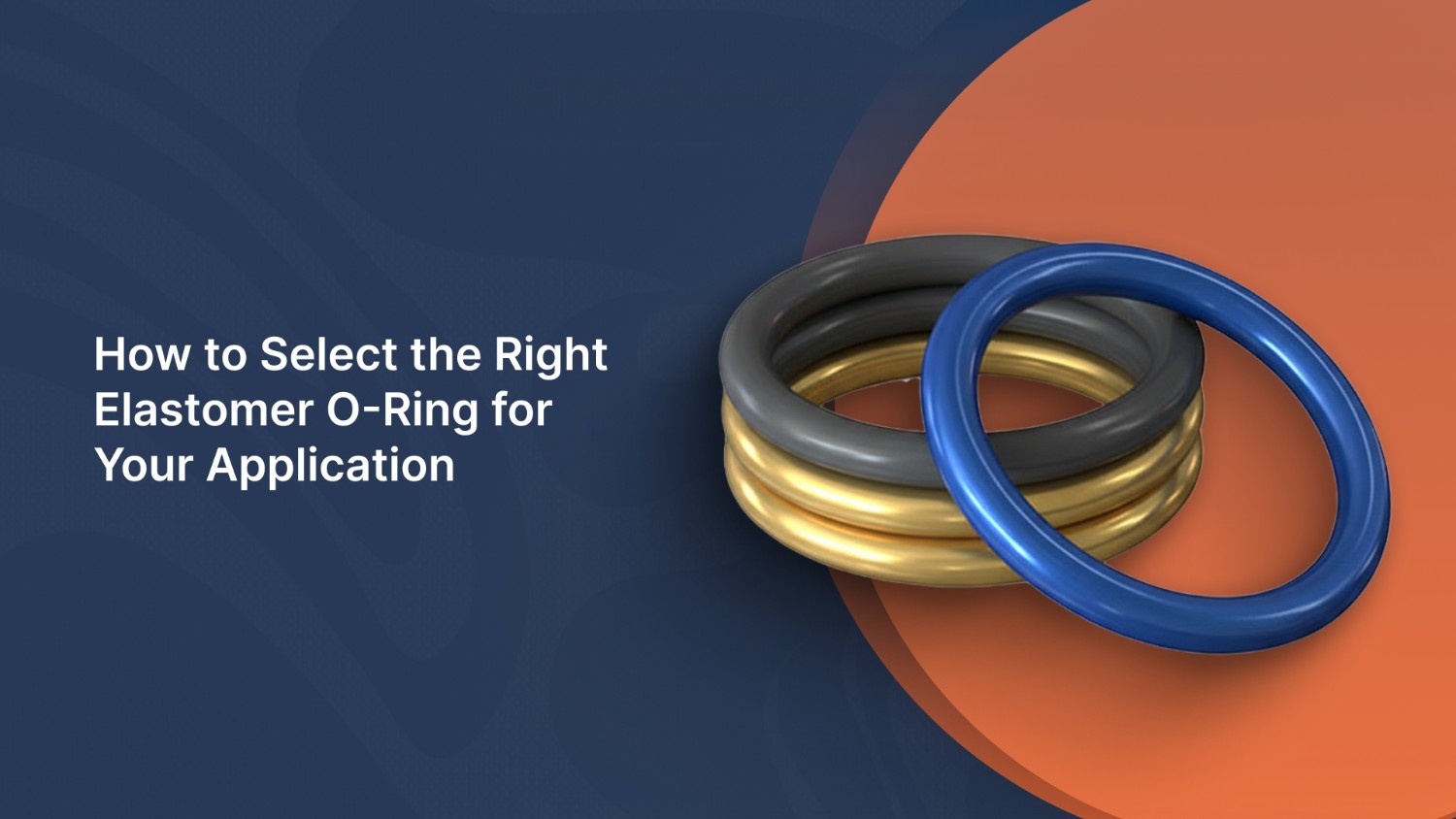
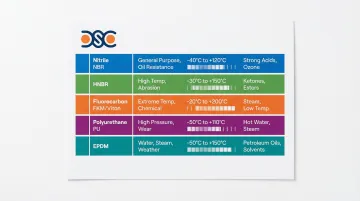
Chemical compatibility between seal material and hydraulic fluid determines whether seals last months or years. Consulting authoritative compatibility charts and selecting elastomers based on fluid type, temperature range, and pressure requirements prevents chemical degradation, swelling, or hardening.
Primary seal materials for hydraulic applications:
| Material | Best For | Temperature Range | Avoid With |
|---|---|---|---|
| Nitrile (NBR) | Mineral oils, petroleum fluids | -34°C to +100°C | Aromatic hydrocarbons, ketones, glycol brake fluids |
| Hydrogenated Nitrile (HNBR) | Hot water, oils, fuels | -32°C to +149°C | Polar solvents, strong acids |
| Fluorocarbon (FKM/Viton) | High-temp mineral oils, synthetics | -26°C to +204°C | Glycol brake fluids, ammonia, steam |
| Polyurethane (PU) | Mineral oils, excellent abrasion resistance | -40°C to +82°C | Ketones, hot water, alcohols, alkalis |
| EPDM | Phosphate esters, water-based fluids | -57°C to +150°C | Mineral oils, petroleum products |
Implementation timing:
- During equipment specification and initial system design
- When switching hydraulic fluid types or suppliers
- After experiencing seal failures with current materials
- At major overhaul milestones or system redesigns
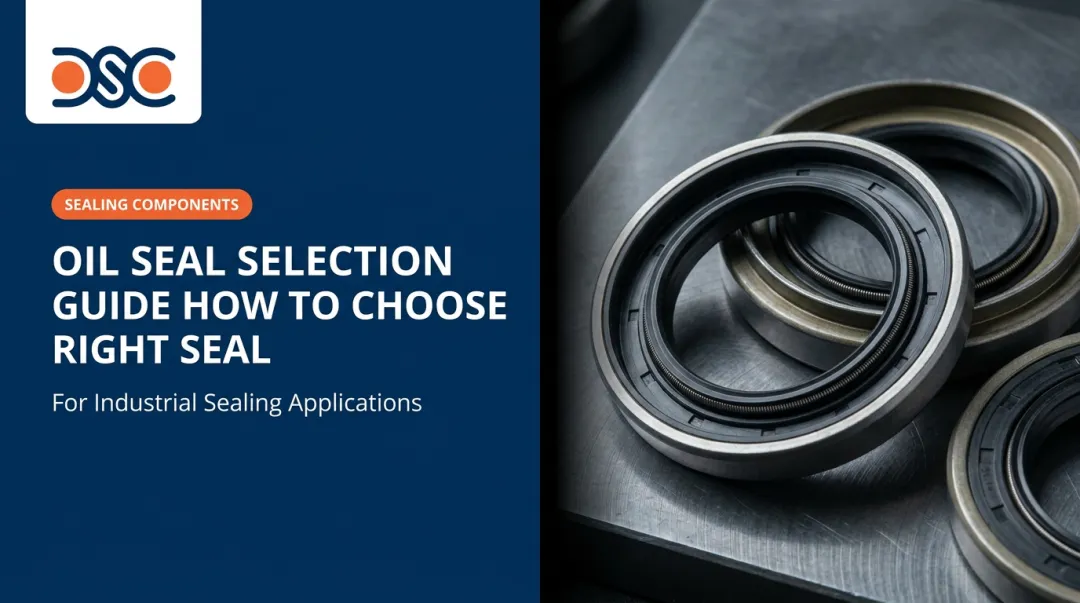
Detroit Sealing Components stocks NBR, HNBR, FKM, and EPDM in hardness ranges from 60–90 Shore A, along with specialized polyurethane compounds for high-wear applications. When standard materials fall short, custom formulations are available for applications with unusual fluid chemistry or extreme operating conditions.
Consider Seal Design and Configuration for Your Application
Different seal types perform best in specific applications. Selecting the appropriate design based on whether the application is static or dynamic, pressure direction, and stroke length ensures adequate sealing force and prevents extrusion.
Seal type selection guide:
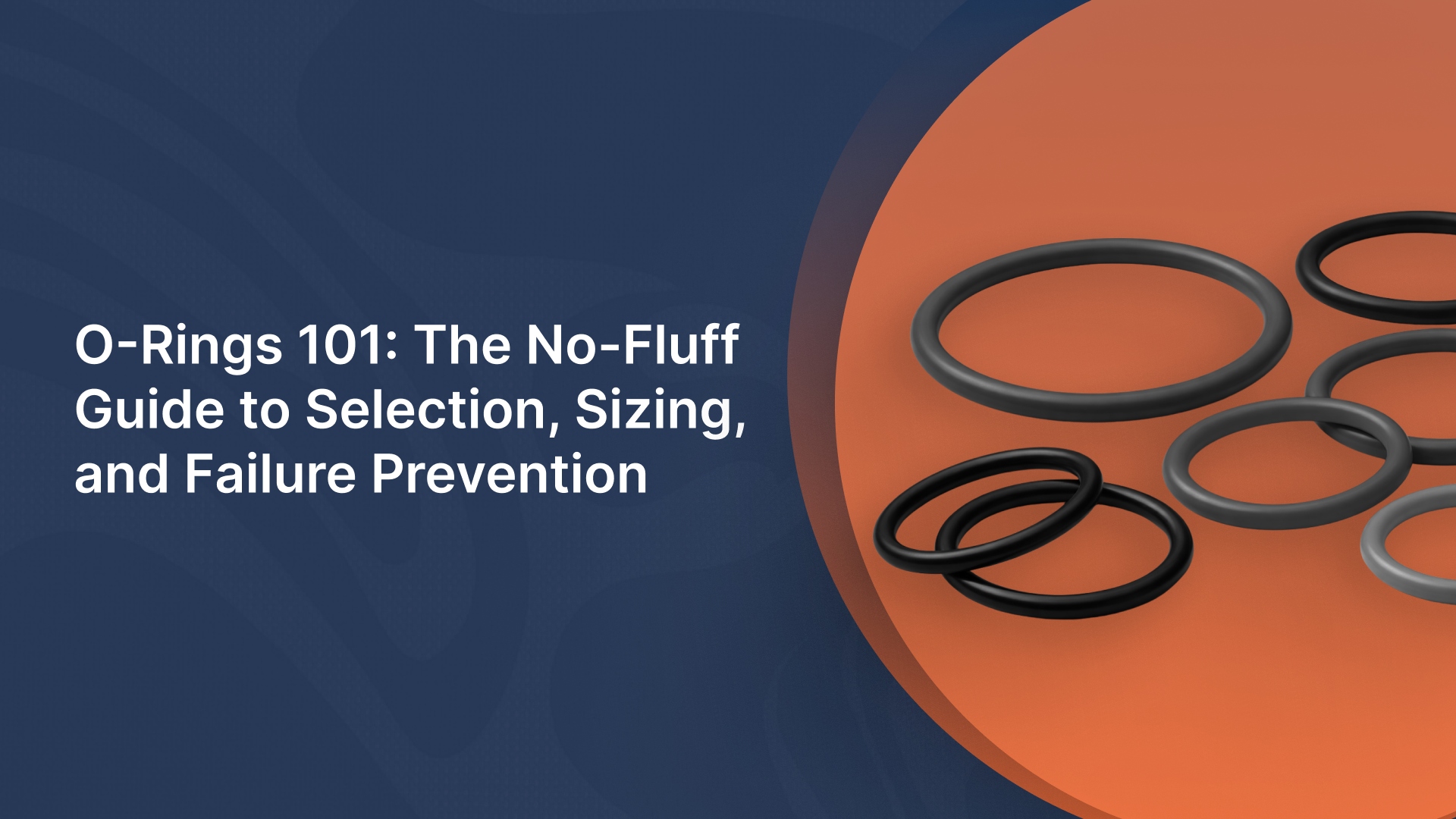
- O-rings: Versatile for static and low-speed dynamic applications; require backup rings above 1,500 psi to prevent extrusion
- U-cups: Ideal for piston and rod seals in cylinders; pressure energizes the sealing lips for better performance
- V-rings: Stackable seals for high-pressure applications; number of rings adjusts to pressure requirements
- Lip seals: Generate lower friction than squeeze seals; suitable for gravity-return rams and low-pressure applications
- Backup rings: Essential companions to O-rings in high-pressure applications; prevent extrusion into clearance gaps
Proper seal design accommodates system dynamics including pressure spikes, temperature cycling, and stroke frequency. Working with seal specialists during equipment design or when troubleshooting recurring issues ensures optimal configuration for your specific conditions.
Verify Surface Finish and Hardware Specifications
Even the right seal design will fail prematurely if the mating hardware isn't prepared correctly. Seal grooves, rod/bore surface finish, and hardware dimensions must meet seal manufacturer specifications.
Proper specifications ensure correct seal seating, prevent cutting during installation, and provide appropriate compression for reliable sealing.
Critical surface finish requirements:
- Dynamic surfaces (rods, shafts): Ra 0.4 µm (16 µin) typical—smooth enough to prevent wear but not so smooth they wipe away lubrication
- Static surfaces (seal contact areas): Ra ≤ 0.8 µm (32 µin)
- Groove flanks: Ra ≤ 1.6 µm (63 µin)
Surfaces below Ra 0.15 µm are too smooth and prevent adequate lubrication retention. Surfaces above recommended values accelerate seal wear and generate contaminating particles.
Hardware dimensional verification:
- Lead-in chamfers of 15-20° to guide seals during installation without damage
- Groove dimensions matching seal manufacturer specifications for proper compression
- Clearance gaps appropriate for operating pressure to prevent extrusion
- Thread relief or protective sleeves to prevent seal cutting during assembly
Implement dimensional verification during manufacturing, equipment refurbishment, or component replacement to catch hardware issues before they damage seals.
Partner with Seal Material Experts for Custom Applications
Standard seals prove insufficient for extreme temperatures, aggressive chemicals, or unique pressure profiles. Custom compounds developed specifically for your operating conditions solve recurring failure problems.
Detroit Sealing Components uses its ISO 17025 accredited laboratory and ISO 9001:2015 certified quality system to develop and test custom seal materials matched to exact operating conditions. Working with top polymer producers, they access hundreds of compounds across all rubber types, then customize formulations through targeted testing against customer-specific parameters.
When to consult specialists:
- Experiencing recurring seal failures despite proper maintenance and installation
- Designing critical systems where downtime costs are exceptionally high
- Operating outside standard temperature ranges (below -40°C or above +150°C)
- Using specialized hydraulic fluids not covered by standard compatibility charts
- Requiring regulatory certifications (FDA, NSF, USP Class VI for food/pharma applications)
Custom material development combines computer-aided design, finite element analysis, and bench testing under real operating conditions—verifying performance before full production commitment. For applications where a single seal failure triggers costly downtime, that upfront validation work typically pays for itself on the first avoided incident.
Seal Replacement Best Practices
Even the best seals eventually need replacement. Proper installation techniques are critical—30% of premature seal failures result from incorrect assembly, making installation as important as material selection.
Preparation and Inspection Before Installation
Pre-installation checklist:
- Thoroughly clean all seal surfaces using lint-free cloths and compatible cleaning solvent
- Inspect rods and bores for scoring, pitting, or surface damage; repair or replace damaged components
- Verify replacement seals match specifications including material, size, and hardness
- Gather proper installation tools including assembly sleeves, seal drivers, and compatible lubricant
- Review installation instructions from seal manufacturer for specific requirements
New seals installed over scored rods or into damaged housings will fail prematurely—no matter how good the seal material is. Fix the hardware first.
Proper Installation Techniques
Step-by-step installation:
- Lubricate seals with compatible hydraulic fluid or assembly lubricant. Never use petroleum grease on EPDM or other incompatible elastomers
- Use seal installation tools including protective sleeves over threads and splines to prevent cutting
- Never force seals over sharp edges; if resistance is excessive, check for proper chamfers and clearances
- Verify proper seal orientation paying attention to lip direction and asymmetric designs
- Confirm proper seating by visual inspection before final assembly
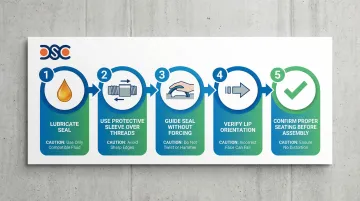
These techniques prevent cutting, twisting, and improper compression that cause immediate or early failure. A 15-20° lead-in chamfer is essential; without it, even careful installation can nick or roll the seal lip.
Installation lubricant guidelines:
- Use the actual hydraulic fluid when possible for guaranteed compatibility
- Barium-based greases work with most elastomers
- Avoid silicone lubricants unless specifically recommended
- Never use incompatible lubricants that can cause seal swelling
Post-Installation Verification and Break-In
Verification procedure:
- Perform visual inspection confirming seals are properly seated without visible damage
- Conduct low-pressure function tests before returning to full operating pressure
- Monitor for leaks during initial cycles, checking all seal locations
- Document replacement date and seal specifications for maintenance records
- Observe break-in period allowing seals to properly seat before maximum load
- Record baseline metrics including cycle times, operating temperature, and pressure stability for comparison during future inspections
If a minor seep appears during break-in, complete the low-pressure cycle before tightening or re-inspecting. Catching issues at this stage costs minutes; catching them after full-pressure operation can mean a full teardown.
Tips for Long-Term Leak Prevention and Control
Five practices separate systems that run clean for years from those that fail prematurely.
Schedule inspections by operating hours. Check high-cycle or critical equipment every 1,000–2,000 hours; less demanding applications can run to quarterly or semi-annual intervals. Watch for weeping around seals, hardness changes that signal aging, and visible surface damage.
Control fluid cleanliness to ISO 4406 targets. Contaminated fluid is one of the fastest paths to seal failure. Match cleanliness codes to your system components:
- Servo valves: 16/14/11 or cleaner
- Proportional valves: 17/15/12
- General hydraulics (gear pumps): 19/17/14
Slipping from ISO 17/15/12 to 22/21/19 significantly shortens seal life. Change filters on schedule and monitor contamination levels consistently.
Track temperatures and pressures against design limits. A rising temperature reading often points to internal bypass from a worn seal — not just an ambient condition. Use an infrared thermometer to pinpoint hot spots early, before a small deviation becomes a catastrophic failure.
Store and handle seals correctly. Shelf life varies by material: polyurethane lasts about 5 years, nitrile up to 7, and FKM or EPDM up to 10 — but only under proper conditions. Keep seals away from direct sunlight, ozone sources like electric motors, and temperature extremes.
Work with a seal specialist, not just a parts supplier. Persistent leak issues often require failure analysis and material expertise, not just a replacement part. Detroit Sealing Components brings ISO 17025-accredited testing supported by an ISO 9001:2015 certified quality system, finite element analysis, and custom compound development to solve recurring sealing problems across industrial hydraulic systems.
Conclusion
Hydraulic oil leaks are preventable — not inevitable. The right approach combines three fundamentals:
- Seal selection matched to your operating pressure, temperature, and fluid compatibility
- Correct installation using proper tools, surface preparation, and lubrication
- Proactive maintenance including contamination control and routine inspections before leaks develop
Choosing quality seals upfront and working with a supplier like Detroit Sealing Components — which offers hundreds of rubber compounds, custom geometries, and ISO 17025-tested materials and ISO 9001:2015 certified quality system, costs far less than emergency repairs, unplanned downtime, or regulatory violations. Getting the seal right the first time is the most cost-effective repair of all.
Frequently Asked Questions
What causes hydraulic cylinders to leak?
Cylinder leaks typically result from worn or damaged rod seals, piston seals, or scored cylinder surfaces. Contamination, improper seal selection for the fluid and temperature conditions, and normal wear are the primary causes, with installation errors accounting for approximately 30% of premature failures.
What is the life expectancy of a hydraulic seal?
Seal life typically falls between 2,000–10,000 hours under normal operating conditions. Temperature extremes, pressure cycling, contamination, and fluid compatibility all affect longevity. Proper maintenance consistently pushes service life toward the higher end of that range.
How much does it cost to fix a hydraulic leak?
Simple seal replacements run $200–$500; major overhauls involving cylinder rebuilds or pump replacement can reach $2,000–$10,000+. Downtime, environmental cleanup, and lost productivity typically add another 3–5x on top of direct repair costs.
Why shouldn't you touch hydraulic leaks?
Hydraulic fluid under pressure can penetrate skin at pressures as low as 100 psi, causing injection injuries that require immediate surgical intervention. These injuries often lead to amputation if treatment is delayed beyond 6 hours. Even low-pressure leaks pose slip hazards and skin irritation risks from prolonged contact.
Can you continue operating equipment with a hydraulic leak?
Continued operation risks complete system failure, accelerated component wear from low fluid levels and contamination, workplace safety hazards from slippery surfaces and potential injection injuries, and environmental violations requiring regulatory reporting. Immediate repair is the recommended course of action to prevent escalating damage and costs.
How do I choose the right replacement seal for my hydraulic system?
Match seal material to your hydraulic fluid using compatibility charts: nitrile for mineral oils, EPDM for phosphate esters, FKM for high-temperature applications. Verify that temperature and pressure ratings meet your operating conditions. For critical or non-standard applications, Detroit Sealing Components can help identify the right compound or source a custom solution.