A leak the size of a pinhead can shut down an entire system. O-rings are small, inexpensive components, yet they often serve as the primary seal in hydraulic, pneumatic, fuel, and fluid systems.
When an O-ring begins to fail, even from minor damage like a nick, flattening, or chemical swelling, the result is rarely contained. Small leaks escalate into pressure loss, contamination, equipment wear, and unplanned downtime.
That downtime is costly. Studies on industrial reliability consistently show that unplanned outages can cost tens of thousands of dollars per hour, with larger operations facing losses well into six figures. In contrast, diagnosing and replacing a compromised O-ring is one of the lowest-cost maintenance actions available.
Early detection prevents secondary damage, reduces safety risks, and protects productivity, proving that in sealing systems, ignoring small failures often leads to very big consequences.
Key Highlights
Minor O-ring damage can trigger major failures, with even pinhead leaks leading to pressure loss, contamination, wear, and costly unplanned downtime.
Most failures come from preventable issues, wrong material, poor groove design, chemical incompatibility, heat, pressure spikes, or installation errors.
Early warning signs like seepage, pressure drops, swelling, cracking, or brittleness signal that the O-ring is degrading long before a major leak occurs.
Correct diagnosis requires inspecting the O-ring, groove, operating conditions, and damage pattern, ensuring the root cause, not just the seal, is addressed.
Effective fixes require the right material, proper sizing, and correct installation, plus support from Detroit Sealing Components for dependable sealing solutions.
Understanding O-Rings and How They Work
O-rings are circular elastomer seals designed to block the passage of fluids or gases between two mating surfaces. When installed in a properly machined groove and compressed, the O-ring deforms to fill microscopic surface imperfections, creating a tight, continuous seal. In pressurized systems, this effect improves: internal pressure forces the O-ring against the groove walls, increasing sealing force exactly where it’s needed.
Long-term performance depends on three fundamentals:
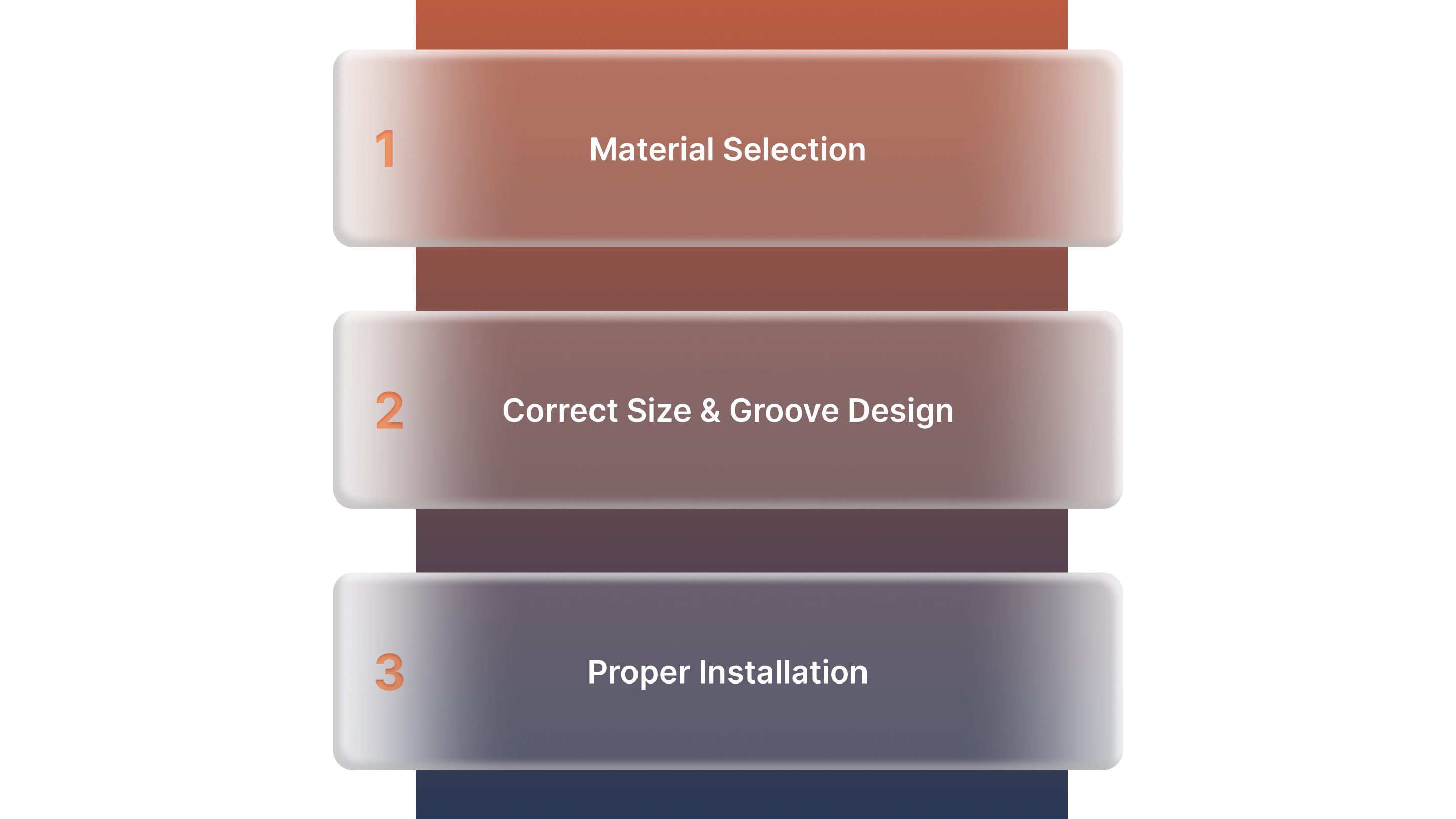
Material selection. O-rings must be compatible with the system’s fluid, temperature range, and pressure. For example, nitrile performs well with petroleum-based fluids, while fluorocarbon handles higher temperatures and aggressive chemicals. The wrong material can swell, harden, crack, or lose elasticity, leading to early failure.
Correct size and groove design. An O-ring must fit the groove precisely. Undersized rings may not seal at all; oversized rings can be over-compressed, causing extrusion or rapid compression set. Proper groove dimensions control squeeze, stretch, and volume fill, all of which directly affect seal life.
Proper installation. Many O-ring failures happen before the system is even turned on. Twisting, pinching, sharp edges, or a lack of lubrication during installation can nick or tear the seal. Even small installation damage creates a weak point that pressure will quickly exploit.
When material choice, sizing, and installation are correct, O-rings provide reliable, long-lasting sealing. When any one of these factors is wrong, failure is often fast, and repeat failures are almost guaranteed.
Why O-Rings Get Damaged in the First Place
Most O-ring failures don’t happen randomly, and they’re rarely unavoidable. In the majority of cases, damage can be traced back to system conditions, material selection, or handling errors.
Aging and material fatigue: Over time, elastomers naturally lose elasticity. Heat, oxygen, and cyclic loading accelerate this process, leading to hardening, cracking, or permanent flattening (compression set). An aged O-ring may look intact, but no longer has the resilience needed to maintain a seal.
Incorrect material for the application: Not all O-rings are interchangeable. Using a material that isn’t rated for the operating temperature, pressure, or environment leads to rapid degradation. The result is swelling, brittleness, softening, or loss of sealing force, often much sooner than expected.
Exposure to incompatible fluids or chemicals: Chemical incompatibility is a common and overlooked cause of failure. Certain oils, fuels, solvents, or cleaning agents can attack the elastomer, causing it to swell, shrink, crack, or break down internally. Even brief exposure can permanently damage the seal.
Excessive heat, pressure, or vibration: Operating outside design limits shortens O-ring life dramatically. High temperatures accelerate aging, excessive pressure can cause extrusion or tearing, and vibration introduces abrasion and micro-movement that wears the seal over time.
Improper groove design or installation mistakes: Many failures occur before the system is ever pressurized. Sharp edges, incorrect groove dimensions, over-compression, lack of lubrication, twisting, or pinching during installation can nick or deform the O-ring. These small defects quickly become leak paths once pressure is applied.
Many repeat failures stem from using the wrong elastomer for the environment. Detroit Sealing Components works with multiple elastomer compounds, including NBR, FKM, EPDM, silicone, and polyurethane, supporting better material alignment with temperature, pressure, and chemical exposure.
Early Warning Signs of O-Ring Damage
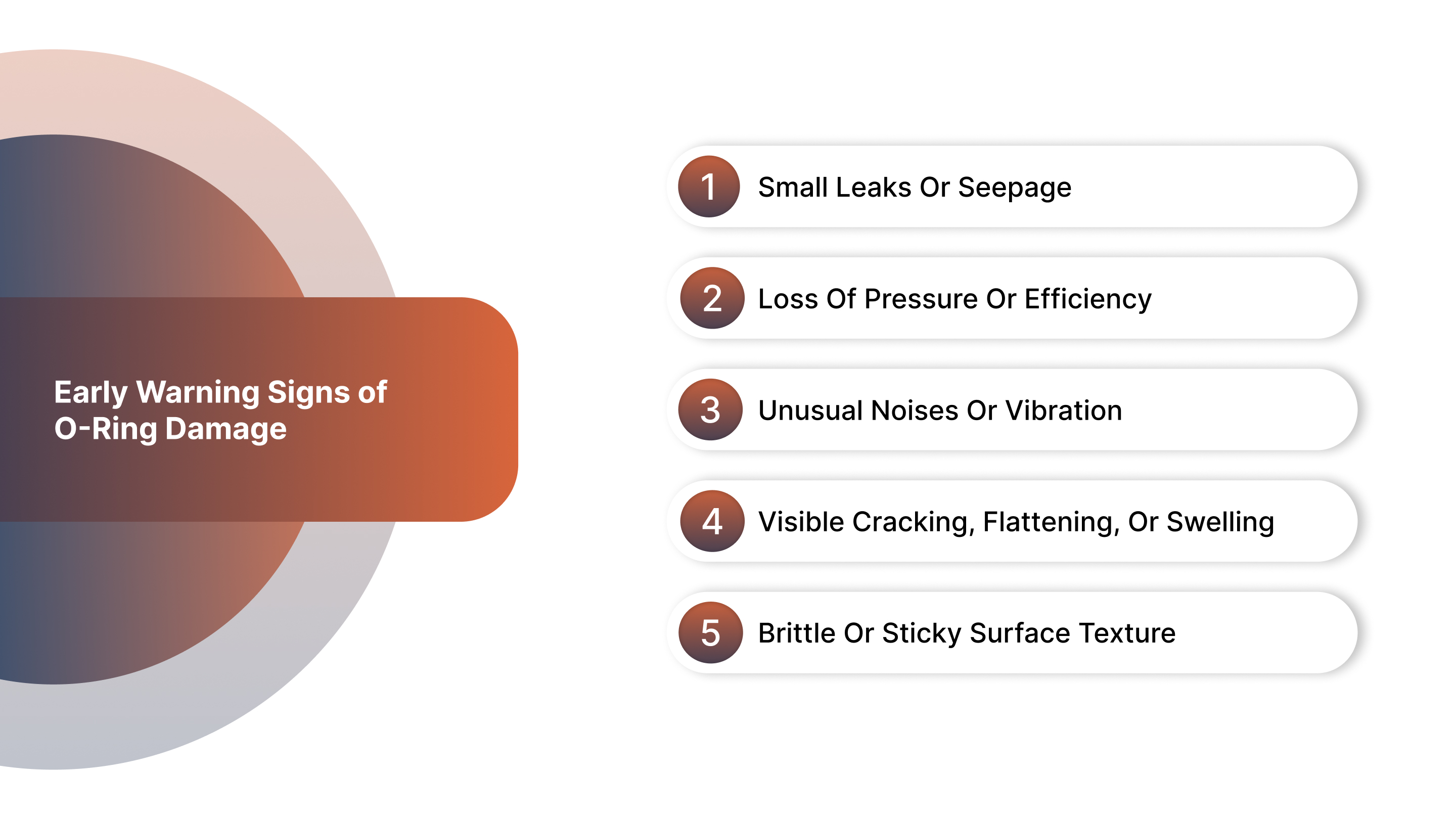
O-ring failures rarely happen without warning. Most seals show clear symptoms long before a leak turns into downtime or a safety incident. Knowing what to look for allows you to intervene early, when fixes are fast, inexpensive, and effective.
Small leaks or seepage: A light weep, damp fitting, or residue buildup is often the first sign of trouble. These minor leaks indicate the O-ring is no longer maintaining a full seal and will almost always worsen under pressure or temperature cycling.
Loss of pressure or efficiency: If a system struggles to hold pressure, respond consistently, or maintain output, a degrading O-ring may be allowing internal leakage. Even when fluid loss isn’t visible, performance drops are a red flag.
Unusual noises or vibration: Hissing, chattering, or increased vibration can signal air or fluid bypassing a damaged seal. In hydraulic and pneumatic systems, this often points to internal leakage caused by worn or extruded O-rings.
Visible cracking, flattening, or swelling: During inspection, look for surface cracks, hardened edges, flattened cross-sections, or noticeable swelling. These are clear indicators of aging, chemical attack, or thermal damage.
Brittle or sticky surface texture: An O-ring that feels hard and brittle has likely heat-aged beyond its service life. A sticky or gummy surface usually signals chemical incompatibility. In both cases, failure is imminent.
Catching these signs early prevents secondary damage and repeat failures. If an O-ring is already talking to you, it’s usually best to listen before the system forces you to.
Step-by-Step Process to Diagnose a Damaged O-Ring
This is where most troubleshooting either gets solved or goes wrong. Replacing a failed O-ring without diagnosing why it failed almost guarantees a repeat issue. Follow this step-by-step process to identify the root cause, not just the symptom.
Step 1: Visual and Physical Inspection
Once the O-ring is removed, start with a close visual check under good lighting.
Look for:
Cuts, nicks, or torn edges
Flattened cross-sections (compression set)
Cracks, glazing, or surface hardening
Swelling, shrinkage, or distortion
Then perform a simple physical check. Gently flex the O-ring. A healthy seal should stretch slightly and return to shape. If it cracks, feels brittle, or fails to rebound, the material has degraded and is no longer serviceable.
Step 2: Identify the Type of Damage
Specific damage patterns usually point directly to the root cause.
Cuts or nicks often indicate installation damage, sharp edges, or poor handling.
Abrasion or surface wear suggests vibration, misalignment, or excessive movement.
Extrusion or torn sections point to excessive pressure or inadequate groove support.
Swelling, softening, or cracking typically signals chemical incompatibility or heat exposure.
Documenting these patterns is critical; they tell you why the seal failed, not just that it failed.
Step 3: Check Operating Conditions
Never diagnose an O-ring in isolation. Review the actual operating conditions of the system.
Confirm:
Operating temperature versus material rating
System pressure and pressure spikes
Fluid, oil, gas, or chemical exposure
Even a correctly installed O-ring will fail early if it’s operating outside its design limits. Many “mystery” failures are simply the result of real-world conditions exceeding assumptions.
Step 4: Inspect the Groove and Sealing Surface
If O-rings keep failing, the problem is often the hardware, not the seal.
Inspect the groove and mating surfaces for:
Sharp edges or burrs
Corrosion, pitting, or scoring
Incorrect groove dimensions or over-compression
Any imperfection in the sealing surface creates a stress point that pressure will exploit. Unless these issues are corrected, even a new O-ring will suffer the same fate.
5 Common Types of O-Ring Damage and What They Mean
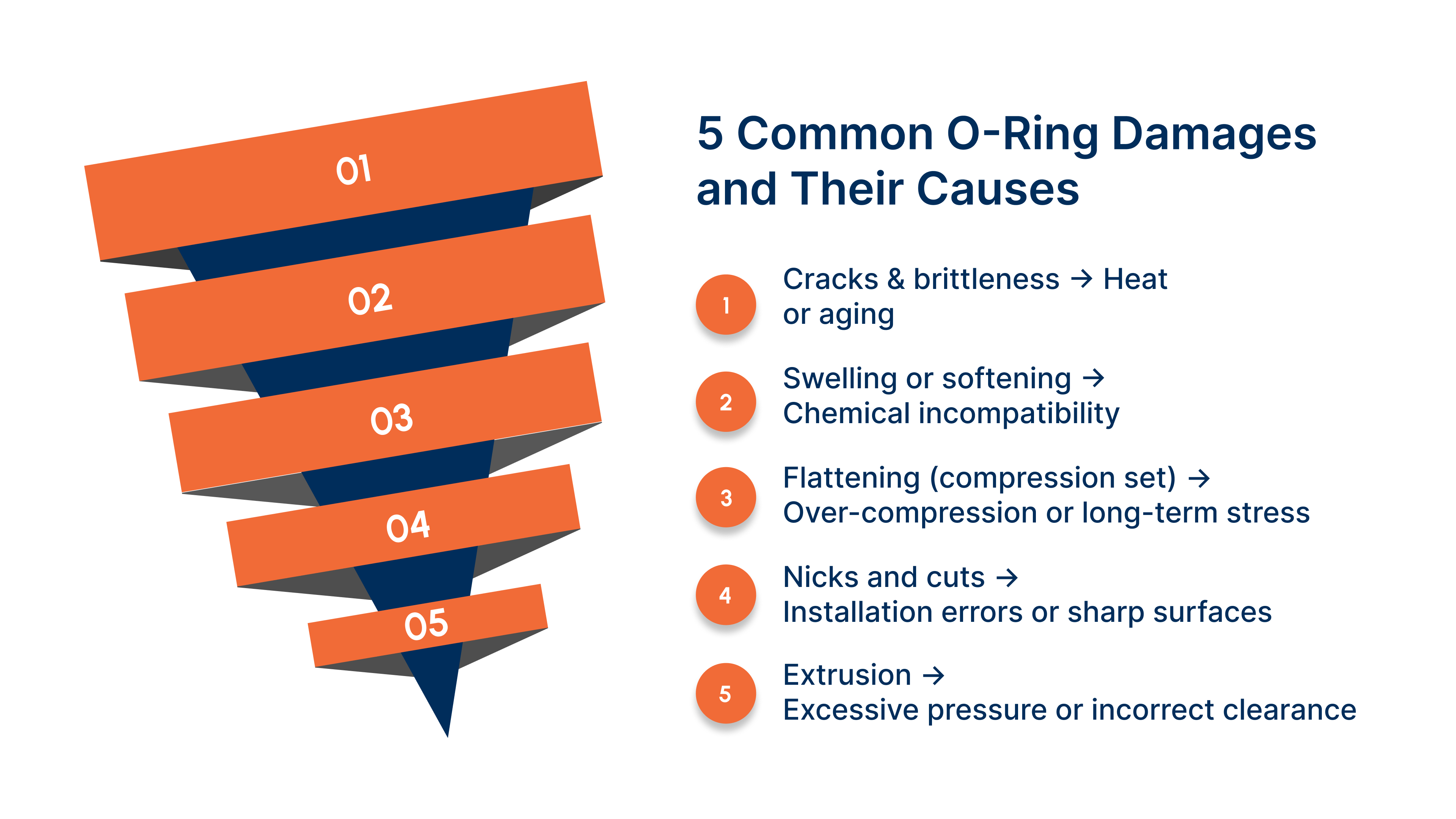
O-rings fail in recognizable ways. Learning to match visible damage to its most likely cause dramatically shortens troubleshooting time and helps prevent repeat failures. Below are the most common damage types, and what they’re telling you about your system.
1. Cracks and brittleness → Heat or aging
Surface cracks, stiffness, or a brittle feel usually indicate thermal aging. Prolonged exposure to high temperatures accelerates elastomer breakdown, reducing elasticity and sealing force. Even if the O-ring looks intact, a hardened seal is already at the end of its service life.
2. Swelling or softening → Chemical incompatibility
An O-ring that appears swollen, misshapen, or unusually soft has likely absorbed incompatible fluids or chemicals. This reduces mechanical strength and causes loss of sealing integrity. A chemical attack is often irreversible and will worsen with continued exposure.
3. Flattening (compression set) → Over-compression or long-term stress
A flattened cross-section means the O-ring can no longer rebound to maintain contact pressure. This is commonly caused by excessive squeeze, incorrect groove dimensions, or extended service under constant load, especially at elevated temperatures.
4. Nicks and cuts → Installation errors or sharp surfaces
Small cuts, tears, or gouges are frequently the result of improper installation, sharp housing edges, or sliding the O-ring over threads without protection. These defects create immediate leak paths once pressure is applied.
5. Extrusion → Excessive pressure or incorrect clearance
Extrusion occurs when pressure forces part of the O-ring into gaps between mating surfaces, causing tearing or nibbling. This points to pressures exceeding material limits, insufficient groove support, or clearances that are too large for the application.
Recognizing these patterns turns a failed O-ring into a diagnostic tool. When you understand what the damage means, you can correct the real problem, not just replace the seal and hope for better results next time.
How to Fix O-Ring Problems Correctly?
Fixing an O-ring problem isn’t about swapping parts and moving on; it’s about making sure the failure doesn’t come back. Quick fixes often mask the real issue and lead to repeat leaks, downtime, and frustration. A correct repair focuses on long-term reliability, not short-term convenience.
1. Removing the Damaged O-Ring Safely
Start by removing the failed O-ring without creating new problems.
Best practices:
Use plastic or brass picks instead of steel tools
Avoid prying against sealing surfaces or groove edges
Never scrape or dig into the groove to “speed things up.”
Even small scratches or burrs left during removal can damage the next O-ring and cause immediate leakage. If resistance is high, slow down; forcing the seal out often does more harm than good.
2. Selecting the Right Replacement O-Ring
Correct replacement goes well beyond matching size. A visually identical O-ring can fail quickly if its properties don’t match the application.
Consider the following:
Material compatibility: Ensure the elastomer is compatible with all system fluids, including cleaners and lubricants
Hardness (durometer): Softer O-rings seal more easily at low pressure; harder compounds resist extrusion at higher pressures
Temperature and pressure ratings: Verify both normal operating ranges and transient spikes
Choosing the wrong material or hardness is one of the most common causes of repeat failures.
Correct Installation Practices
Many O-rings are damaged during installation, before the system ever operates.
To install correctly:
Lightly lubricate the O-ring with a compatible lubricant
Keep the seal aligned to prevent twisting or rolling
Use installation tools or protective sleeves when passing over threads or sharp edges
A properly installed O-ring should sit evenly in the groove without stretching, pinching, or distortion. Taking an extra minute during installation often saves hours of troubleshooting later.
Preventing Repeat O-Ring Failures
If an O-ring has failed once, it can fail again, unless something changes. Preventing repeat failures means shifting from reactive repairs to proactive control of materials, handling, and maintenance practices.
Match O-ring material to application conditions: Always select O-rings based on real operating conditions, not assumptions. Temperature range, pressure, fluid exposure, and environmental factors all matter. A seal that’s “close enough” on paper often isn’t in service. Proper material selection is the single most effective way to extend seal life.
Use proper lubrication and avoid over-stretching: Lubrication reduces friction, prevents twisting, and protects the O-ring during installation. Use only lubricants compatible with the elastomer and system fluid. Avoid stretching the O-ring more than necessary; excessive stretch thins the cross-section and weakens the seal before it ever goes into service.
Store O-rings correctly to prevent premature aging: Poor storage shortens seal life before use. Store O-rings in a cool, dry environment away from direct sunlight, ozone sources, heat, and chemicals. Seals left exposed to air, UV, or temperature extremes can harden or crack long before installation.
Follow routine inspection and maintenance schedules: Don’t wait for leaks to signal a problem. Regular inspections help catch early signs of wear, compression set, or chemical attack. Replacing O-rings during planned maintenance is far less costly than dealing with unplanned failures and downtime.
Preventing repeat failures requires consistent materials, proper sizing, and reliable sourcing. Detroit Sealing Components provides extensive O-ring inventories, material expertise, and sealing kits that support preventive maintenance and long-term system reliability.
Where O-Ring Failures Commonly Occur
O-rings are used across countless applications, but certain environments place them under far greater stress. Knowing where failures most often occur helps prioritize inspection and preventive maintenance.
Hydraulic and pneumatic systems: High pressure, pressure spikes, and constant cycling make these systems especially hard on O-rings. Heat buildup, vibration, and contamination can quickly degrade seals, leading to leaks and loss of system efficiency.
Pumps and valves: Pumps and valves experience frequent motion, pressure changes, and direct fluid exposure. O-rings in these components are prone to wear, extrusion, and chemical attack, particularly when fluids are hot, abrasive, or poorly filtered.
Automotive and heavy machinery: Engines, transmissions, braking systems, and hydraulic circuits in heavy equipment operate under extreme temperatures, vibration, and load. O-rings in these environments often fail due to heat aging, improper material selection, or installation damage during service.
Industrial and manufacturing equipment: Production machinery relies on O-rings to maintain consistent operation over long duty cycles. Continuous operation, aggressive cleaning chemicals, and missed maintenance windows make seal failures common sources of downtime in industrial settings.
In these high-risk applications, O-rings aren’t just consumables; they’re reliability-critical components. Focusing attention where failures are most likely delivers the biggest return in uptime and cost savings.
How Detroit Sealing Components Helps Prevent Repeat O-Ring Failures
Preventing O-ring failures isn’t just about better maintenance; it’s also about sourcing seals from partners that understand real operating conditions. Detroit Sealing Components supports long-term reliability through both product depth and technical capability.
Extensive O-ring inventory covering AS568, metric, and JIS sizes, from micro sizes to large-diameter O-rings
Wide material selection, including NBR, FKM, EPDM, HNBR, silicone, fluorosilicone, polyurethane, and more
Custom O-rings and molded rubber parts for applications where standard seals fall short
Material expertise and compound validation, helping match O-rings to temperature, pressure, and chemical exposure
O-ring kits and sealing solutions that support faster maintenance and preventive replacement.
Access to the correct size, compound, and hardness, backed by application knowledge, directly reduces the most common causes of repeat O-ring failure: wrong material, improper fit, and mismatched operating limits.
Conclusion
O-ring failures aren’t random, and they’re rarely fixed by replacement alone. Leaks and repeat issues almost always stem from material mismatch, operating conditions, installation damage, or overlooked hardware problems. By recognizing early warning signs, diagnosing damage correctly, and addressing the root cause, you turn O-rings from a recurring failure point into a reliable part of your system.
For help selecting the right O-ring, material, or sealing solution for your application, Detroit Sealing Components provides standard and custom O-rings, broad material options, and application expertise to prevent repeat failures. Contact Detroit Sealing Components to get the right seal in place before downtime becomes a problem.
FAQ
1. What is the most common cause of O-ring failure?
Incorrect material selection is the leading cause. Using an O-ring that isn’t compatible with system fluids or temperatures often leads to swelling, cracking, or loss of elasticity.
2. Can an O-ring look fine and still fail?
Yes. An O-ring can appear intact but lose elasticity due to aging or compression set, resulting in leaks even though no visible damage is present.
3. Should O-rings be lubricated before installation?
In most cases, yes. Proper lubrication reduces friction, prevents twisting or tearing during installation, and improves sealing performance, provided the lubricant is compatible with the material.
4. Why do O-rings keep failing in the same location?
Repeat failures usually indicate an underlying issue such as improper groove design, sharp edges, excessive pressure, or incorrect material selection, not a bad O-ring.
5. How do I know if an O-ring material is chemically compatible?
Compatibility charts are a starting point, but real-world conditions matter. Temperature, concentration, and exposure time can change performance, so expert guidance is often recommended.