When a seal hardens, flattens, or starts leaking, temperature is usually the hidden cause. Many failures happen because Buna-N temperature rating limits were ignored in O-rings and seals. What temperature really breaks a Buna-N seal when pressure and motion are involved. The truth is simple. Buna temp rating defines the range where the rubber keeps sealing force, not where it melts or burns. That is why two Buna O-rings can fail differently at the same heat. In this blog, we explain how Buna-N temperature rating controls leakage, downtime, and rework.
Read This Before You Spec a Buna-N Seal
Buna-N temperature rating controls sealing force first. Fit and hardness mean nothing if the rubber stops pushing against the metal.
Motion changes everything. A seal that survives in a flange can fail fast on a moving shaft at the same temperature.
Visual checks do not protect you. Buna-N can lose recovery long before cracks, color change, or surface damage appear.
Temperature and pressure must be evaluated together. Heat plus load is what drives the compression set and loss of contact.
Material upgrades are not optional outside the usable range. FKM, HNBR, or silicone become required when Buna temp rating is exceeded.
What the Buna-N Temperature Rating Actually Means
Buna-N temperature rating defines the temperature window where the rubber still works as a seal. It is not the point where the material burns or melts. You rely on this range because elasticity controls how hard the seal pushes against metal surfaces, which creates sealing force.
Here is how the three common terms relate to the same performance limit.
Term used | What it means in practice |
Buna-N temperature rating | The full sealing performance range of NBR |
Buna temperature rating | A shortened way to describe the same usable range |
Buna temp rating | Industry shorthand for the same temperature window |
Seals often fail before rubber looks damaged because loss of elastic recovery happens first. At 85°C, the compression set rate of NBR increases by 296.66 percent after seven days of thermal oxidative aging, which means the seal no longer rebounds to keep contact pressure.
Before you can judge whether Buna-N will survive in your system, you need to know its usable temperature limits. Buna-N temperature rating defines the range where the rubber still provides sealing force through elastic recovery. Outside this window, the material may remain physically intact but no longer function as a seal. Standard and special Buna-N compounds differ significantly in how much heat or cold they tolerate, which is why temperature rating must be treated as a performance boundary, not a material label.
Knowing the temperature window is only the starting point. What matters next is how that window changes the way your seal behaves once heat or cold enters the system.
How Buna-N Temperature Rating Affects Seal Performance
Buna-N temperature rating controls whether your seal stays tight or slowly loses contact with the gland. Once you cross the usable range, elasticity drops and the rubber no longer fills the sealing gap. That shift happens even when the seal still looks intact on the outside.
Below is how temperature changes the way NBR behaves in service.
Temperature direction | What changes inside the rubber |
Cold exposure | Polymer chains stiffen and lose flexibility |
Heat exposure | Rubber relaxes and takes permanent shape |
These changes directly decide whether you get stable sealing or creeping leaks.
Low-Temperature Buna-N Temperature Rating Limits
When you push Buna temp rating below its cold limit, the rubber starts acting like hard plastic instead of an elastic seal. This matters most in moving equipment where vibration and motion need the seal to keep flexing.
Cold-related failures show up as the following.
Loss of elasticity that prevents the O-ring from expanding against the groove
Reduced sealing force that allows micro leaks under pressure pulses
Cracking in motion when shafts or pistons cycle
Slow recovery after compression that leaves gaps after each movement
This is why cold weather hydraulics and outdoor equipment often see early leakage with standard NBR.
High-Temperature Buna-N Temperature Rating Limits
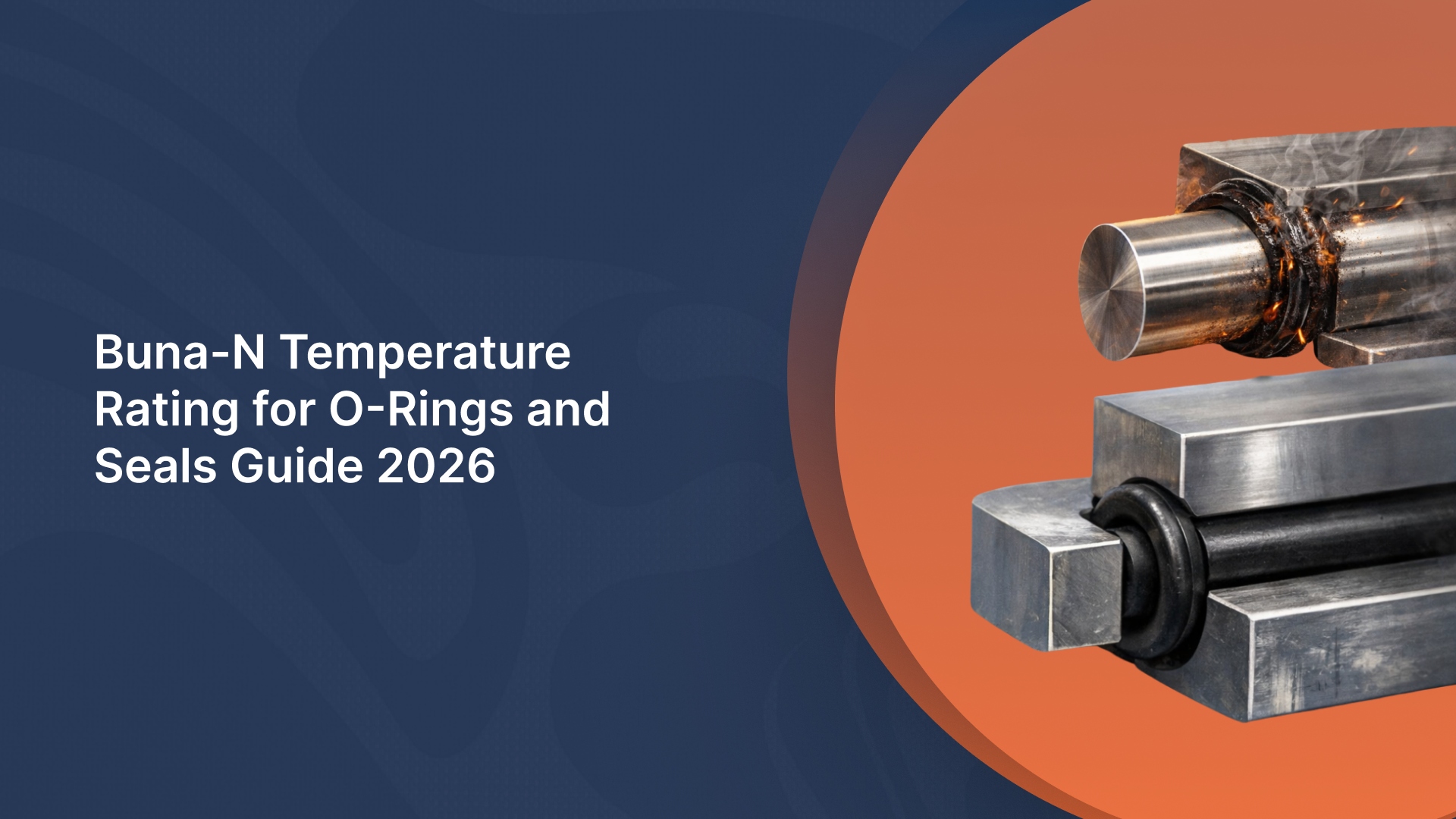
Heat pushes Buna-N past its ability to spring back. You see this in engines, pumps, and hydraulic systems where oil temperature keeps rising during operation. Once the rubber takes a permanent shape, sealing force drops even if the part still fits in the groove.
Heat-driven damage appears in these forms.
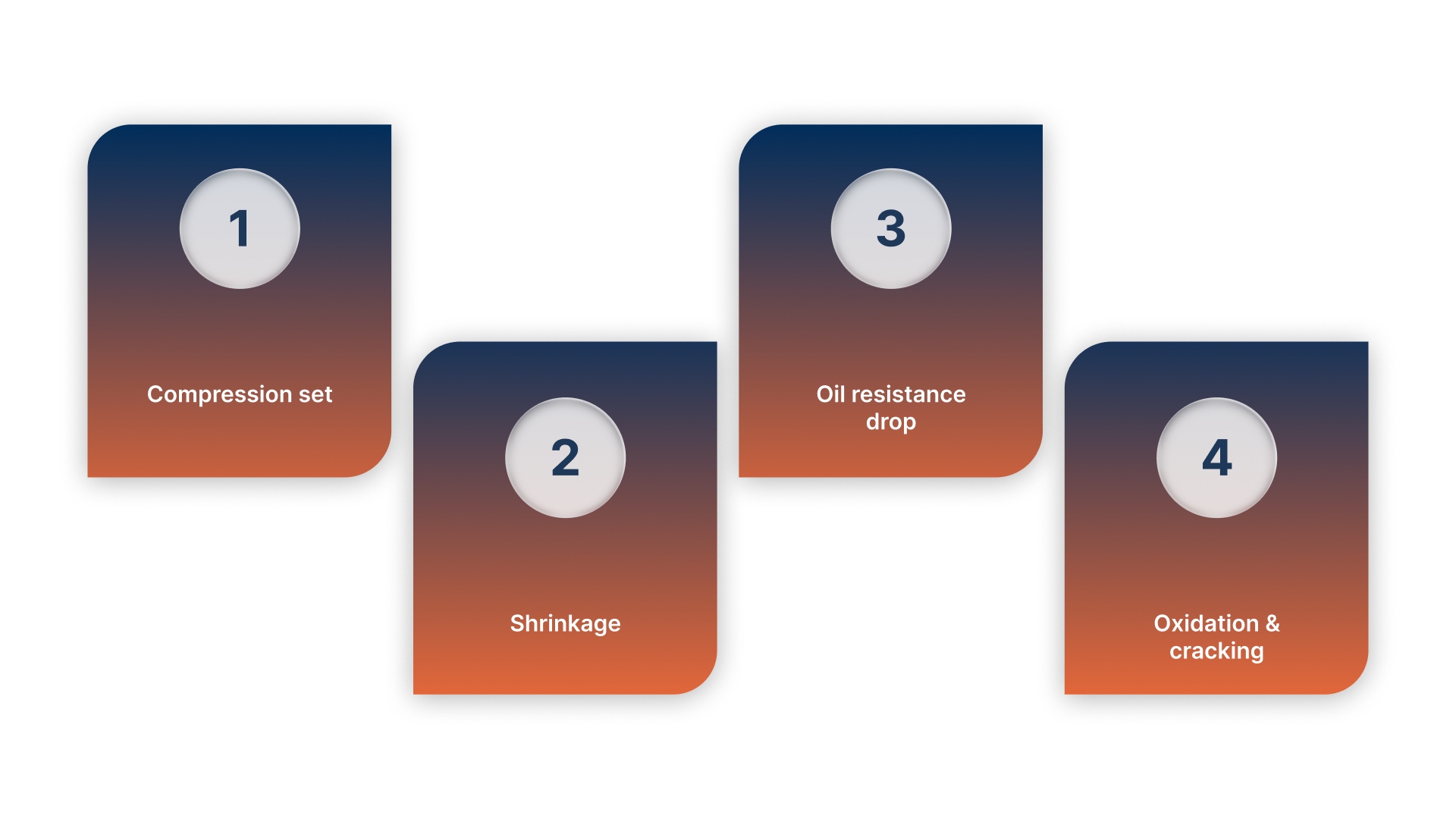
Compression set that leaves the seal permanently flattened
Shrinkage that pulls the rubber away from sealing surfaces
Oil resistance drop that lets fluids attack the compound
Oxidation and cracking that weakens the rubber over time
These failures explain why NBR struggles in hot oil systems and is replaced by FKM or HNBR when temperatures climb.
Once you see how temperature changes the rubber itself, the next step is choosing the right compound before failure starts. That is where Buna-N temperature rating becomes a design filter instead of just a data point.
Using Buna-N Temperature Rating in Seal Selection
Temperature is the first filter you apply before picking any elastomer. Buna temperature rating tells you when NBR keeps sealing force and when it stops doing its job. If your system runs outside that window, you need a different compound before you even look at size or groove design.
Use this selection view to match motion to temperature limits.
Application type | Practical Buna-N temperature use |
Static seals | Can run closer to the upper limit because there is no friction heat |
Dynamic seals | Must stay well below the limit due to heat from motion |
You should also apply a safety margin based on movement.
Moving shafts and pistons generate friction heat that pushes Buna temp rating higher than the bulk fluid temperature.
Vibration and cycling speed increase rubber aging and compression set.
Tight grooves and poor lubrication raise surface temperature at the seal.
Once operating temperatures cross the usable NBR range, you move to higher performance compounds.
When temperature rises | Replacement elastomer |
Hot oils and fuels | FKM |
High pressure with heat | HNBR |
Extreme cold or wide swings | Silicone |
Once you know which compound the temperature demands, the next step is finding a supplier that can actually deliver it in the right form. That is where Detroit Sealing Components turns these rules into working seal systems.
How Detroit Sealing Components Applies Buna-N Temperature Rating in Critical Systems
Detroit Sealing Components applies Buna-N temperature rating across real operating conditions, not just catalog limits. You see this in hydraulic, oil and gas, water, and medical systems where heat shifts quickly create leaks, extrusion, and early seal loss. DSC supplies both standard and custom Buna-N solutions that stay reliable when temperature, pressure, and motion change.
Here is how Detroit Sealing supports temperature based selection.
Buna-N O-rings in AS568, JIS, and metric sizes for static and dynamic sealing
Backup rings in NBR and FKM to prevent extrusion when heat softens the rubber
Hydraulic and pneumatic seals built for high pressure, friction, and temperature rise
Metal bonded rubber seals for strength in aerospace, military, and heavy machinery
O-ring kits for fast field replacement and reduced downtime
Infinite Size O-ring technology for large or non-standard diameters without tooling delays
This product range lets you keep Buna-N seals operating inside their usable temperature window instead of failing early under heat, cold, or pressure. Explore Detroit Sealing’s full range of sealing solutions and find the right Buna-N O-ring for your application. View our product catalog today!
Conclusion
Buna-N temperature rating decides how long a seal keeps working, not just which part fits the groove. When temperature limits are missed, you deal with leaks, shutdowns, and repeat repairs. That risk grows in hydraulic, oil and gas, water, and medical systems. Detroit Sealing Components gives you properly specified Buna-N seals, backed by stocked inventory and engineering support, so temperature never becomes the weak point.
Contact Detroit Sealing Components today to get the right Buna-N seal for your application and keep temperature from turning into downtime.
FAQs
Q: Can Buna-N seals handle short heat spikes without immediate failure?
A: Short spikes can be tolerated if the seal cools before permanent shape change occurs. Repeated spikes still shorten service life.
Q: Does seal color or appearance indicate if Buna-N overheated?
A: Color changes are unreliable for heat damage. You often see leaks long before any visible surface change appears.
Q: Should you change groove design when running Buna-N near its upper temperature limit?
A: Yes, tighter tolerances and proper squeeze help offset reduced rubber recovery. This improves contact pressure under thermal stress.
Q: Can lubrication reduce thermal stress on Buna-N in moving assemblies?
A: Proper lubrication lowers friction heat at the sealing surface. This helps maintain rubber flexibility during continuous motion.
Q: Is Buna-N suitable for mixed fluid systems that see temperature cycling?
A: Temperature cycling accelerates aging when different fluids are present. You should verify compatibility for every operating condition.
Q: How does storage temperature affect unused Buna-N seals?
A: Excess heat during storage can pre-age the rubber. This shortens usable life even before the seal is installed.