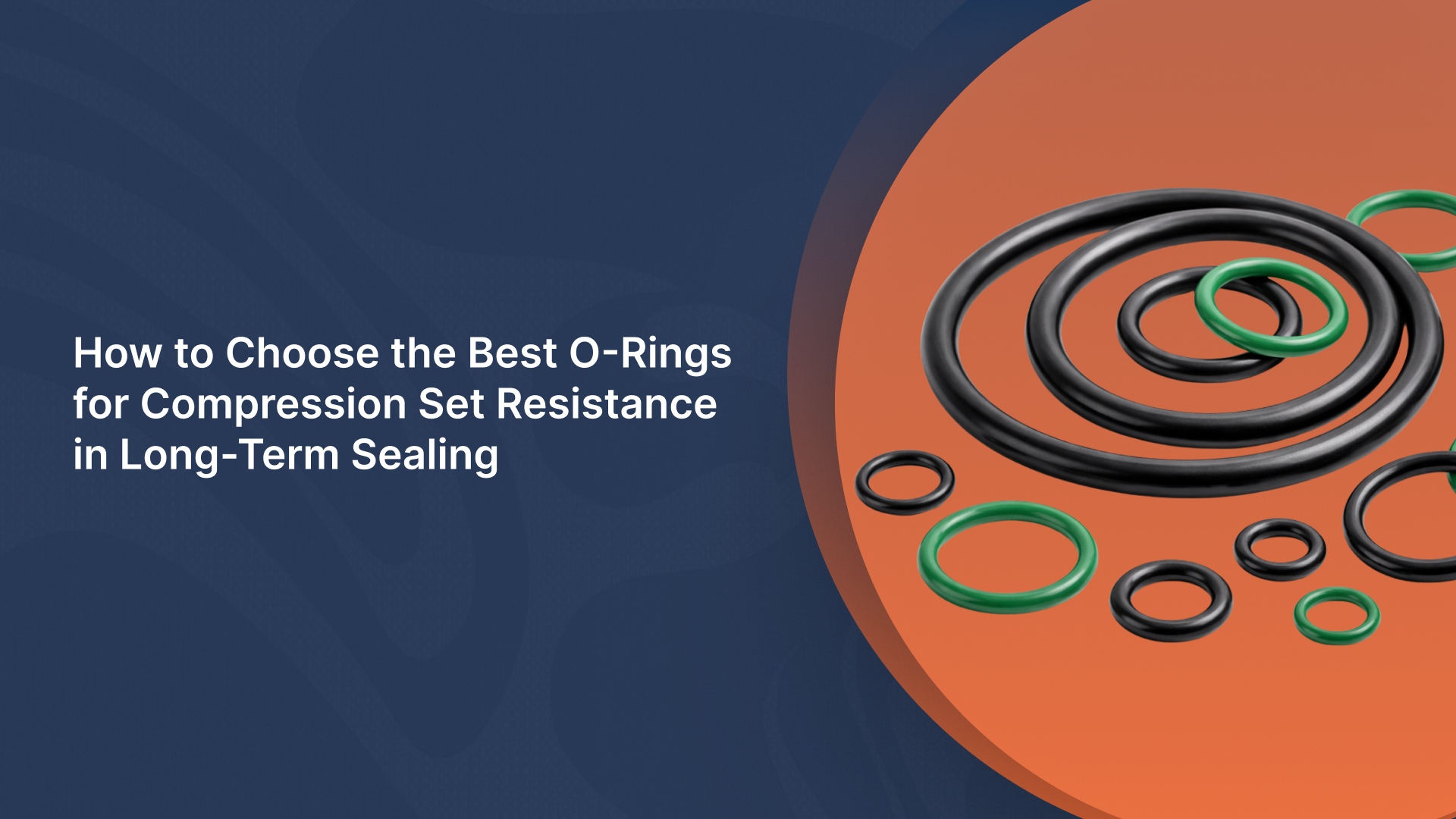
A compression set is one of the most common causes of O-ring seal failure in static and long-term sealing applications. When an O-ring remains compressed for extended periods, poor compression set resistance can prevent the material from returning to its original shape.
Selecting the best O-rings for compression set resistance is important in applications where seals experience sustained compression, elevated temperatures, or long service intervals. Material choice, compound formulation, temperature exposure, and load duration all influence compression set performance.
This guide explains what a compression set is, why it matters, which O-ring materials perform best, and how to select the right O-ring for long-term sealing reliability.
Before we dive into
Compression set resistance is critical for O-rings used in static and long-term sealing applications.
O-ring material choice has the greatest impact on compression set performance, especially under sustained load and elevated temperatures.
Materials such as FKM and FFKM generally provide the best compression set resistance for demanding applications.
Operating temperature, duration under compression, chemical exposure, and seal design all influence long-term elastic recovery.
Proper testing, material selection, and design considerations help reduce leakage risk and extend seal service life.
What Is a Compression Set and Why Does It Matter?
A compression set refers to the permanent deformation an elastomer experiences after being compressed for a defined time and temperature. It is typically expressed as a percentage; lower values indicate better recovery.
In sealing applications, compression set matters because:
O-rings rely on elastic recovery to maintain sealing force.
High compression set reduces contact pressure over time.
Loss of recovery increases leak risk in static seals.
Long service intervals amplify compression set effects.
A compression set is especially critical in applications where seals remain compressed continuously, such as flanges, housings, enclosures, and vacuum or pressure systems.
Factors That Affect Compression Set Performance
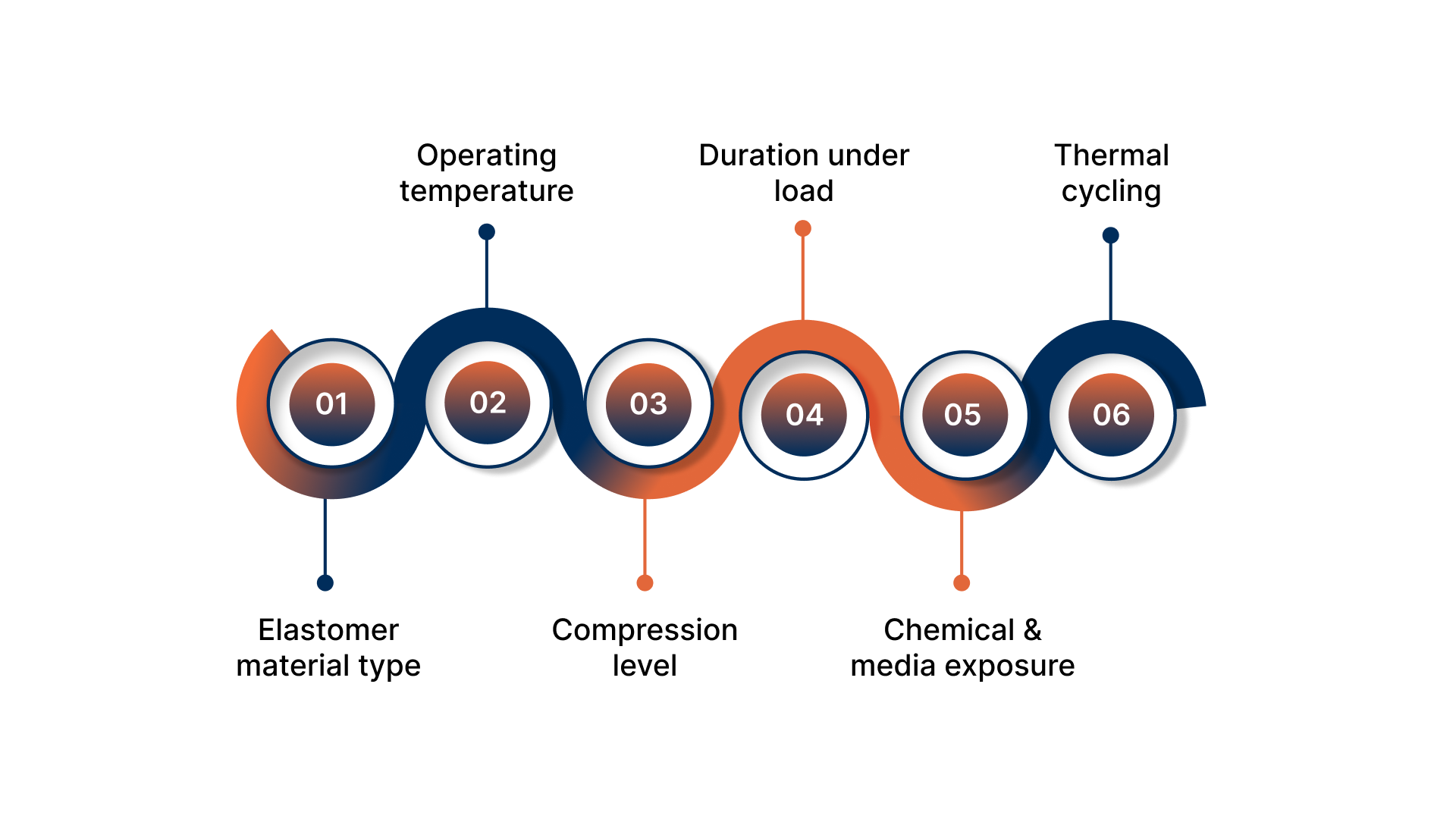
Compression set performance is influenced by several material, design, and operating factors. Understanding these variables helps ensure O-rings maintain sealing force over time and resist permanent deformation.
Elastomer material type: Different elastomers recover differently after compression. Materials like FKM and FFKM generally offer better compression set resistance than softer or highly flexible compounds.
Operating temperature: Elevated temperatures accelerate material aging and increase the risk of permanent deformation. Extended exposure above a material’s rated temperature range significantly worsens compression set.
Compression level (squeeze): Excessive compression increases stress on the O-ring and can lead to faster compression set. Proper gland design and controlled squeeze are critical.
Duration under load: O-rings held under compression for long periods are more likely to lose elastic recovery, especially in static sealing applications.
Chemical and media exposure: Contact with incompatible fluids can soften, swell, or degrade the elastomer, reducing its ability to rebound after compression.
Thermal cycling: Repeated heating and cooling cycles can accelerate material fatigue and compression set.
When standard O-ring materials do not meet compression set requirements, Detroit Sealing Components provides guidance on material selection and design considerations for improved seal performance.
Best O-Ring Materials for Compression Set Resistance
Not all elastomers perform equally with respect to compression set. The materials below are commonly evaluated for applications requiring long-term elastic recovery.
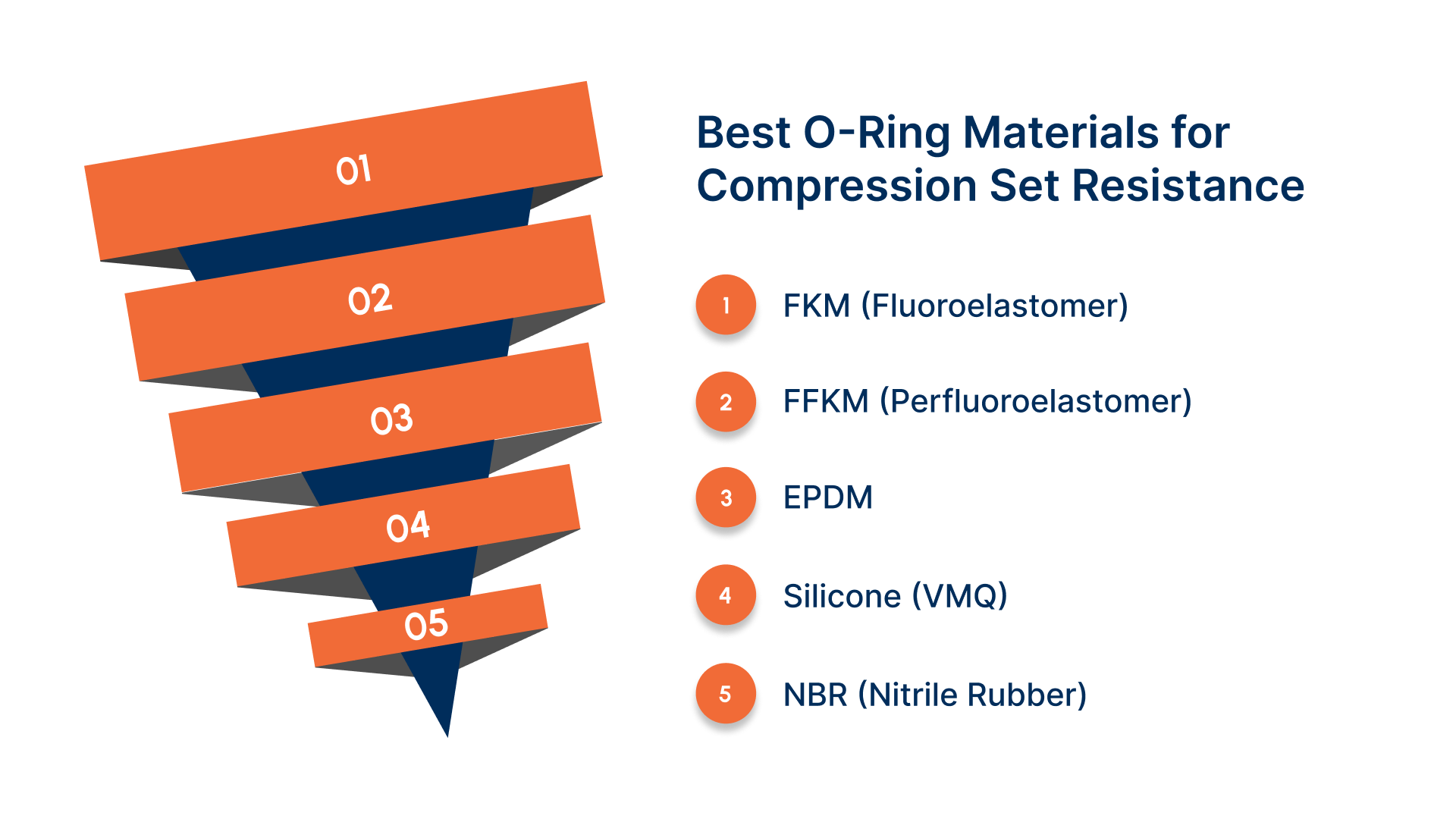
1. FKM (Fluoroelastomer)
FKM offers excellent compression set resistance, particularly at elevated temperatures.
Performs well in long-term static sealing
Maintains elasticity at higher operating temperatures
Widely used in industrial, automotive, and process systems
FKM is often the preferred choice where heat, chemical exposure, and long service life are required.
2. FFKM (Perfluoroelastomer)
FFKM provides the highest compression set resistance among elastomers.
Extremely low permanent deformation
Performs in extreme temperatures and aggressive chemicals
Used where seal failure is unacceptable
FFKM is commonly specified for semiconductor, aerospace, and critical process applications.
3. EPDM
EPDM offers good compression set resistance in moderate temperature ranges.
Performs well in water, steam, and outdoor environments
The compression set increases at higher temperatures
Best suited for non-oil, non-hydrocarbon systems
EPDM is a solid choice for static seals where environmental resistance is required.
4. Silicone (VMQ)
Silicone remains flexible over a wide temperature range but has moderate resistance to compression set.
Good low-temperature recovery
The compression set increases at sustained high temperatures
Often used where flexibility matters more than sealing force.
Silicone is typically not selected for long-term static seals requiring high compression retention.
5. NBR (Nitrile Rubber)
NBR has lower compression set resistance than other elastomers.
Suitable for short-term or moderate-duty applications.
Performance declines rapidly at higher temperatures.
Often chosen for oil compatibility rather than longevity.
NBR is generally not recommended for applications requiring extended compression retention.
O-Ring Material Comparison for Compression Set Resistance
O-Ring Material | Compression Set Resistance | Temperature Capability | Typical Applications |
FFKM | Excellent | -5°F to 625°F | Semiconductor, aerospace, critical systems |
FKM | Very Good | -15°F to 400°F | Industrial equipment, automotive, and process sealing |
EPDM | Good | -65°F to 300°F | Water systems, HVAC, outdoor applications |
Silicone | Moderate | -100°F to 500°F | Medical, temperature extremes |
NBR | Fair | -40°F to 250°F | Oil systems, cost-sensitive applications |
Note: Compression set performance varies by compound formulation, temperature, and test conditions.
Design Considerations to Minimize Compression Set
Seal design plays a critical role in reducing compression set and extending service life. Even the best material can fail prematurely if design parameters are not optimized.
Key design considerations include:
Proper groove design: Ensure gland depth and width support uniform compression without pinching or extrusion.
Control thermal exposure: Limit continuous operation to the elastomer's upper temperature limits.
Avoid excessive stretch: Overstretching O-rings during installation thins their cross-section and increases the risk of permanent set.
Select appropriate hardness: Softer compounds may seal easily but often exhibit higher compression set over time.
Allow for material aging: Account for long-term relaxation and environmental effects during design selection.
Applying these design principles helps preserve sealing force, reduce maintenance frequency, and improve long-term reliability in compression-critical applications.
How Compression Set Is Measured and Tested
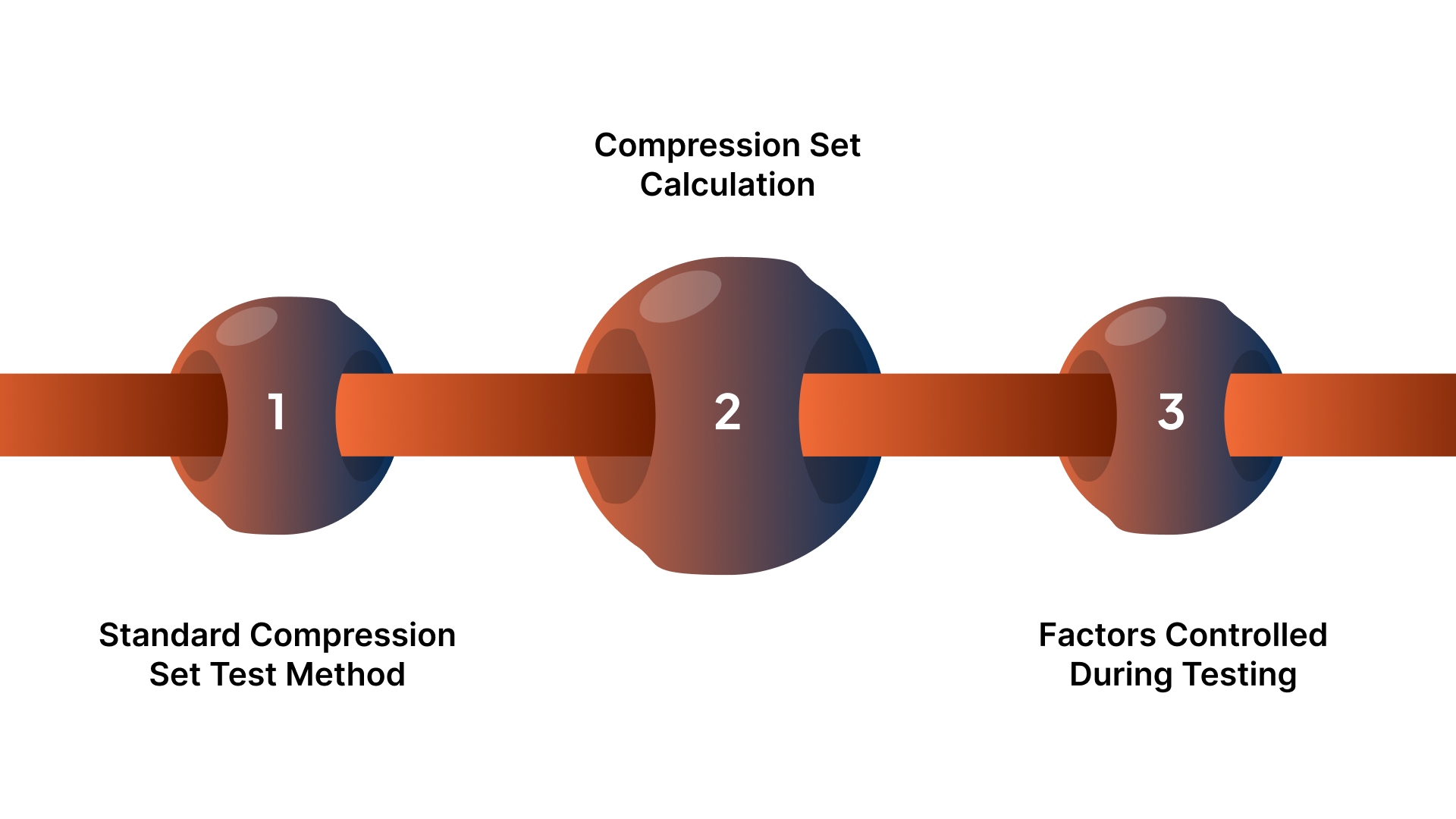
Compression set is measured to evaluate an elastomer’s ability to return to its original shape after being compressed for a defined period under controlled conditions. The test helps predict how well an O-ring will maintain sealing force over time, especially in static or long-duration applications.
1. Standard Compression Set Test Method
Compression set is most commonly measured using standardized test methods such as ASTM D395 or ISO 815. While procedures vary slightly, the general process includes:
Sample preparation: An elastomer test specimen or O-ring is measured for original thickness.
Controlled compression: The sample is compressed to a specified percentage (commonly 25%) between plates or fixtures.
Exposure conditions: The compressed sample is held at a defined temperature for a set time, such as 22, 70, or 168 hours.
Recovery period: After compression, the load is removed, and the sample is allowed to recover for a specified time at room temperature.
Final measurement: The recovered thickness is measured and compared to the original thickness.
2. Compression Set Calculation
Compression set is expressed as a percentage:
Lower percentage = better performance
Indicates greater elastic recovery after compression
Helps maintain long-term sealing force
A low compression set value means the O-ring retains its ability to rebound and continue sealing, while a high value indicates permanent deformation and increased leakage risk.
3. Factors Controlled During Testing
Compression set results depend on controlled variables, including:
Test temperature
Duration of compression
Amount of squeeze applied
Elastomer formulation and hardness
Because compression set performance changes with temperature and time, test results should be evaluated relative to actual operating conditions rather than as standalone numbers.
Why Compression Set Testing Matters
Compression set testing provides valuable insight into long-term seal performance, particularly for:
Static sealing applications
Seals exposed to elevated temperatures
Applications with long maintenance intervals
Understanding how compression set is measured helps engineers compare materials more effectively and select O-rings that maintain sealing integrity throughout their service life.
To reduce the risk of seal relaxation and long-term leakage, Detroit Sealing Components can assist with selecting O-ring materials suited for compression set–sensitive applications.
When to Use Custom O-Rings for Compression Set Control
Standard O-rings perform well in many applications, but certain operating conditions place higher demands on material performance and long-term elasticity. In these cases, custom O-rings can help reduce compression set and maintain a reliable sealing force over time.
Custom O-rings may be appropriate when:
Seals remain compressed for long durations: Static applications with extended service intervals benefit from materials and geometries optimized for elastic recovery.
Operating temperatures are elevated: High or fluctuating temperatures accelerate compression set in standard compounds, requiring specialized formulations.
Tight tolerances are required: Custom cross-sections or durometers help maintain consistent squeeze without overstressing the material.
Critical leak prevention is required: Applications where seal relaxation could cause downtime, safety risk, or product loss often justify custom solutions.
Material compatibility limits standard options: Custom compounds can be engineered to balance compression set resistance with chemical or environmental exposure.
Unique gland designs are used: Non-standard grooves may require tailored O-ring dimensions to achieve optimal compression and recovery.
Custom O-rings allow greater control over material formulation, hardness, and geometry, helping extend seal life and improve performance in compression-set–sensitive applications.
Material Aging and Long-Term Compression Set Behavior
Compression set performance is not only influenced by initial material properties but also by how an elastomer ages over time under real operating conditions. As O-rings remain compressed for extended periods, factors such as heat, oxygen exposure, mechanical stress, and chemical contact gradually alter the material structure.
Key considerations related to material aging include:
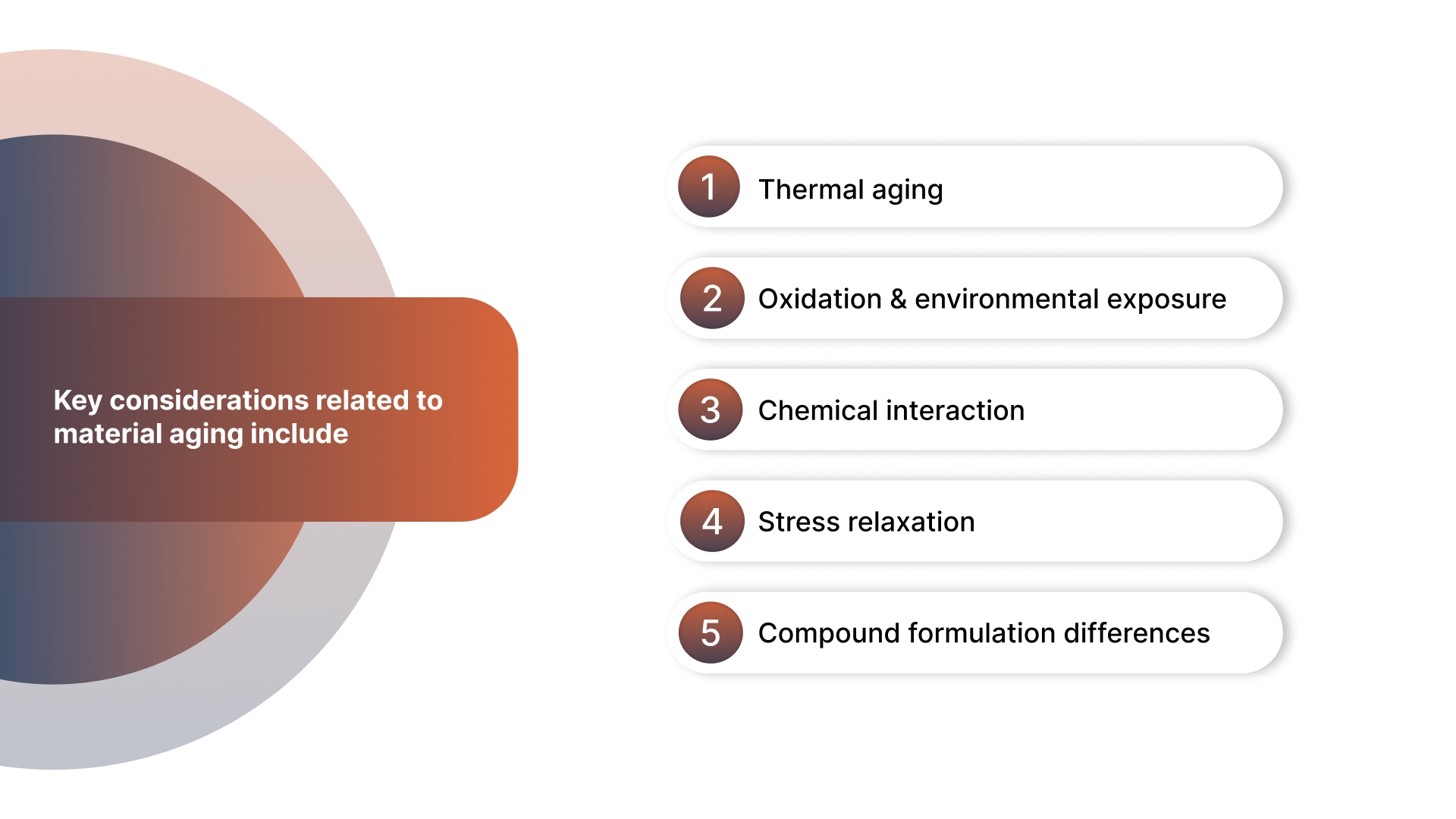
Thermal aging: Prolonged exposure to elevated temperatures accelerates polymer chain breakdown, reducing elasticity and increasing permanent deformation. Materials operating near their upper temperature limits are especially vulnerable.
Oxidation and environmental exposure: Oxygen, ozone, and UV exposure can harden elastomers over time, contributing to loss of sealing force even if compression levels remain unchanged.
Chemical interaction: Long-term contact with incompatible fluids can cause swelling, softening, or extraction of plasticizers, all of which negatively affect compression set resistance.
Stress relaxation: Even materials with low initial compression set may gradually lose sealing force due to molecular relaxation under constant load.
Compound formulation differences: Two O-rings made from the same base elastomer (e.g., FKM or EPDM) can exhibit significantly different long-term compression set behavior depending on fillers, curing systems, and additives.
Understanding how materials age in service is critical when selecting O-rings for applications requiring long-term static sealing.
Detroit Sealing Components: Your Partner in O-Ring Solutions
Detroit Sealing Components is a trusted distributor of high-quality O-rings and engineered sealing solutions designed for demanding industrial applications. With a strong focus on material performance and reliability, DSC supports customers in selecting O-ring solutions that minimize compression set and maintain long-term sealing integrity.
DSC offers both standard and custom O-rings across a wide range of elastomer materials, helping address challenges related to temperature, pressure, chemical exposure, and extended compression.
What Detroit Sealing Components Provides
Standard and custom O-rings for static and dynamic sealing applications
Material selection support to balance compression set resistance, temperature limits, and chemical compatibility
Backup rings and complementary sealing components to reduce extrusion and stress
Pre-sorted O-ring kits for maintenance and field service needs
Infinite Size O-Rings for large-diameter or non-standard applications requiring consistent sealing performance
For applications where compression set control is critical to reliability and uptime, Detroit Sealing Components provides the products and technical support needed to seal with confidence. Check out our product catalog today!
Final Thoughts
Compression set resistance plays a critical role in the long-term performance of O-ring seals, especially in applications involving sustained compression, elevated temperatures, or extended service intervals. Selecting the right O-ring material, compound, and design helps maintain sealing force, reduce leakage risk, and extend equipment service life.
For applications with demanding performance requirements, careful material selection and validation are essential. Detroit Sealing Components (DSC) supports compression set, critical sealing applications with a broad range of standard and custom O-rings, backed by material expertise and application-focused support.
Contact our team today to discuss your compression set requirements and identify the right O-ring solution for reliable, long-term sealing performance.
FAQs
1. What is a compression set in O-rings?
Compression set is a measure of an O-ring’s ability to return to its original shape after being compressed for a period of time. A high compression set indicates permanent deformation, which can lead to leakage.
2. Why is compression set resistance important in sealing applications?
Good compression set resistance helps maintain sealing force over time, especially in static applications where O-rings remain compressed for long durations. Poor resistance can result in seal failure and loss of containment.
3. Which O-ring materials have the best compression set resistance?
Materials such as FKM, FFKM, and properly formulated EPDM typically offer better compression set resistance compared to general-purpose elastomers, depending on temperature and operating conditions.
4. How does temperature affect compression set performance?
Higher temperatures accelerate material aging and increase compression set. Selecting an O-ring material rated for the application’s continuous operating temperature is critical to long-term performance.
5. Are compression set values the same for all applications?
No. Compression set performance varies based on material formulation, temperature, compression level, exposure time, and whether the application is static or dynamic.