In engine design and industrial equipment manufacturing, gaskets and sealants are mission-critical interfaces that directly affect safety, performance, emissions, uptime, and lifecycle cost. From automotive powertrains and hydraulic systems to oil and gas equipment operating above 10,000 psi and temperatures exceeding 1,200°F, the choice of gasket determines if an assembly performs reliably or fails prematurely.
With the global gasket and seal materials market projected to grow from USD 61.35 billion in 2024 at a CAGR of 5.4% through 2030, selecting the best gasket requires more than matching a material to a flange.
For OEMs, Tier suppliers, and regulated manufacturers across automotive, energy, food processing, medical devices, and semiconductor equipment, gasket selection sits at the intersection of design engineering, quality control, and procurement strategy. A well-engineered solution improves uptime, reduces maintenance cycles, and ensures compliance with industry standards such as ASTM, SAE, FDA, NSF, and ASME.
This guide provides a practical, engineering-focused framework for selecting the best gasket types and sealants for engines and industrial systems.
Key Takeaways
Gasket performance depends on matching material properties to real operating conditions, rather than temperature or pressure ratings.
Joint design, surface finish, and bolt load are as important as gasket material selection.
Testing and validation are essential to prevent long-term leakage and failure.
Early engineering collaboration reduces redesigns and accelerates production readiness.
Reliable manufacturers ensure consistent quality, compliance, and supply continuity.
8 Considerations for Selecting Gasket Materials in Engine Applications
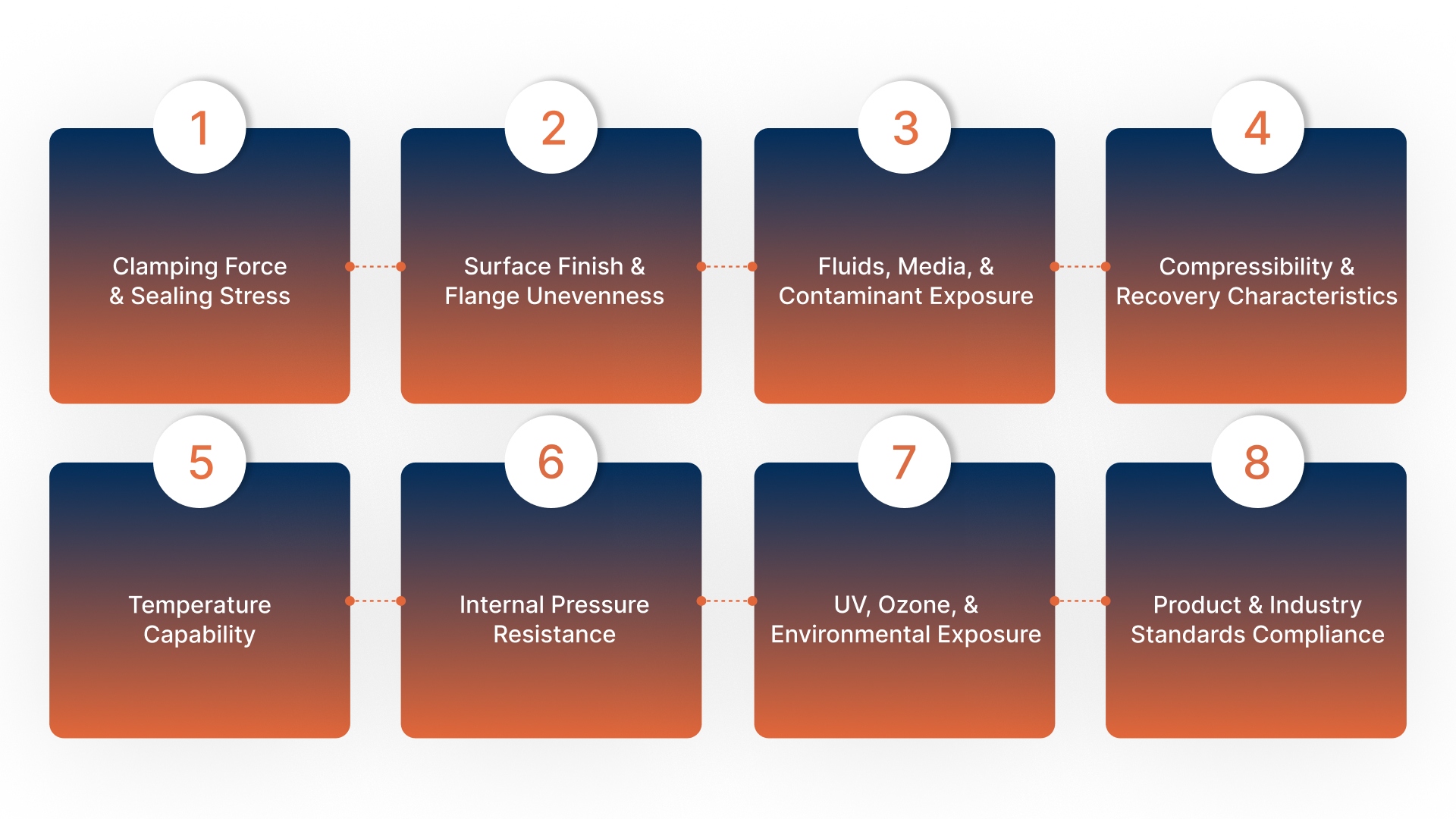
Selecting the right gasket material requires balancing mechanical load, surface conditions, environmental exposure, and regulatory requirements. For engines and industrial equipment, these factors determine if a seal maintains integrity under pressure, temperature cycling, and long-term service or fails prematurely in operation.
Clamping Force and Sealing Stress
The compressive load applied by bolts, studs, or clamps directly controls sealing effectiveness. Gaskets must generate sufficient sealing stress at available bolt loads without crushing, extruding, or relaxing over time. Automotive engine joints typically see 3,000–8,000 psi, while oil and gas flanges can exceed 15,000 psi.
Surface Finish and Flange Unevenness
Surface flatness and roughness (Ra) determine how well a gasket can conform to mating surfaces. Precision-machined engine blocks with Ra values below 125 µin can use thinner, denser materials, while cast or stamped flanges require thicker, more compressible gaskets to compensate for waviness and micro-voids.
Fluids, Media, and Contaminant Exposure
Gaskets are exposed to fuels, lubricants, hydraulic oils, coolants, steam, gases, and aggressive chemicals. Media compatibility dictates resistance to swelling, chemical attack, permeation, and embrittlement. In food, pharmaceutical, and potable water systems, material purity, extractables, and contamination risk are equally essential.
Compressibility and Recovery Characteristics
Compressibility allows the gasket to conform during installation, while recovery maintains sealing stress after thermal cycling and pressure fluctuations. Materials with inadequate recovery may seal initially but lose load after heat soak, vibration, or joint movement, leading to leakage over time.
Temperature Capability
Operating temperature defines the upper and lower limits of gasket materials. Automotive engines typically operate between 250–450°F, turbocharged and exhaust systems can exceed 900°F, and aerospace or energy applications may surpass 1,500°F. Materials must retain tensile strength, elasticity, and chemical resistance across the full temperature range.
Internal Pressure Resistance
System pressure directly influences blow-out resistance and sealing stress requirements. Low-pressure sanitary systems may operate below 150 psi, while hydraulic and oilfield equipment routinely exceeds 20,000 psi. The gasket must resist extrusion, creep, and mechanical failure under sustained and cyclic pressure loads.
UV, Ozone, and Environmental Exposure
Outdoor, under-hood, and industrial environments expose gaskets to UV radiation, ozone, moisture, and pollutants. Elastomeric materials must resist cracking, hardening, and surface degradation to maintain long-term sealing performance in exposed conditions.
Product and Industry Standards Compliance
Regulatory and industry standards heavily influence gasket material selection. Automotive OEMs rely on SAE and ISO specifications, potable water systems require NSF/ANSI certification, food and pharma applications demand FDA compliance, and pressure equipment follows ASME codes. Meeting these standards is essential for qualification, traceability, and long-term production approval.
Recurring leaks and compression-set failures often trace back to mismatched elastomers or inconsistent sizing. Detroit Sealing Components supplies O-Rings and Back-Up Rings engineered for static and dynamic engine joints, including higher-hardness options to prevent extrusion under pressure. Get predictable quality, standard sizing, and material guidance that reduces rework, downtime, and warranty exposure.
The next section walks through a step-by-step process you can apply to your specific engine setup.
6 Steps for Choosing the Best Gasket Types and Materials for Engine Assemblies
Choosing the right gasket ensures reliable sealing, prevents leaks, and extends equipment life. Follow these six steps to select the best gasket for your engine or industrial application.
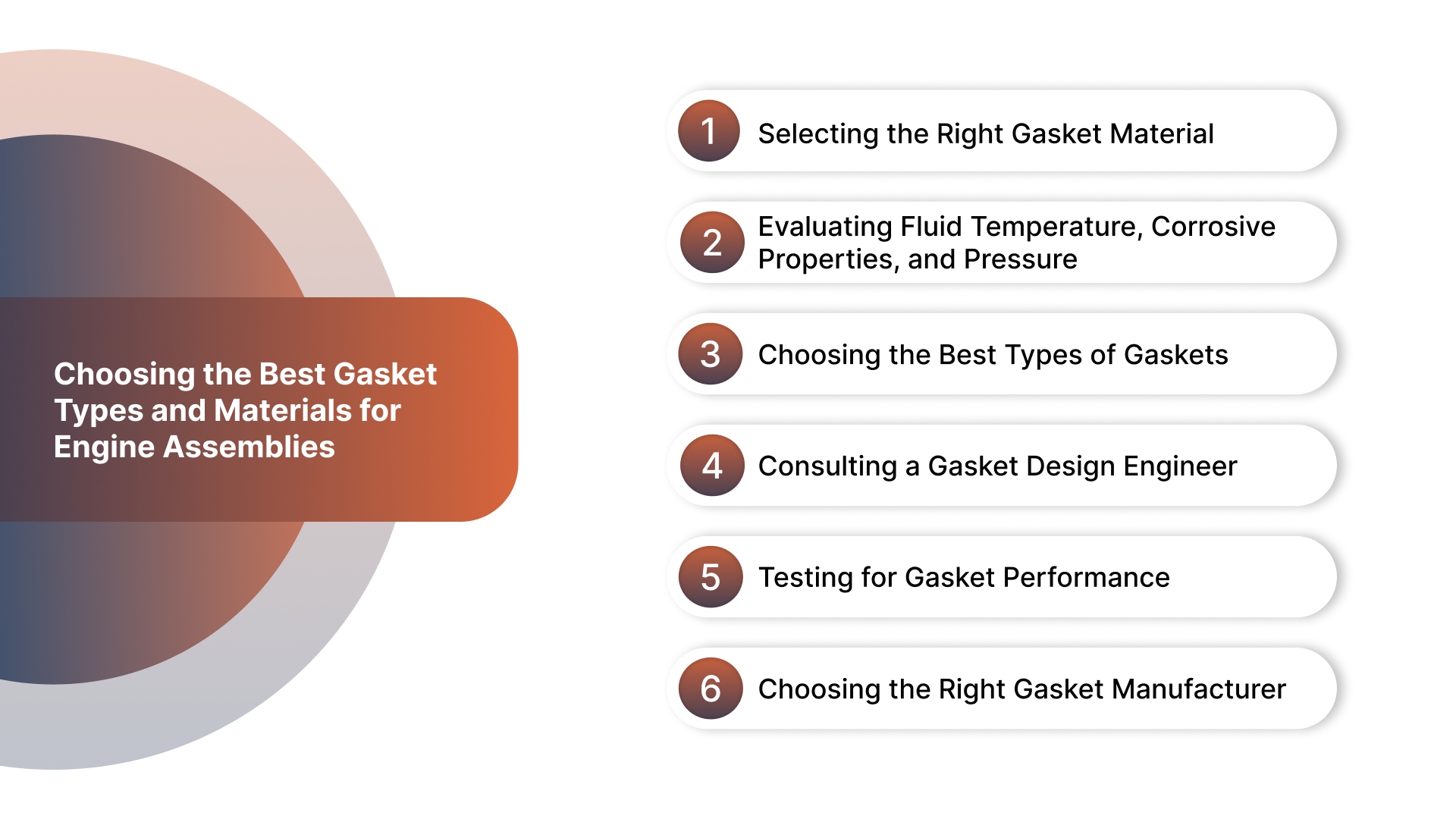
1. Selecting the Right Gasket Material
Selecting the right gasket material is an engineering decision that directly impacts sealing reliability, service life, and system safety. In engines and industrial equipment, materials must withstand defined pressure ranges, thermal cycling, chemical exposure, and mechanical stress while remaining manufacturable at scale.
Compressed Non-Asbestos Gasket Materials
Compressed non-asbestos materials replace traditional asbestos sheets while maintaining mechanical strength and thermal capability. They are widely used in engine flanges, compressors, and industrial pressure joints.
Key Properties
Fiber-reinforced elastomeric construction
High compressive strength and torque retention
Operating temperatures up to ~750°F
Good compatibility with oils, fuels, steam, and gases
Electrical Insulation Gasket Materials
Electrical insulation gasket materials provide sealing while preventing electrical conductivity between components. These materials are essential in motors, generators, and electrically sensitive engine assemblies.
Key Properties
High dielectric strength and insulation resistance
Thermal stability under continuous operating temperatures
Resistance to moisture absorption and tracking
Maintains insulation integrity under compression
EMI / RFI Shielding Gasket Materials
EMI/RFI shielding materials protect sensitive electronics from electromagnetic interference while maintaining environmental sealing. These materials are needed in automotive electronics and semiconductor manufacturing equipment.
Key Properties
Electrically conductive fillers or coatings
Maintains shielding effectiveness under compression
Supports grounding and signal integrity
Good environmental sealing performance
Fiber-Based Gasket Materials
Fiber gasket materials provide strength and dimensional stability in applications where creep resistance and load retention are required. They are commonly used in industrial and heavy-duty equipment.
Key Properties
High tensile and tear strength
Low creep under sustained compressive loads
Good thermal stability
Reliable sealing under static load conditions
Foam Gasket Materials
Foam gasket materials offer lightweight, compressible sealing solutions for non-structural applications. These materials are often used for dust, splash, and environmental protection.
Key Properties
Low density with high compressibility
Effective sealing against dust and moisture
Tolerant of surface unevenness
Limited pressure and temperature capability
Felt Gasket Materials
Felt materials are traditionally used for lubrication, retention and vibration control in mechanical assemblies. They perform well in rotating or reciprocating components.
Key Properties
Oil absorption and retention capability
Excellent vibration and noise dampening
Moderate temperature tolerance
Long service life in mechanical systems
Plastic Gasket Materials
Plastic gasket materials are used where chemical resistance and dimensional stability are required. These materials perform best in controlled sealing environments with predictable loads.
Key Properties
Low coefficient of friction
Excellent resistance to corrosive media
Minimal moisture absorption
Stable across wide humidity ranges
Specialty Polymer and Fluoroelastomer Materials
This category includes advanced materials designed for specific chemical, thermal, and regulatory demands in engines and industrial equipment.
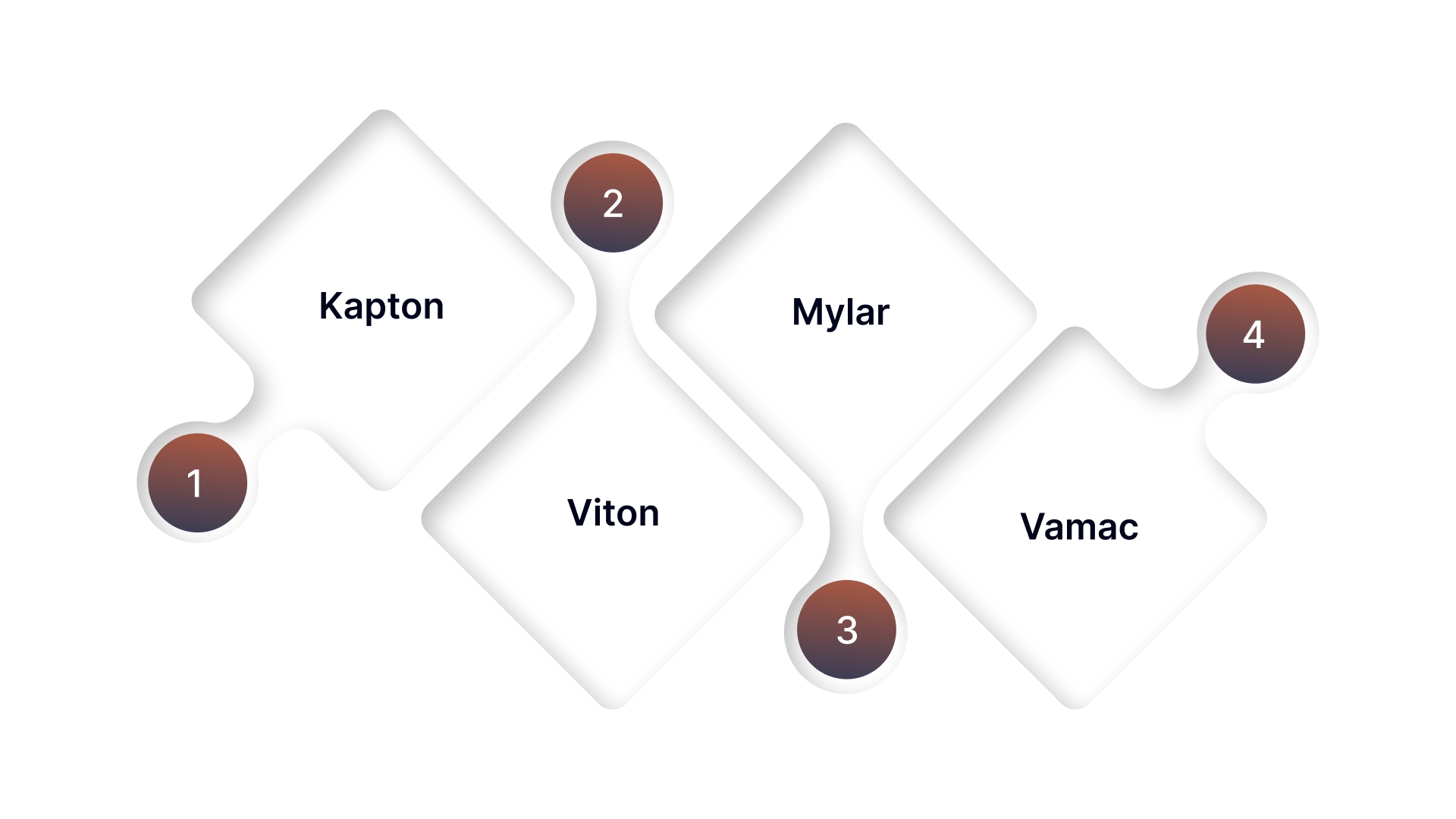
Kapton
High dielectric strength and thermal stability
Low outgassing for clean environments
Excellent dimensional stability
Viton
Outstanding resistance to fuels, oils, and chemicals
Continuous temperature capability up to ~400°F
Low permeability to gases
Mylar
High tensile strength and dimensional stability
Good electrical insulation properties
Resistant to moisture absorption
Vamac
Resistance to automotive fluids and heat
Good elasticity at elevated temperatures
Long-term aging stability
Neoprene Gasket Materials
Neoprene gaskets provide balanced performance across oil resistance, weatherability, and mechanical durability. They are commonly used in general industrial and engine-related sealing.
Key Properties
Good resistance to oils and moderate chemicals
Stable under UV and ozone exposure
Moderate temperature capability
Reliable mechanical strength
Silicone Gasket Materials
Silicone gaskets are preferred in applications involving wide temperature swings and prolonged environmental exposure. They are common in engine compartments and outdoor equipment.
Key Properties
Wide operating temperature range (−75°F to 450°F)
Excellent UV, ozone, and weather resistance
Low compression set over time
Maintains flexibility at high and low temperatures
Premature wear in rotating or reciprocating components can stall production and trigger field failures. Detroit Sealing Components offers X-Rings and Hydraulic Seals that are designed to resist twisting, lower friction, and maintain sealing integrity under pressure and temperature cycling. Ideal for engine-adjacent hydraulic systems where performance, efficiency, and seal life directly impact reliability.
2. Evaluating Fluid Temperature, Corrosive Properties, and Pressure
Engineers must analyze maximum and continuous temperature ratings, pressure cycling, and chemical exposure. Hydraulic OEMs focus on wear and extrusion resistance at pressures above 5,000 psi, while food processing equipment emphasizes washdown chemicals and steam exposure. Accurate evaluation ensures the best gasket maintains seal integrity over time.
3. Choosing the Best Types of Gaskets
Gasket type determines how well the joint handles pressure, temperature cycling, flange movement, and long-term relaxation, making it a key decision for engine, hydraulic, and high-duty industrial applications.
Kammprofile Gaskets
Kammprofile gaskets consist of a serrated metal core with soft sealing layers bonded to the surface. They are used in engine and process joints where high sealing efficiency is required at lower bolt loads.
Key Properties
High sealing stress concentration at the serrated metal core
Excellent performance at pressures exceeding 10,000 psi
Resistant to blow-out and flange rotation
Maintains sealing integrity under thermal cycling
Spiral Wound Gaskets
Spiral wound gaskets are constructed from alternating layers of metal strip and soft filler material. This design allows them to accommodate flange movement while maintaining sealing stress.
Key Properties
Excellent resilience and recovery under pressure cycling
Suitable for pressures up to ~15,000 psi
Handles thermal expansion and contraction effectively
Commonly used in ASME flanged joints
Soft Cut Gaskets (Sheet Gaskets)
Soft cut gaskets are die-cut from non-metallic sheet materials such as CNAF or PTFE. They are widely used in engines and industrial equipment with moderate pressure and temperature requirements.
Key Properties
High conformability to flange surface irregularities
Effective sealing at lower bolt loads
Broad material options for chemical compatibility
Limited resistance to extreme pressure compared to composite designs
Each design supports different performance envelopes, and selecting the best gasket depends on flange design and duty cycle.
4. Consulting a Gasket Design Engineer
Early collaboration with a gasket design or applications engineer reduces downstream failures and accelerates time to production. For engines and industrial equipment, this step ensures the sealing solution is optimized for manufacturability, cost, and long-term reliability.
Why Early Engineering Collaboration Matters
Prevents over-specification or under-design of materials and gasket geometry
Reduces risk of leakage, blow-out, or compression loss in field conditions
Shortens validation timelines by minimizing design iterations
Design Inputs that Engineers Help Validate
Flange surface finish (Ra values) and flatness tolerances
Bolt pattern, preload capability, and achievable sealing stress (psi)
Joint movement due to thermal expansion, vibration, or pressure cycling
5. Testing for Gasket Performance
Gasket testing validates that the selected design will perform reliably under real operating conditions. For engines, pressure systems, and regulated industries, testing bridges the gap between theoretical performance and long-term field reliability.
Mechanical Performance Testing:
Compression and recovery testing to measure elastic behavior
Creep relaxation testing under sustained bolt load
Stress retention analysis after thermal and pressure cycling
Leakage and Seal Integrity Testing:
Helium or air leakage testing for gas-tight applications
Liquid leakage testing under static and dynamic pressure
Blow-out resistance testing at elevated pressures
Thermal Cycling and Temperature Exposure:
High-temperature soak testing to simulate engine operating conditions
Thermal shock testing across wide temperature ranges (°F and °C)
Evaluation of material hardening or embrittlement over time
Chemical and Media Compatibility Testing:
Immersion testing in oils, fuels, coolants, hydraulic fluids, and solvents
Measurement of swelling, weight change, and tensile degradation
Validation for aggressive or corrosive media in oil and gas systems
Standards and Compliance Validation:
ASTM test methods for compression, leakage, and aging
SAE standards for automotive engine and powertrain sealing
Application-specific compliance (FDA, NSF, ASME, ISO) when required
6. Choosing the Right Gasket Manufacturer
Selecting the right gasket manufacturer is as important as choosing the material or design. For OEMs and operators, supplier capability directly impacts quality consistency, uptime, and total cost of ownership.
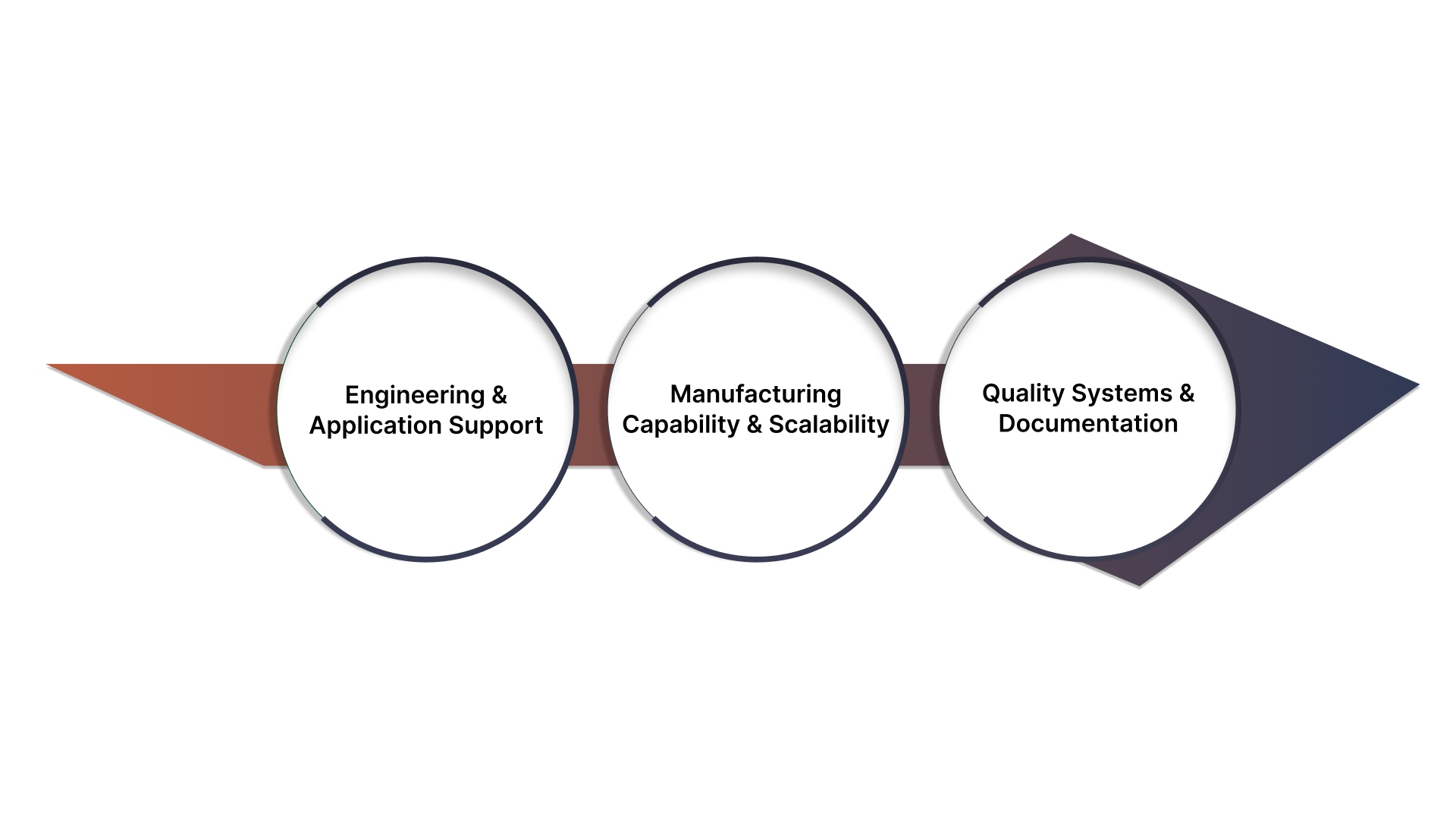
Engineering and Application Support
Access to experienced design and applications engineers
Ability to recommend alternatives during design changes or shortages
Support for rapid prototyping and iterative testing
Manufacturing Capability and Scalability
Proven processes for stamping, molding, machining, or laminating
Capacity to support low-volume prototypes and high-volume production
Consistent process controls for repeatability and yield
Quality Systems and Documentation
ISO-certified quality management systems
Full material traceability and batch documentation
PPAP, FAI, and validation support for automotive and aerospace OEMs
Next, let’s see how to source and validate engine-ready solutions with Detroit Sealing Components.
Get Engine-Ready Gasket Solutions from Detroit Sealing Components
When engine reliability, uptime, and repeatability matter, sealing decisions cannot be left to chance. Detroit Sealing Components (DSC) supports OEMs, Tier suppliers, and industrial operators with stocked and engineered sealing solutions designed for real engine pressures, temperatures, and duty cycles, backed by application expertise and dependable supply.
Molded Gaskets & Packings: Compression, transfer, and injection-molded gasket solutions designed primarily for static engine joints. DSC offers a large library of tooled parts plus custom geometries to match flange design, material requirements, and production volume.
O-Rings: A versatile sealing solution for static and dynamic engine applications, available in a broad range of international standard sizes. Optional coatings and lubricants support assembly efficiency and durability, with QC controls for urgent uses.
X-Rings (Quad Rings): Four-lobed geometry improves sealing stability in dynamic engine components. X-rings resist twisting, reduce friction, and can extend service life compared to traditional O-rings in rotary and reciprocating motion.
Back-Up Rings: Designed to prevent O-ring extrusion in higher-pressure engine and hydraulic glands. Typically paired with AS568 O-rings, using higher-hardness materials such as 90-durometer NBR or FKM.
Hydraulic Seals: Engine-adjacent sealing solutions for hydraulic cylinders exposed to high pressure, elevated temperatures, and abrasive conditions. DSC supports common cylinder sizes and abrasion-resistant materials, with complementary PTFE-based components available.
Metal-Bonded Rubber Seals: Rubber chemically or mechanically bonded to metal for rigid engine interfaces. These seals improve retention, alignment, and durability in assemblies requiring both structural support and elastomeric sealing.
Detroit Sealing Components combines stocked inventory, engineered solutions, and application-focused support to help you select the right gasket and sealing components, without delays or supply risk.
Conclusion
Gasket and sealant selection for engines and industrial systems requires a disciplined, engineering-led approach. Material behavior, pressure ratings, compliance needs, and supplier reliability all directly affect safety, performance, and total cost of ownership.
Automotive OEMs, oil and gas equipment builders, hydraulic manufacturers, and regulated industries share the same objective: reliable sealing under real-world conditions. A structured selection process and collaboration with experienced suppliers help teams specify the best gasket for long-term durability, compliance, and operational success.
Non-standard flanges and rigid interfaces often cause inconsistent sealing and assembly delays. Detroit Sealing Components offers Molded Gaskets & Packings and Metal-Bonded Rubber Seals with custom geometries and bonded constructions to improve alignment, retention, and repeatability. A practical solution for OEMs scaling engine programs without sacrificing seal integrity.
Reach out to our team today to find the perfect gasket and seal solutions tailored for your engine applications.
FAQs
1. How do engineers prevent gasket failure during engine thermal cycling?
Engineers select materials with high recovery and low creep, validate bolt load retention, and design gasket thickness to accommodate flange expansion and contraction.
2. When should a semi-metallic gasket be chosen over a soft gasket?
Semi-metallic gaskets are preferred when operating pressures exceed soft gasket limits or when joints experience significant thermal cycling and flange movement.
3. How does gasket selection impact engine warranty and recall risk?
Incorrect gasket material increases leakage and durability failures, which directly raise warranty claims, field repairs, and recall exposure for OEMs.
4. What documentation should OEMs request from gasket suppliers?
OEMs should require material traceability, compliance certifications, test reports, and consistent batch documentation to support quality audits and validation.
5. Can gasket design reduce maintenance downtime in industrial engines?
Yes, properly designed gaskets extend service intervals, reduce re-torque requirements, and minimize unplanned downtime caused by recurring seal failures.