Choosing the correct grommet size is just as important as selecting the right grommet type or material. An improperly sized grommet can lead to loose fits, exposed panel edges, increased vibration, or premature wear of cables and hoses. Even high-quality grommets cannot perform effectively if sizing is overlooked.
In industrial, automotive, and electrical applications, grommet sizing directly affects retention, protection, and long-term reliability. Understanding how grommet sizes are specified and how to select the correct size helps prevent installation issues and equipment downtime.
This guide explains grommet sizes, how they are measured, how to read sizing specifications, and how to select the right grommet using a practical selection chart.
Before we dive into
Grommet sizes play a critical role in retention, protection, and long-term performance across industrial, automotive, and electrical applications.
Proper grommet sizing depends on three key dimensions: panel hole diameter, panel thickness, and inner diameter for the passing component.
Incorrect grommet size selection can lead to loose fits, exposed panel edges, vibration damage, and premature wear.
Standard grommet sizes cover many common applications, but custom sizes may be required for tight tolerances or demanding environments.
Accurate measurement and verification before installation help prevent downtime, rework, and equipment reliability issues.
What Are Grommet Sizes and Why They Matter?
Grommet sizes define how a grommet fits within a panel and how it supports the cable, wire, or hose passing through it. Unlike general fasteners, grommet sizing must account for three critical dimensions working together.
Properly sized grommets:
Seat securely in the panel opening
Maintain consistent contact with the panel edge
Support the passing component without excessive compression
Reduce vibration, wear, and movement
Improper sizing can result in loose grommets, torn material, or exposed edges that defeat the purpose of the grommet entirely.
Key Dimensions Used in Grommet Sizing
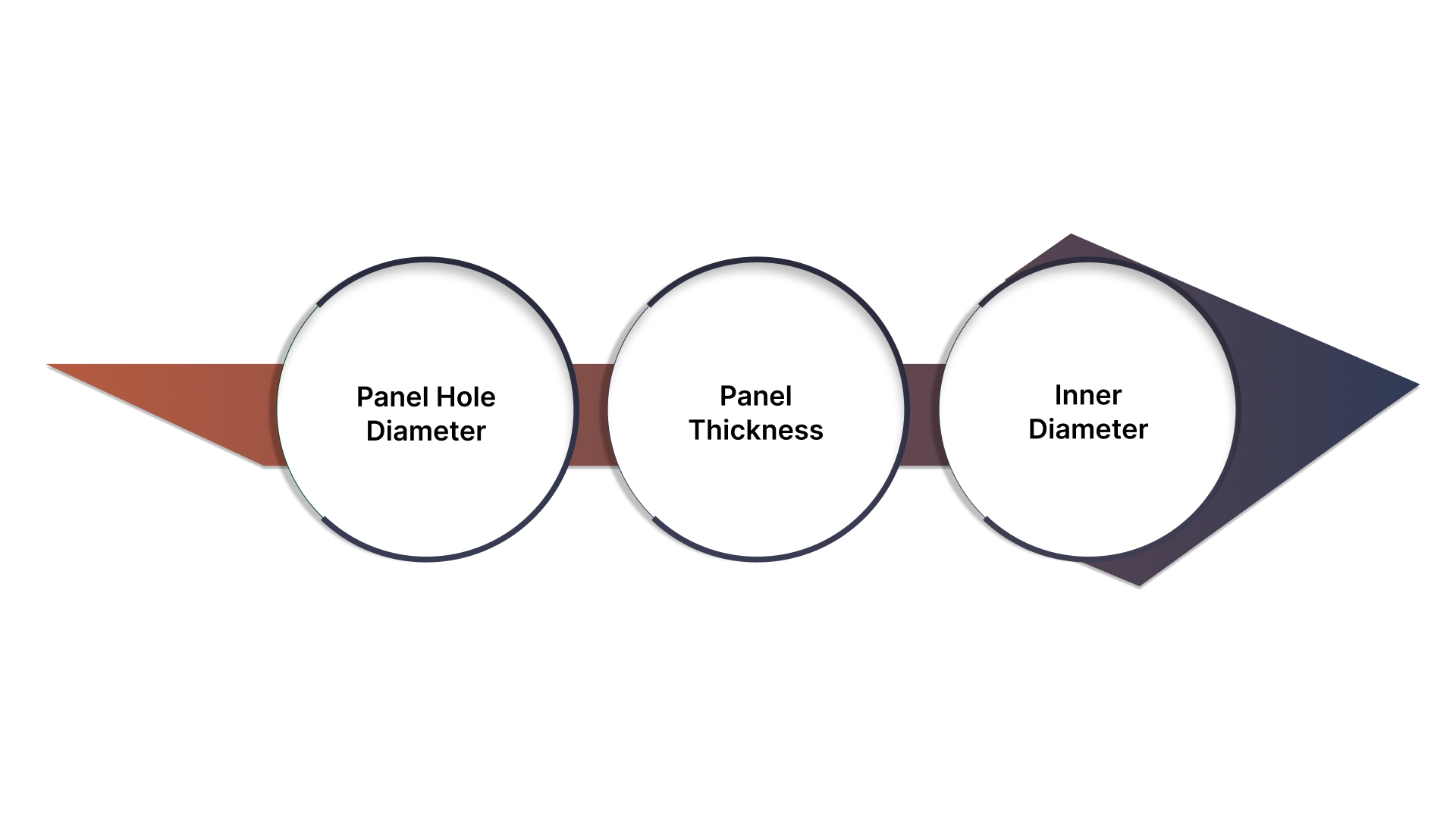
Grommet sizing is determined by a combination of panel and component dimensions that must work together for proper fit and performance. Understanding these key measurements helps ensure secure installation, consistent retention, and long-term protection in industrial applications.
1. Panel Hole Diameter
The panel hole diameter determines how tightly the grommet fits into the opening. This is typically the primary reference dimension when selecting a grommet size.
Too small: Grommet may not seat properly or may tear
Too large: Grommet may loosen or fall out
2. Panel Thickness (Groove Range)
Grommets are designed to accommodate specific panel thickness ranges. The groove width of the grommet must match the panel thickness to ensure proper retention.
Ignoring panel thickness is a common cause of installation failure.
3. Inner Diameter (ID)
The inner diameter refers to the opening through which the cable, wire, or hose passes.
Too small: Can pinch or damage the component
Too large: Allows excessive movement and vibration
Correct ID sizing helps keep the component centered and protected.
Detroit Sealing Components supports material selection and provides custom molded grommet solutions for industrial applications where standard options may not be sufficient.
Grommet Sizes Selection Chart (Typical Reference)
The table below shows commonly referenced grommet sizes with key dimensions used for selection. These values are intended as a general guide and reflect standard sizing conventions used across manufacturers.
Grommet Size | Panel Hole / Inside Diameter (mm) | Outside Diameter (mm) | Depth (mm) | Applications |
#0 (1/4") | 6 | 11.5 | 5.5 | Small wiring and light-duty cables |
#1 (5/16") | 7 | 17.5 | 6 | Wiring harnesses |
#2 (3/8") | 9 | 19 | 7 | Larger cables and tubing |
#3 (7/16") | 12 | 22 | 7 | Control panels and enclosures |
#4 (1/2") | 15 | 28 | 9 | Industrial wiring bundles |
#5 (5/8") | 17 | 32 | 9 | Hoses and cable clusters |
#6 (3/4") | 18 | 34 | 10 | Heavy-duty cable protection |
#8 (1-1/8") | 28 | 48 | 7 | Large harnesses or conduit |
#12 (1-9/16") | 41.5 | 61.5 | 11 | Large cable or hose pass-throughs |
#15 (2") | 50 | 75 | 11 | Industrial hoses and large openings |
Note: Dimensions are typical references only. Always confirm exact specifications, tolerances, and material behavior with the supplier before final selection.
When standard size charts do not fully match application requirements, we at Detroit Sealing Components can assist you in helping to accurate grommet sizing and material selection.
Check out our product catalog today!
How to Measure for the Correct Grommet Size
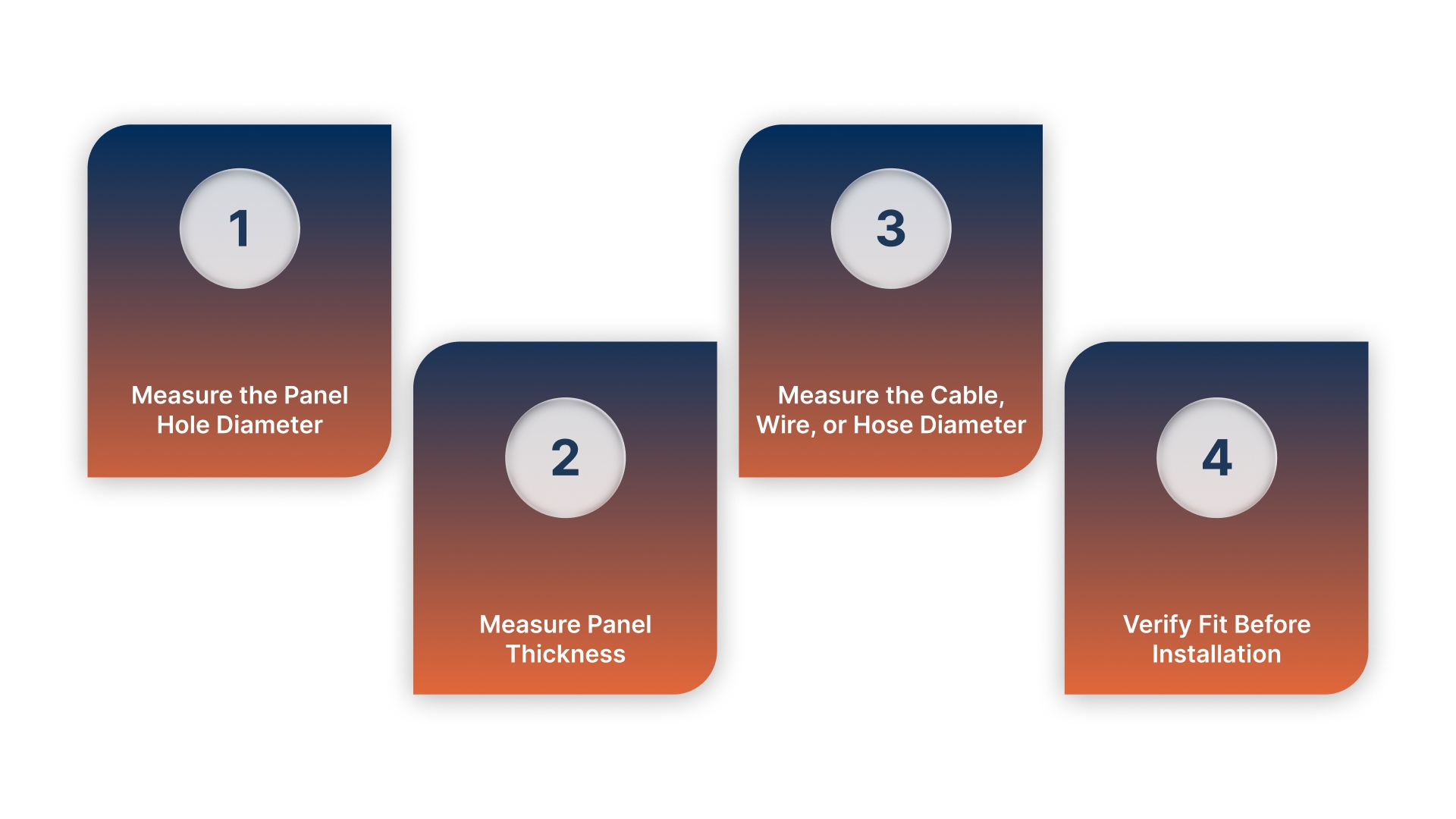
Accurate measurement is essential for selecting the correct grommet size. Taking precise measurements before ordering helps ensure proper fit, secure retention, and long-term performance after installation.
Step 1: Measure the Panel Hole Diameter
Use calipers to measure the diameter of the panel hole.
Measure at multiple points to confirm roundness
Check for out-of-tolerance or deformed holes
Record the smallest measurement for sizing accuracy
Step 2: Measure Panel Thickness
Measure the thickness of the panel where the grommet will be installed.
Compare this measurement to the grommet’s groove range
Ensure the grommet is designed to accommodate the panel thickness
Avoid forcing grommets onto panels outside the specified range
Step 3: Measure the Cable, Wire, or Hose Diameter
Measure the outside diameter of the component passing through the grommet.
Allow enough clearance to avoid pinching
Avoid excessive space that can lead to vibration or movement
Confirm compatibility with the grommet’s inner diameter
Step 4: Verify Fit Before Installation
Before final installation:
Dry-fit the grommet in the panel opening
Confirm full seating around the panel edge
Ensure the cable or hose passes through without stress
Careful measurement and verification help prevent installation issues and support consistent, long-term grommet performance.
When to Use Standard vs. Custom Grommet Sizes
Standard grommet sizes are suitable for many common applications, but not all installations fall within standard dimensional or performance limits. Comparing standard and custom grommet sizes helps determine when off-the-shelf options are sufficient and when a tailored solution is more appropriate.
Criteria | Standard Grommet Sizes | Custom Grommet Sizes |
Availability | Readily available in common sizes | Designed to meet specific requirements |
Panel Hole Size | Fits standard round holes | Accommodates non-standard or irregular holes |
Panel Thickness Range | Limited to predefined groove ranges | Optimized for exact panel thickness |
Fit Tolerance | General-purpose fit | Tight tolerances for precise retention |
Material Options | Common elastomer choices | Custom compounds and certifications |
Performance Demands | Suitable for typical environments | Designed for harsh or critical conditions |
Lead Time | Short, stocked availability | Depends on design and tooling needs |
Selecting between standard and custom grommet sizes depends on application requirements, installation constraints, and long-term performance expectations.
For applications where accurate sizing is critical, or measurements fall outside standard ranges, Detroit Sealing Components can assist with grommet size selection, material guidance, and fit considerations to support reliable installation and long-term performance.
Extra Tips and Strategies for Selecting the Right Grommet Size
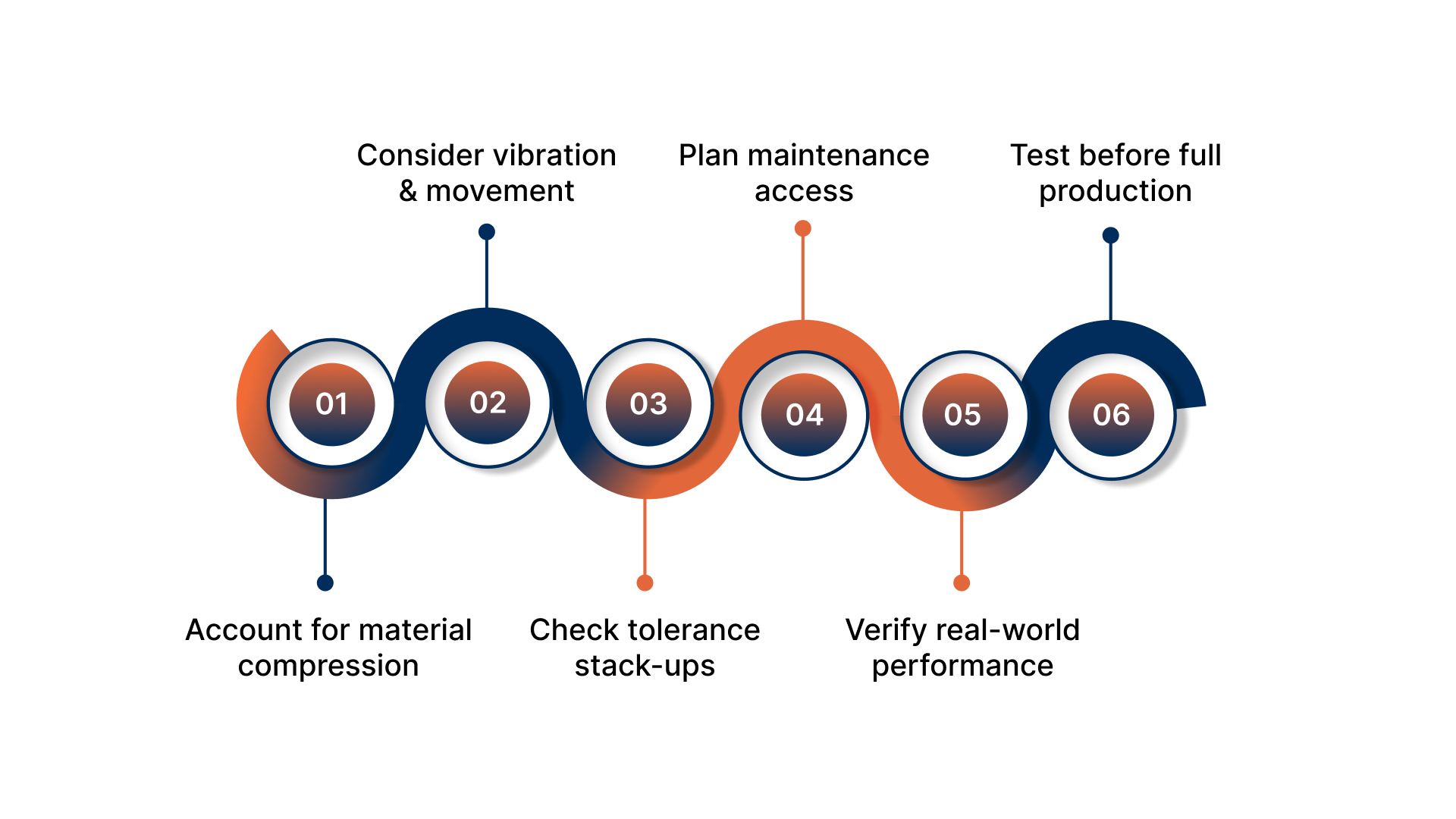
Beyond basic measurements and charts, a few additional considerations can help improve grommet fit, installation consistency, and long-term performance, especially in industrial and high-use environments.
Account for material compression: Rubber grommets can compress differently depending on durometer and temperature. In tight tolerances, allow for material behavior under load.
Consider vibration and movement: Applications with continuous vibration or cable motion may benefit from slightly tighter fits or strain-relief style grommets to reduce wear over time.
Check tolerance stack-ups: Small variations in panel thickness, hole size, or cable diameter can add up. Reviewing tolerances together helps prevent loose or overly tight installations.
Plan for maintenance access: In systems requiring frequent service or cable replacement, split grommets or slightly larger inner diameters can simplify future work.
Verify performance in the operating environment: Temperature extremes, chemical exposure, or outdoor conditions can affect grommet elasticity and retention; material choice should align with real operating conditions.
Test before full production: When possible, perform a trial installation to confirm fit, seating, and cable movement before committing to large production runs.
Applying these strategies alongside proper measurement helps reduce installation issues, extend service life, and improve overall system reliability.
How Detroit Sealing Components Supports Grommet Size Selection
Selecting the right grommet size involves more than matching a chart. Material properties, application environment, and installation conditions all influence performance.
Detroit Sealing Components supports reliable grommet sizing and selection by offering:
Industrial-grade rubber grommets designed for consistent fit and durability
Material selection guidance based on temperature, exposure, and mechanical demands
Standard and custom grommet sizes to support common and non-standard panel designs
Application-focused support for automotive, industrial, and electrical systems
This approach helps reduce installation issues and supports long-term reliability.
Conclusion
Understanding grommet sizes is essential for ensuring proper installation, reliable protection, and long service life. Correct measurement of panel holes, panel thickness, and component diameter helps prevent loose fits, vibration damage, and premature wear.
For applications with tight tolerances or demanding conditions, selecting the right grommet size and material is critical. Detroit Sealing Components provides the products and technical support needed to ensure accurate grommet sizing and dependable performance in industrial applications. Connect with our team.
FAQs
1. How are grommet sizes measured?
Grommet sizes are measured using panel hole diameter, panel thickness (groove range), and inner diameter for the passing component.
2. What happens if a grommet size is incorrect?
Incorrect sizing can cause loose retention, tearing, exposed panel edges, or excessive vibration and wear.
3. Are grommet sizes standardized?
Many grommets follow common sizing conventions, but dimensions can vary by manufacturer and material.
4. How much clearance should a grommet have for a cable?
The inner diameter should allow the cable to pass through without compression while minimizing excessive movement.
5. When should custom grommet sizes be used?
Custom sizes are recommended for non-standard panels, tight tolerances, harsh environments, or applications requiring precise fit and performance.