What are the signs of a bad rubber gasket seal?
Common signs include visible leakage of fluids or gases, compressed or flattened gasket material, cracks or brittleness, chemical degradation or swelling, and loss of elasticity. You may also notice increased system pressure drops, contamination between sealed areas, or difficulty maintaining proper torque on bolted connections. Regular inspection and timely replacement prevent costly system failures.
What is the difference between rubber and gasket?
Rubber is the elastomeric material itself, available in various compounds like NBR, FKM, EPDM, or silicone. A gasket is a sealing component that can be made from rubber or other materials, designed to fill the space between two or more mating surfaces to prevent leakage. Rubber gaskets specifically leverage the elastic properties of rubber compounds to create effective seals in static or dynamic applications.
How long will a rubber gasket last?
Service life varies significantly based on application conditions, material selection, and operating environment. Properly selected rubber gaskets can last from several months in severe conditions to 10+ years in mild applications. Factors affecting longevity include temperature extremes, chemical exposure, pressure cycles, UV exposure, and compression forces. Custom material selection and proper design maximize service life for your specific application.
Can you create custom rubber gaskets for unique applications?
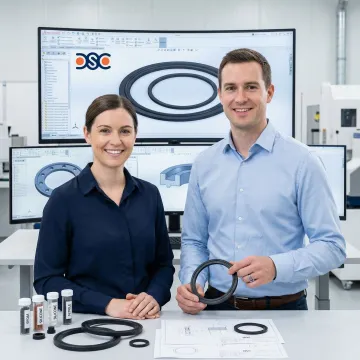
Yes, we specialize in custom solutions. Our engineering team uses computer-aided design and finite element analysis to develop gaskets tailored to your exact specifications. We can design custom geometries, select optimal materials from hundreds of compounds, and bench-test prototypes under your operating conditions to ensure performance before full production.
What rubber materials are available for gasket applications?
We offer comprehensive material options including Fluorocarbon (FKM), Nitrile (NBR), Hydrogenated Nitrile (HNBR), EPDM, Silicone (VMQ), Fluorosilicone (FVMQ), Liquid Silicone (LSR), Perfluoro elastomer (FFKM), Polyurethane, and many more. Our ISO 17025 accredited lab and ISO 9001:2015 certified quality system, can also custom-develop specialized compounds to meet unique requirements for chemical resistance, temperature range, or regulatory compliance.
How do I select the right gasket material for my application?
Material selection depends on operating temperature, chemical exposure, pressure requirements, regulatory compliance, and dynamic or static application. Our technical staff evaluates your specific conditions—including media compatibility, temperature ranges, and pressure cycles—to recommend optimal compounds. We can provide material certifications and test data to ensure the selected material meets your performance and safety requirements.
What is your typical lead time for custom gasket orders?
Lead times vary based on design complexity, tooling requirements, and order quantity. Standard modifications typically take 2-4 weeks, while completely custom designs with new tooling may require 6-8 weeks. Our strategic location and efficient processes enable faster turnaround than industry averages. We work closely with customers to meet project timelines and can expedite critical orders when needed.
Do you provide material certifications and compliance documentation?
Yes, we provide comprehensive documentation including material certifications for industry standards, compliance certificates for FDA, NSF, and other regulatory bodies, dimensional inspection reports, and material test data from our ISO 17025 accredited lab and an ISO 9001:2015 certified quality system. We work across automotive, aerospace, food & beverage, medical, and oil & gas sectors, ensuring all products meet applicable industry specifications and quality standards.